


Mickoski celebrates a 4-to-1 win over SDSM in Brvenica, but his candidate got 445 fewer votes than a year ago
19.10.2026


19.10.2026

19.10.2026

19.10.2026

19.10.2026

19.10.2026
19.10.2026

19.10.2026

18.10.2026

18.10.2026

19.10.2026

19.10.2026

18.10.2026

19.10.2026

19.10.2026

19.10.2026
19.10.2026
18.10.2026
17.10.2026

19.10.2026

19.10.2026

19.10.2026

19.10.2026

19.10.2026

19.10.2026

18.10.2026

18.10.2026

18.10.2026

17.10.2026

15.10.2026

13.10.2026

23.04.2026

23.04.2026

12.04.2026

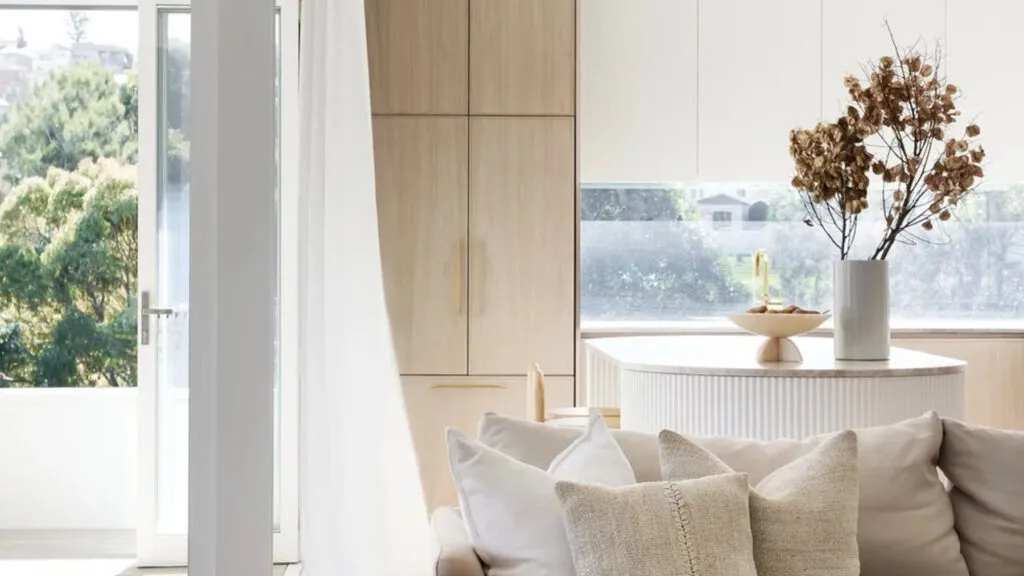
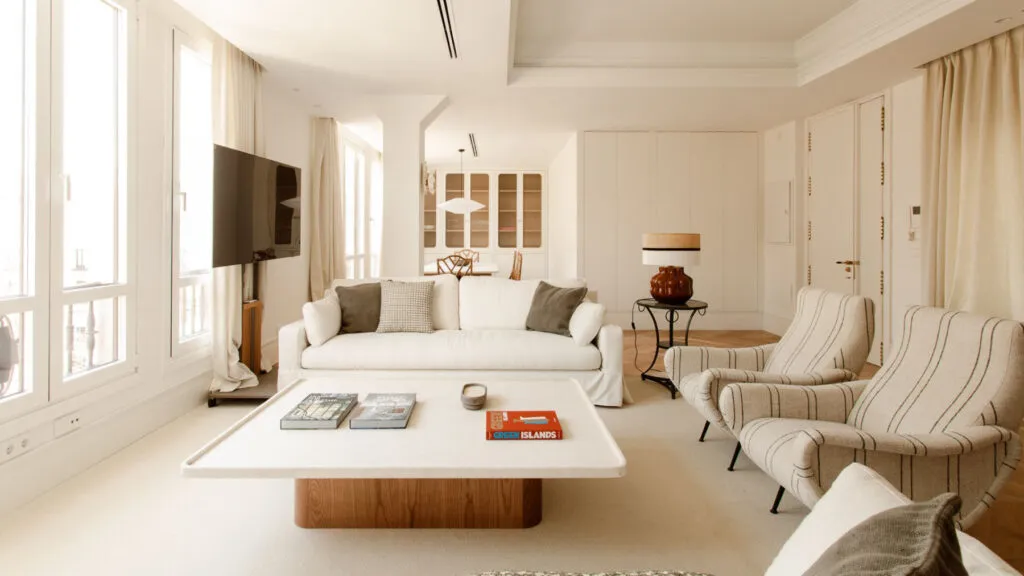
The living room looks like it came out of a catalogue: bright walls, a big window, minimal furniture. Then three guests arrive and every word starts bouncing back off the walls. A home can look cosy and sound like an empty hall - and very often the culprit isn't the building, but the layout and materials we chose ourselves.
Experts call it acoustic comfort - a term few people know by name, but everyone feels when it's missing. A home is acoustically comfortable when the sound fits the purpose of each room: easy conversation in the living and dining room, rest in the bedroom, focus in the study. That means controlling both the sounds from inside and those from outside. Without it, conversations turn into a din, music distorts, and the clatter from the kitchen can be heard all over the flat.
Three things are decided during construction or renovation. The first is the layout: active zones away from rest areas, and bedrooms away from the lift, the meter room, the kitchen and the children's rooms. The second is ceiling height - high ceilings amplify sound, so they need enough surfaces that absorb it. The third is insulation: walls, windows, doors and shutters that insulate well.
If you already live with the problem, start by finding the source. If sound bounces around the living room and it's hard to follow a conversation with several people at once, the fix is in the room itself. If the noise comes from another room or from outside, you need better insulation. And if a particular device hums, check the appliance and the parts that transmit vibration.
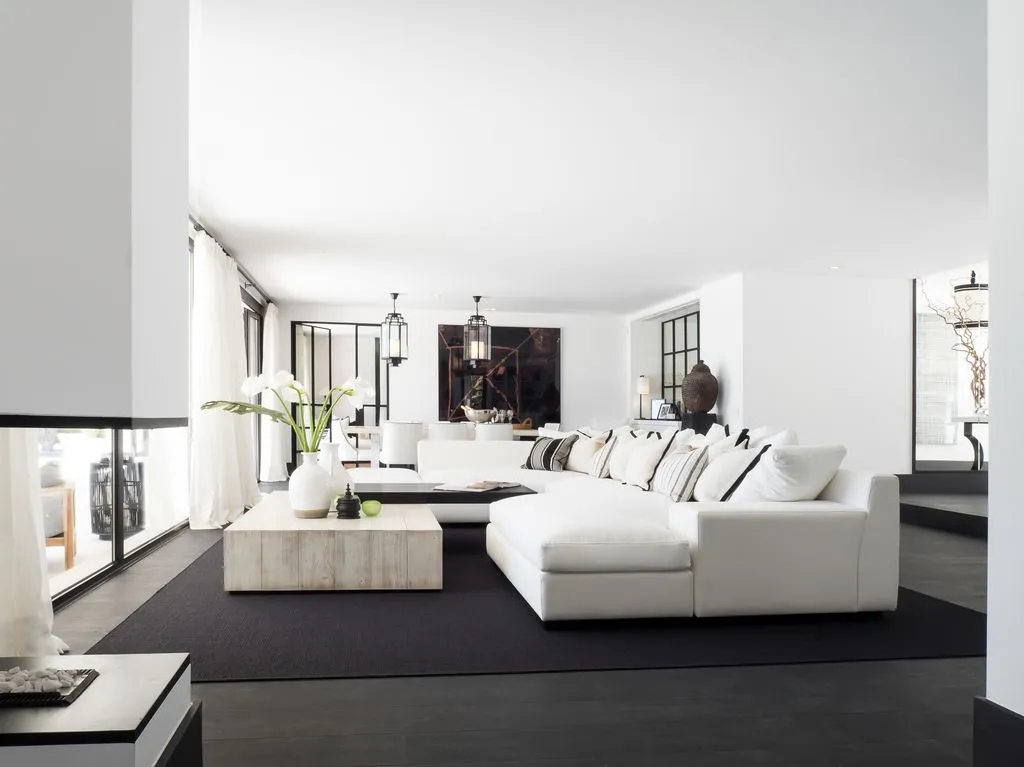
The four most common mistakes are easy to spot. A large living room with no textiles or upholstery - the classic recipe for echo. An open kitchen, from which the sound of appliances and dishes spills across the whole living space. Partition walls, doors and windows that insulate poorly, so sound passes from room to room. And the combination of hard floors, wide windows and bare walls, off whose smooth surfaces sound bounces like a ball.
The fixes, in order: upholstered furniture, rugs and textiles in the large living room; absorption panels, curtains or textiles around the open kitchen; better-insulated partitions, doors and windows; and sound-absorbing surfaces wherever everything is hard and smooth.
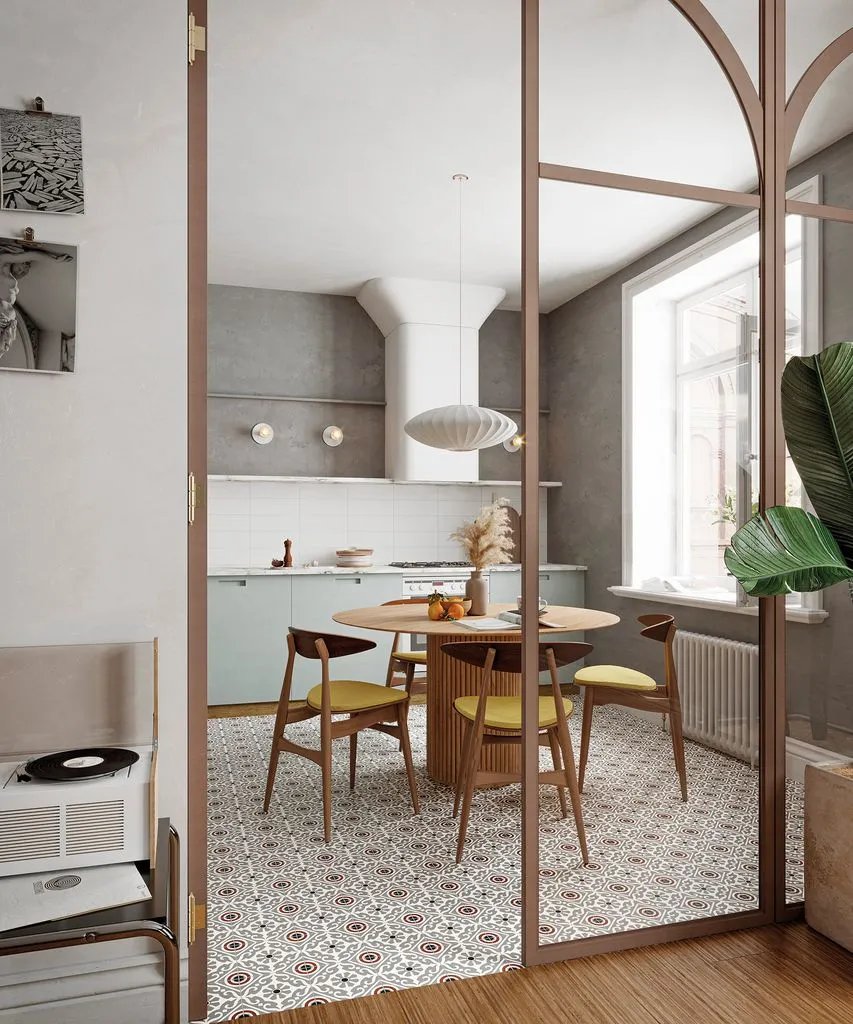
A special trap is minimalism taken all the way. Empty space looks tidy, but a room that's too empty reflects sound off every bare surface. Glass, ceramics and stone amplify what you hear even more. When there are many surfaces reflecting sound and few absorbing it, the sound comes back and loses clarity. How much a material absorbs depends on its thickness, size and other factors.
The good news is that much of this doesn't require knocking anything down. Rugs, curtains and upholstery are the easiest place to start. A floor-to-ceiling bookshelf absorbs a surprising amount of sound, depending on its shape, contents and material - a full shelf is an irregular surface that absorbs well. There are also decorative acoustic panels made of felt, faced mineral wool or other porous materials, as well as wooden slats on an absorbent backing, which decorate at the same time. And there are absorbent ceilings that can be installed without construction work.
When choosing panels, be careful: some reduce echo, others improve sound reflection, and they also differ in absorption power, thickness and performance. Choose panels with good fire resistance - that's an investment in safety, not just in quiet. In apartment buildings, where your neighbour's wall is also your wall, quiet is a shared job.
The latest 10 news from this category
The dark wood wall unit is back in fashion, but the rule is clear: borrow the decade's warmth, don't reconstruct...
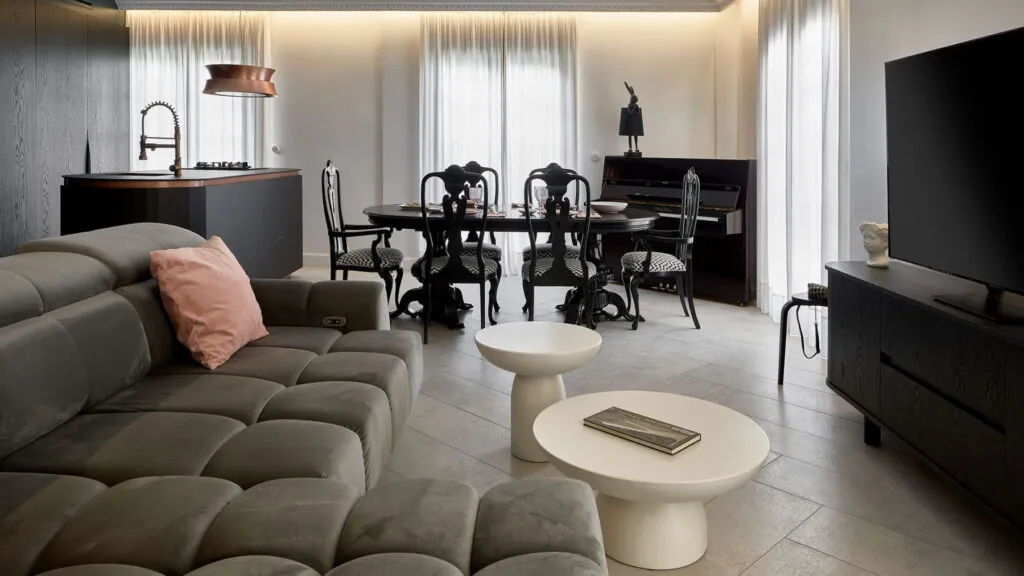
Dark colours supposedly make a room smaller. Designer Juancho González proved the opposite - with white walls, a mirror in...

An estate bought the year he became a matador, century-old olive trees and a kitchen with velvet armchairs. How El...

The lower cost of living in the countryside, she says, gives them "ten times more things". A home assembled over...
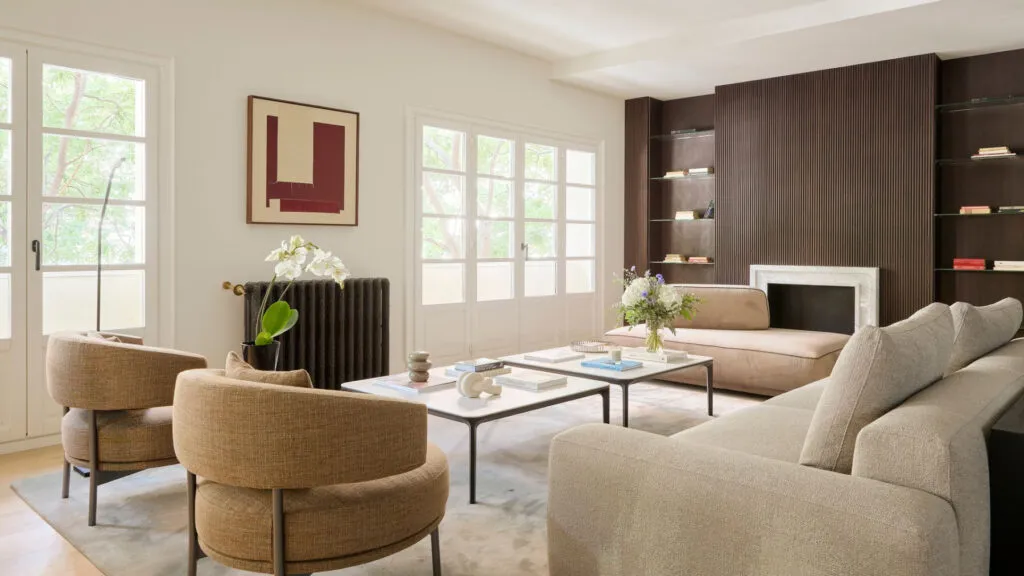
Bleeding the air, a pressure of 1 to 1.5 bar, 19 to 21 degrees during the day and a reflective...
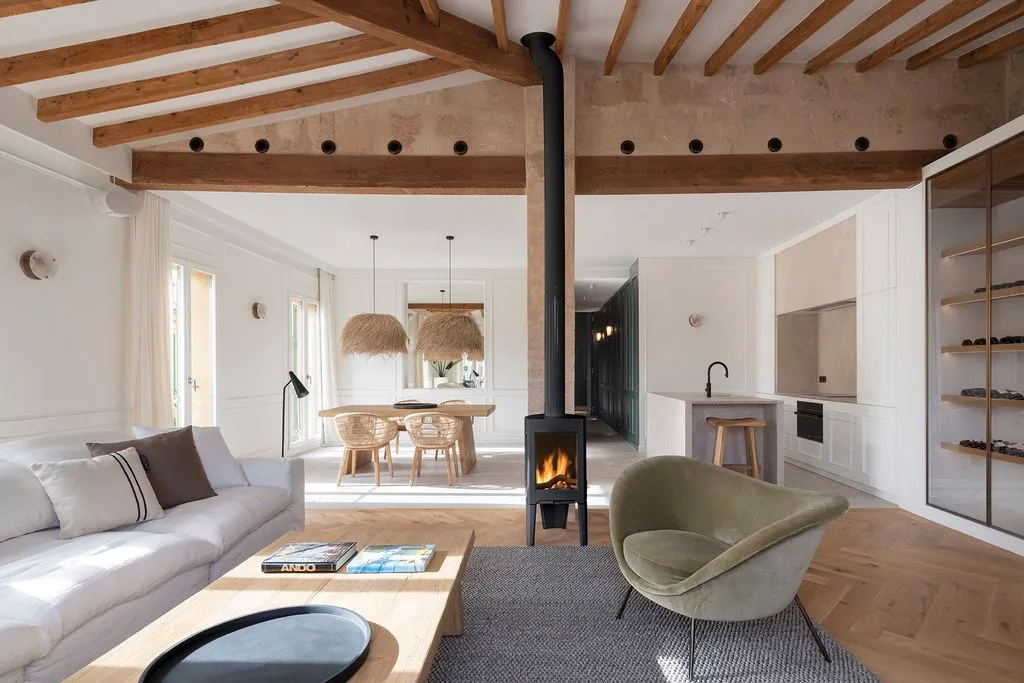
The design, the insulation and the installations - not the tiles. A Spanish architect explains how to plan a home...

Over a thousand rooms, a Velázquez in a small cabinet, and a museum the princess once wanted to close to...

Messi has said goodbye to Argentina's national team, and four addresses tell the story of his life. The one that...
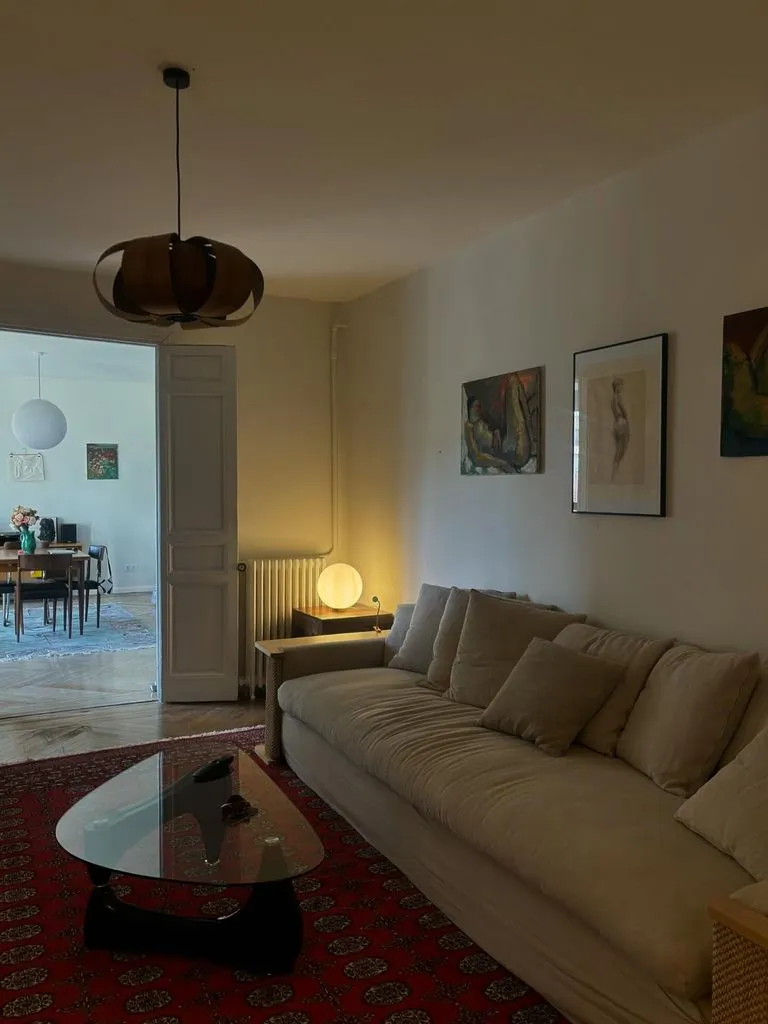
A cream sofa, a red oriental rug and an armchair the cat has taken over: the two Spanish actors' home...
Small, dark rooms in an old Madrid building became one bright space from the living room to the kitchen. The...
This site uses cookies - is that okay? Learn more
Be the first to know when Metla launches something new
Leave your email and we will write when there is a new guide or something new on Metla.


