

A week after the police brutality story, the Interior Ministry has its own version: the passenger took the officer's gun
15.10.2026


15.10.2026

15.10.2026

15.10.2026

15.10.2026

15.10.2026

15.10.2026

15.10.2026

14.10.2026

13.10.2026

15.10.2026

15.10.2026

14.10.2026

15.10.2026

15.10.2026

15.10.2026

15.10.2026

14.10.2026

13.10.2026

15.10.2026

15.10.2026

15.10.2026

15.10.2026

15.10.2026

15.10.2026

15.10.2026

14.10.2026

13.10.2026
13.10.2026

12.10.2026

10.10.2026

23.04.2026

23.04.2026

12.04.2026

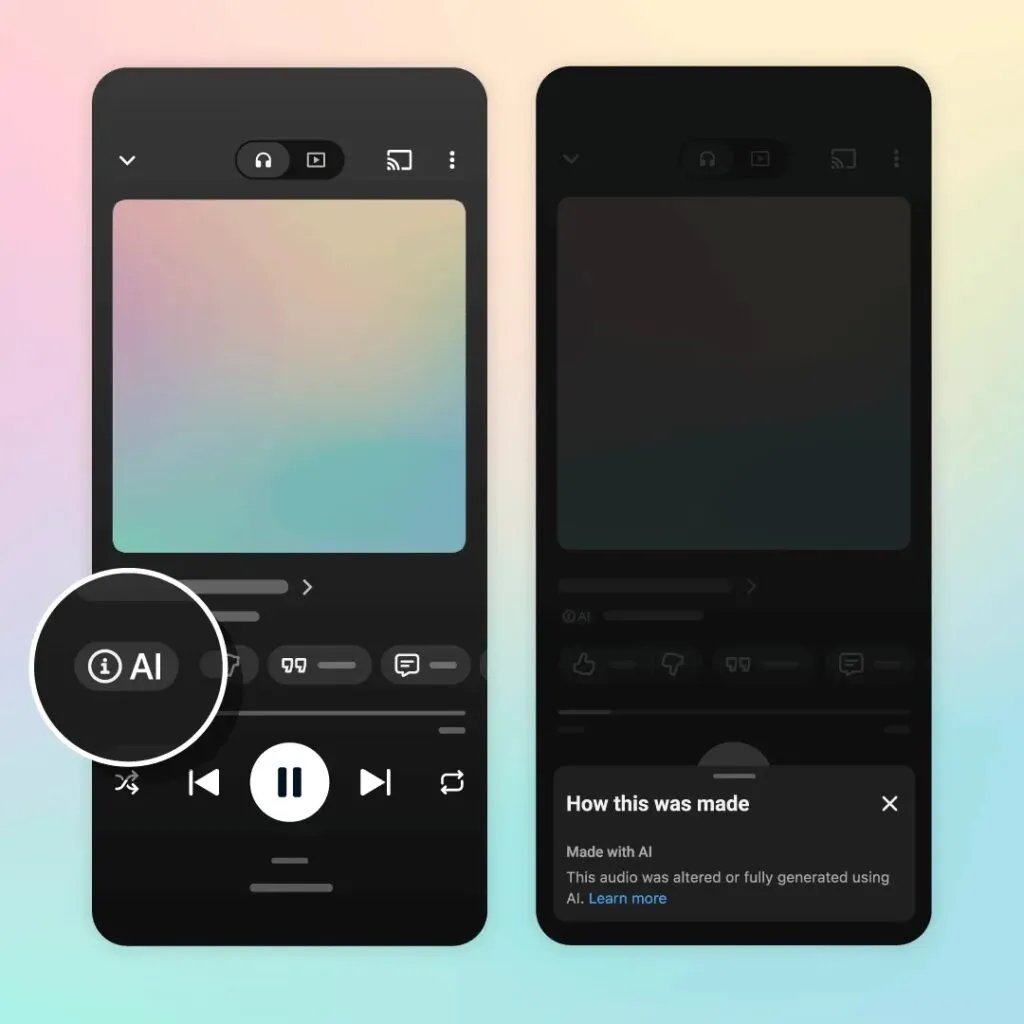
YouTube Music is introducing labels for songs created with generative artificial intelligence. The label sits on the screen where the song is playing, and by tapping it the listener can find out how much the machine was involved - in the composition, in the vocals, or both. The same labels will also come to the main YouTube app.
The system has three levels: "Fully Gen AI", "Partly Gen AI" and "No Gen AI". The label is declared by music partners, and YouTube says it also checks it with its own detection tools. Vocals ironed out with Auto-Tune and similar pitch-correction tools officially count as "No Gen AI". So Auto-Tune doesn't count as a machine - at least not under this classification.
The key detail is what isn't changing: AI involvement on its own doesn't exclude a song from monetisation. YouTube chose disclosure over restriction. The listener gets information, and the platform keeps earning from every play. On top of that, the same company is experimenting with Dream Track - a tool that lets selected creators make music with AI versions of the voices of artists who have agreed to take part. So the platform is labelling goods it is helping to produce.
The competition is stricter. France's Deezer announced in July that it receives almost 90,000 fully generated songs every day. There, detected AI music is labelled and removed from algorithmic recommendations and editorial playlists, and no royalties are paid for fraudulent streams. Deezer is also working on a filter that will let users switch it off entirely. TIDAL already allows that and leaves fully generated recordings out when distributing royalties. Spotify has labels and a music-spam filter, and Apple Music has announced a "Made With AI" label by the end of the year.
Almost 90,000 songs a day on a single platform is no longer a trend, it's a flood. The label tells listeners what they're hearing, but it doesn't stop the algorithm from serving up the next authorless "song". The question is whether anyone will even look at it while scrolling. And one closer to home: how long before the first AI hit in Balkan turbo-folk style racks up millions of views, and nobody asks who is actually singing?
The latest 10 news from this category
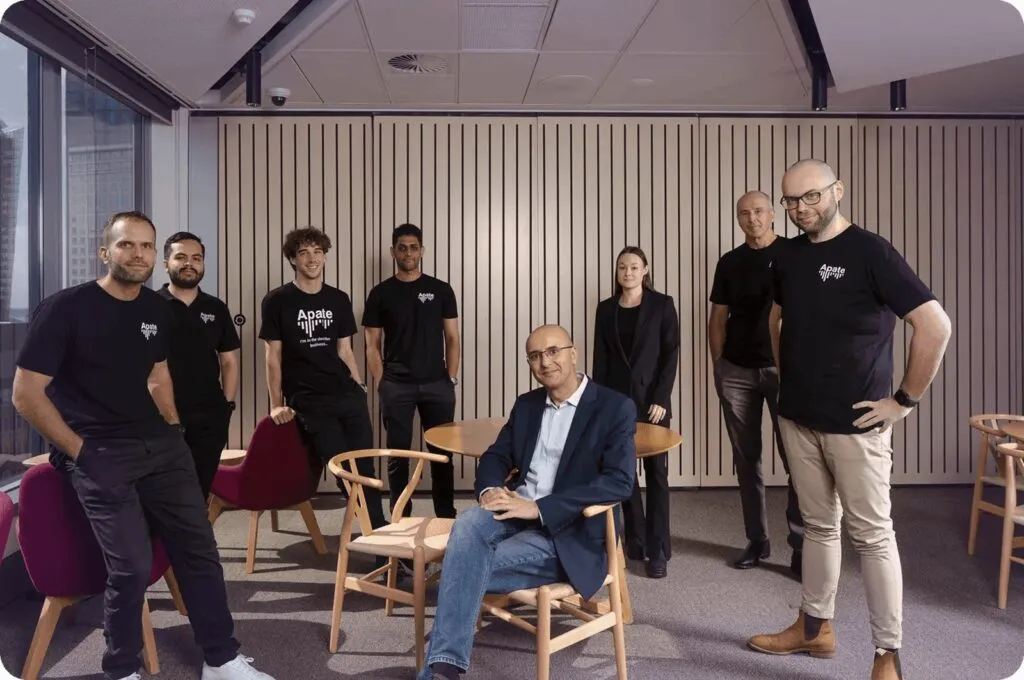
Instead of waiting for the scam to happen, the startup sends its bots straight into the trap. The scammers waste...

A hidden device in a USB port behind a TV, in OpenAI's leadership meeting room. The FBI director talks about...
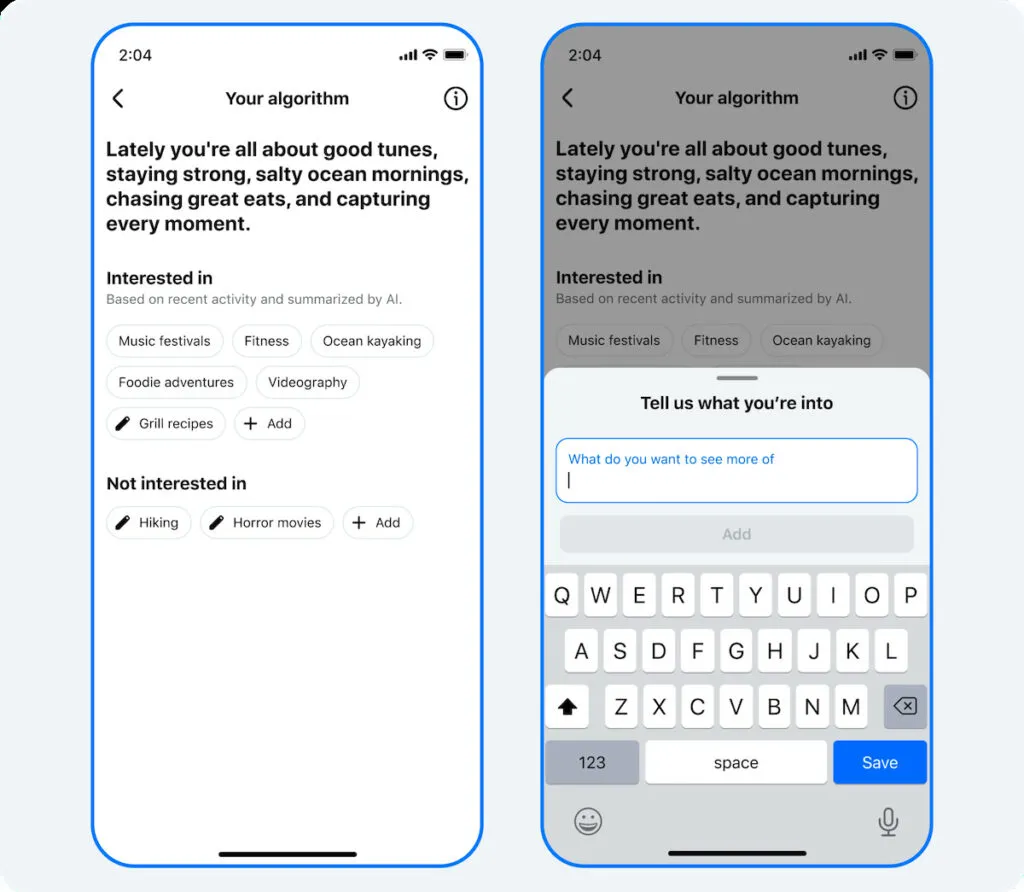
Instead of the algorithm guessing, now you write to it what you want to see. Every such sentence is also...
Problems people worked on for entire careers, solved by a model nobody outside the company has seen. Some are already...

Meta's new models, according to the company's own tests, are on a par with the competition's leading models. But the...

On every continent, a four-hour battery is cheaper than an open-cycle gas turbine. The paradox: gas is being made more...
Musk accuses Ambani of a monopoly, and India's ministry replies that all satellite operators are waiting in the same queue....

The film about Frances Haugen and the "Facebook Files" failed to excite audiences. Several more films casting tech bosses as...
Victims in 42 countries lost 442 billion dollars last year, and scam tools are available from 500 dollars a month....
The startup pulled its app and deleted user data, and less than three weeks later Apple was already filing a...
This site uses cookies - is that okay? Learn more
Be the first to know when Metla launches something new
Leave your email and we will write when there is a new guide or something new on Metla.


