


Fire by the railway in Prilep: residents watched black smoke over textile waste, "Komunalec" says - a small part, no danger
04.10.2026


04.10.2026

04.10.2026

04.10.2026

04.10.2026

04.10.2026

04.10.2026

04.10.2026

03.10.2026

02.10.2026

04.10.2026

04.10.2026

03.10.2026

04.10.2026

04.10.2026

04.10.2026

04.10.2026

03.10.2026

02.10.2026

04.10.2026

04.10.2026

04.10.2026

04.10.2026

04.10.2026
03.10.2026

09.03.2026

27.02.2026

19.02.2026

04.10.2026

03.10.2026

02.10.2026
02.10.2026
22.08.2026

20.08.2026

23.04.2026

23.04.2026

12.04.2026

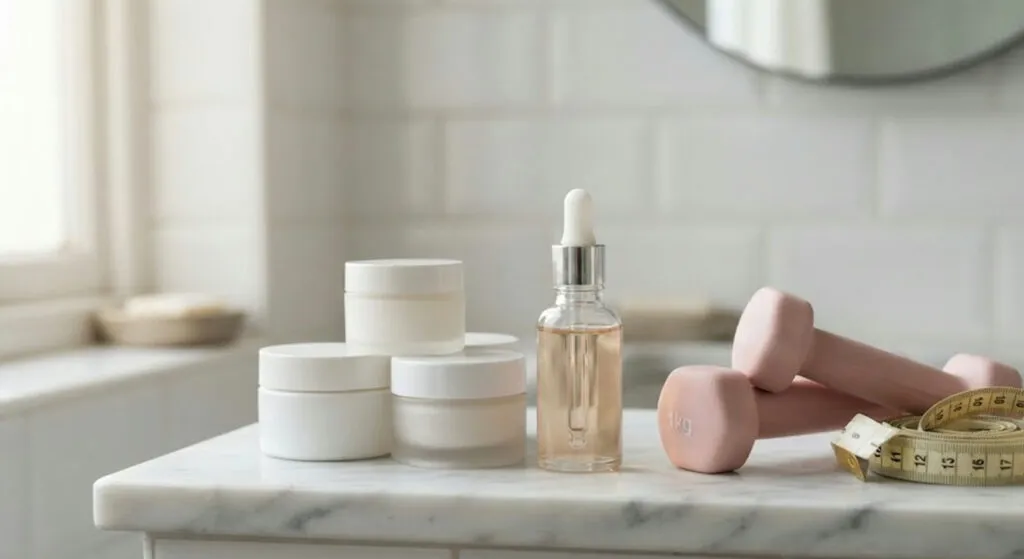
With GLP-1 drugs such as Ozempic, losing weight has become faster than ever for many people. But speed has brought a problem that doesn't show on the scales - it shows in the mirror. Aesthetic doctors are getting more and more questions about loose skin on the belly, arms, thighs and knees.
"The skin may not retract at the same pace at which the body's volume is shrinking," explains Dr Beatriz Beltrán, a specialist in aesthetic medicine, nutrition and anti-ageing medicine. How loose it ends up depends on several things: age, the quality of the skin before the weight loss, how many kilos were lost, how long the excess weight lasted, and how much collagen and elastin the body is able to produce.
In other words, the injection fixes the number on the scales, but the skin has its own pace. How many of those starting treatment know this before the first dose?
To begin with, the doctor recommends cosmetics with a few proven ingredients: retinoids, which stimulate collagen production; peptides for repair; antioxidants such as vitamins C and E, which protect the skin from oxidative stress; and hyaluronic acid and ceramides for hydration. They improve firmness, but they don't work miracles when the sagging is pronounced.
Movement matters just as much. "Strength training reduces the unwanted effects of losing a lot of weight," says trainer Cris Díaz. Preserved muscle mass also lowers the risk of the yo-yo effect - the lost kilos coming back.
When the sagging is pronounced, creams are not enough and professional treatments come into play. Beltrán lists three options: injectable biostimulators, such as poly-L-lactic acid, which push fibroblasts to produce new collagen; monopolar radiofrequency, which generates deep heat and activates skin renewal; and tightening lasers, such as Fotona TightSculpting, which improve skin retraction and firmness.
The point is simple and a little uncomfortable: rapid weight loss doesn't end when the scales show the number you wanted. The skin needs its own time, exercise and, often, extra treatments. It is worth asking before, not after: will the body be able to keep up?
The latest 10 news from this category

A Paris château turned into an arena, leather that drapes and skirts deliberately unbuttoned at the waistband. McCollough and Hernandez's...

King Juan Carlos, Camilla and Eva Herzigová were among the guests, but the wedding in Íllora is remembered for one...

Twenty-two years old, a fresh Vanderbilt degree and a surname that opens every door. Apple Martin debuted at Paris Fashion...

An entire industry lives off dyeing grey hair, and one actress wears hers like jewellery. Extensions made the braid -...

Nobody told this bride she had to suffer at her own wedding. Claudia Osborne skipped the heels - and five...

Frogging, gold buttons and strong shoulders, plus a story about rebellious youth after the French Revolution. The designer Dior fired...
A face that "squeaks" after washing isn't cleaner - it's asking for help. What to look for in the ingredients...

Two industrial designers, almost seven years together between Amsterdam and Barcelona, and an engagement on a Japanese island. Guests in...

The most expensive dress isn't the newest one, it's the one you can no longer buy. Hailey Bieber wore archival...

Ten-step routines are on the way out, and glass skin with them. An aesthetic doctor explains which six ingredients are...
This site uses cookies - is that okay? Learn more
Be the first to know when Metla launches something new
Leave your email and we will write when there is a new guide or something new on Metla.