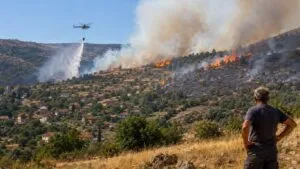
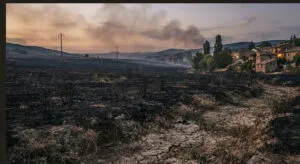
Three planes over Studeničani, crews staying all night: „No danger" is an assessment, not the end of the fire
20.08.2026


20.08.2026

20.08.2026
20.08.2026

20.08.2026

20.08.2026

20.08.2026

20.08.2026

19.08.2026
18.08.2026

20.08.2026

20.08.2026

19.08.2026

20.08.2026

20.08.2026

20.08.2026

20.08.2026

19.08.2026

18.08.2026

20.08.2026

20.08.2026

20.08.2026

20.08.2026

20.08.2026
19.08.2026

09.03.2026

27.02.2026

19.02.2026
20.08.2026

19.08.2026
18.08.2026

23.04.2026

23.04.2026

12.04.2026

Something that has never existed in Macedonia before has begun at the Info Centre of „Pelister\" National Park: genetic monitoring of the brown bear. Rangers and staff have completed training in non-invasive sample collection - droppings, specifically - and in the protocols for labelling, storing and recording them.
It sounds like minor fieldwork. In fact it is the first time anyone has tried to answer a question that has been answered with a guess for decades: how many bears are actually in this country.
The answer so far was „somewhere between\"
The assumption is that Macedonia holds a population of around 160 to 200 individuals, with core areas in the national parks - Pelister, Galičica, Šar Planina, Mavrovo - and on Jakupica. That „around\" is a range of forty bears. When the range is that wide, every decision made on the basis of it is guesswork.
Every bear has a unique genetic signature. Laboratory analysis of the collected material will make it possible to identify individual animals and, for the first time, to obtain an accurate number, sex, age and population structure - instead of a blanket estimate.
Bears do not read border regulations
The second thing the data will show is how bears move between the massifs - from Pelister towards Galičica, Mavrovo, or across the border into Greece and Albania. That means mapping real ecological corridors rather than assumed ones.
This is not an academic detail. If you know where they cross, you also know where an infrastructure project would cut a corridor - before it is built, not ten years afterwards.
The benefit beekeepers actually feel
The most concrete part of the project is the one rarely mentioned when species protection comes up. Knowing the routes, the seasonal habits and the places where bears feed or approach settlements makes it possible to install protective solar electric fences for apiaries and farmers, to manage waste better and to reduce damage to private property.
That is the point where protecting the bear and the interest of the person living next to it stop being opposed. Conflict between people and bears in Macedonia usually ends with damage for one side and a demand for a cull from the other. The fence costs less than either.
The brown bear is a strictly protected species, hunting it is completely banned under the Hunting Act, and it appears on both national and European lists of endangered species.
Who is paying for this
The monitoring is being carried out under the LIFE DinPin Bear project, co-financed by the European Union's LIFE programme, in partnership with the Macedonian Ecological Society and the Ministry of Environment and Physical Planning, with support from the Prespa Ohrid Nature Trust.
The Pelister data will be compared with data from neighbouring countries within the cross-border Dinaric-Pindos network. The activity can only be carried out in summer, and it is led by the park's own staff - the people who are out in the field every day.
For the first time, the number of bears in Macedonia will not be an estimate. It will be a fact.
The latest 10 news from this category

A foreign licence plate is no longer a way out of the system. Day one brought queues, arguments and a...
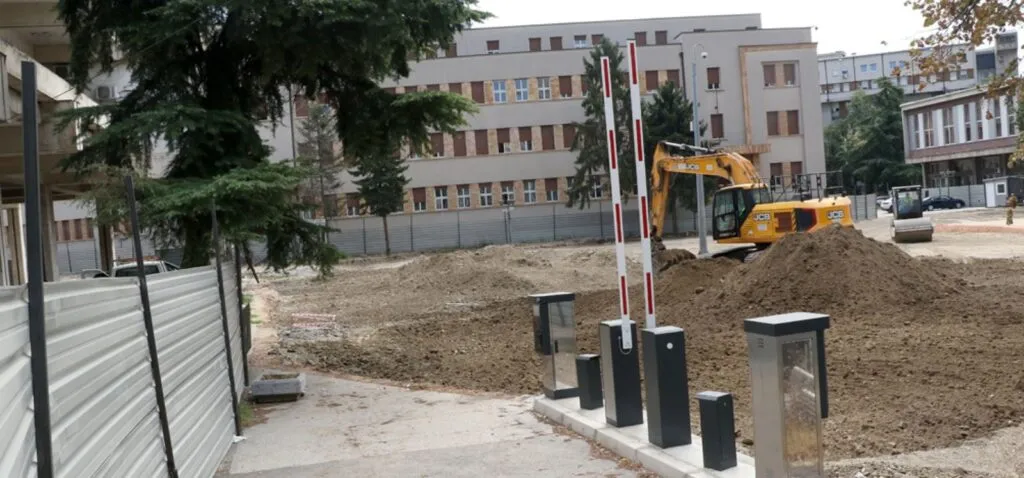
A company bought the land at public auction for 333,000 euros, a law stopped it from building, and now a...

The city transport company is activating „Slovenija" boulevard for the first time and linking Radišani and Butel with Karpoš 3....

The mayor defends dates, the opposition counts victims. A calendar shows something was done - it does not show whether...
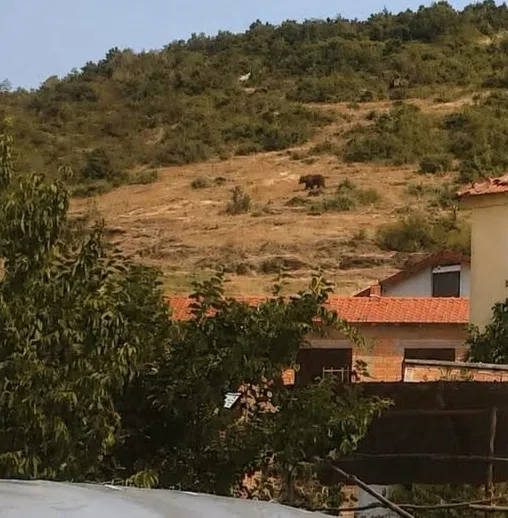
The advice residents got is correct and worth repeating. The problem is that it arrived because somebody remembered to write...
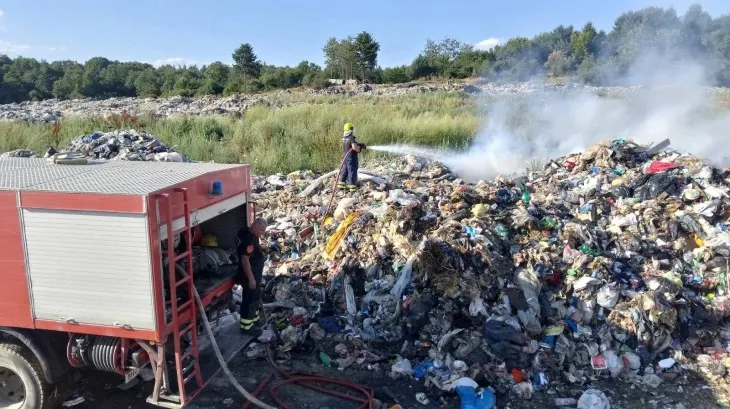
The anti-fire measure was carried out on a serious scale - and the landfill is burning anyway. Arson is not...

Two sentences from the same statement cannot both be true. And the one carrying the consequence is the first-grader, not...
Twelve new cases in seven days, when until yesterday we had fewer than one a week. The figure in Serbia...
The country's largest active fire is being held back by volunteers from three towns, air tractors and local residents. Unexploded...
Twenty sprayings are planned by the end of the season. Effectiveness is not measured in treatments but in cases -...
This site uses cookies - is that okay? Learn more
Be the first to know when Metla launches something new
Leave your email and we will write when there is a new guide or something new on Metla.