

Expert witness at the Puls trial: the change-of-use application had to come from the owner, not the tenant
26.08.2026


26.08.2026

26.08.2026
26.08.2026

26.08.2026

26.08.2026

26.08.2026
26.08.2026

25.08.2026

24.08.2026

26.08.2026

26.08.2026

25.08.2026

26.08.2026

26.08.2026

26.08.2026

26.08.2026

25.08.2026

24.08.2026

26.08.2026

26.08.2026

26.08.2026

26.08.2026

26.08.2026

25.08.2026

09.03.2026

27.02.2026

19.02.2026

26.08.2026

25.08.2026

24.08.2026

23.04.2026

23.04.2026

12.04.2026
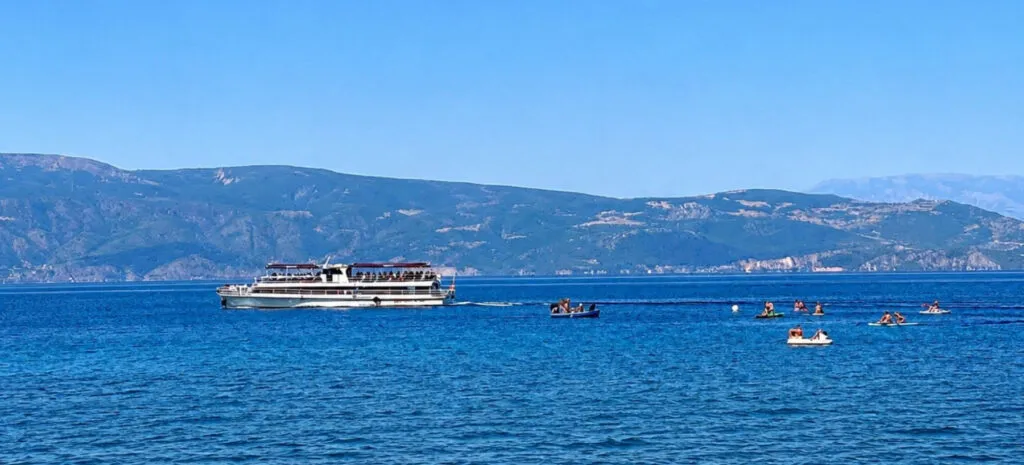
A boat struck a paddleboard at Lagadin beach and threw two swimmers into the water. It happened close to shore, in a zone where the law requires motorised vessels to move at low speed. The harbour authority and the police recorded the case and interviewed those affected and the witnesses, but there is still no official report.
The response came from people, not institutions. Lagadin residents, backed by environmental activists, took paddleboards into the lake and formed a floating blockade. Then they moved onto land and blocked the regional road to Sveti Naum intermittently for half an hour.
"UNESCO, we have a problem"
The banners lay out the whole list of grievances at once. "UNESCO, we have a problem," written in English so the intended reader can read it. "Concrete - death for tourism." "Urbanisation without sewerage." And one that is literally a legal provision: "Law on Inland Navigation, article 13."
When citizens bring an article number to a protest, that means something precise - that the law exists and is not being enforced. They are not asking for a new regulation. They are asking someone to apply the one already there.
Beyond swimmer safety, the protest also targeted construction of the disputed hotel right on the shoreline. With the messages "We demand an anti-corruption investigation into the hotel in Lagadin" and "The hotel in Lagadin - an urban planning crime", demonstrators called on the State Commission for Prevention of Corruption and the prosecution to examine the entire permit process.
Fifty-two offences, nine under the influence
The authorities say they are running intensified checks, and the numbers they publish confirm it - while at the same time explaining why the protest happened. In just one of the recent joint patrols by officers from the Lake Ohrid Border Surveillance Police Station, the Western Regional Border Affairs Centre and harbour authority inspectors, 52 offences were recorded.
Nine of those checked were operating vessels under the influence of alcohol. In a single operation.
The most common offences: sailing with an expired navigation licence, operating without a certificate, not wearing a life jacket, overloading vessels, planing close to shore, sailing without lights at night.
The rules exist and they are perfectly clear
Speedboats and jet skis may only plane once they leave the 300-metre zone from the shore. Until then they must move at low speed. The fine for breaching this is 250 euros, and repeat offences can lead to the jet ski being confiscated.
For pedalos: they may not be rented to unsupervised minors, may not carry more than four people, life vests are mandatory, and they may not go more than 300 metres from shore.
Since 2 June the transport ministry has also banned jet skis on Lake Ohrid, Lake Prespa and Lake Dojran from 1 July to 31 August, between 11am and 7pm. Night-time boating is restricted too.
Thirteen lifeguards for eleven bathing areas
Beach concession holders carry responsibility as well. Under the regulations, every concession holder must provide at least one lifeguard and meet safety standards. At present, 13 lifeguards are engaged across 11 bathing areas.
Thirteen people for eleven beaches, in August, on a lake carrying swimmers, tourists, boats, speedboats, jet skis, pedalos and paddleboards all at once. Formally, the minimum is met. Practically, that is one person per beach with several hundred people in the water.
Beaches are supposed to be marked with buoys defining the swimming zone. At the beach where the incident happened, around twenty speedboats are routinely anchored close to shore.
Where the story stops
So we have a law, we have a 250-euro fine, we have a jet ski ban during the busiest hours, we have a lifeguard requirement, we have buoys and zones. And we still have a boat that ran into a paddleboard beside the shore, and a harbour authority with no official report two days later.
The regulations on Lake Ohrid are not the problem - they are highly detailed. The problem is that between what is prescribed and what you can see from a beach in August there is a gap, and the people filling it are the residents themselves, on boards, in the water, trying to force someone to react.
The latest 10 news from this category
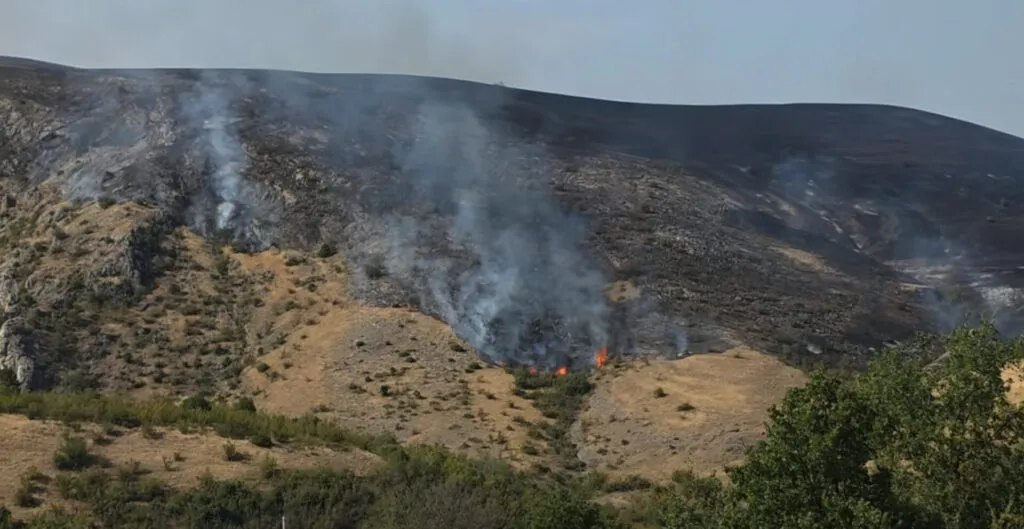
Twenty-three fires in a single day, aircraft redirected from one front to the next. And on Kitka, someone waits for...

Three hundred fewer classes, twenty-six villages without a school. Janevska says they "managed" to do it - but an empty...

The fire is not being put out - it is being buried under soil. And when clearing a dump means...

One suspected case was enough for an entire village to be treated. Spraying is protocol and it has to happen...
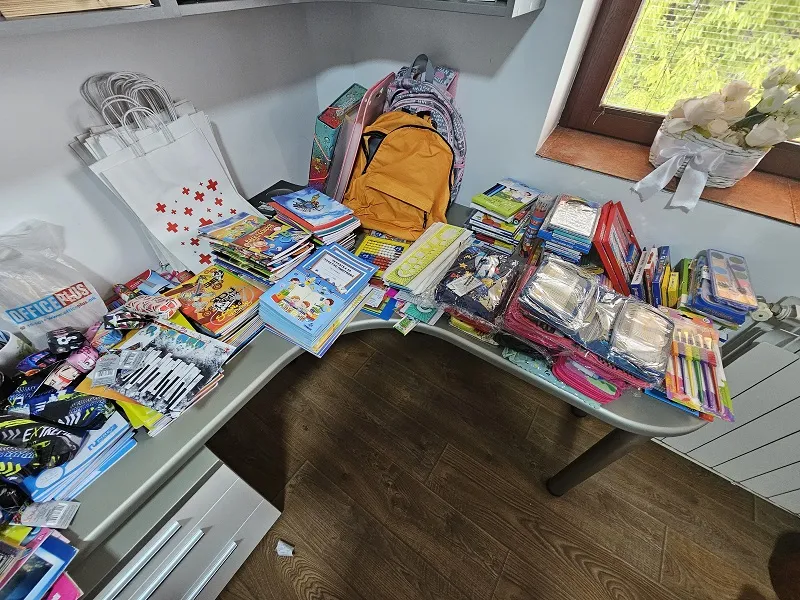
The municipalities are doing more than they have to. The problem is that "free education" means the teaching is not...

A decade ago the town had over 10,000 pupils. This year it has 5,569. The first-grade desk is the most...

The operators stopped after years of funding the service out of their own pockets. The mayor says the debt was...

The administration calls it dispersing power, the opposition calls it party hiring worth 200,000 euros. The real problem is the...

A full year of work - seedlings, planting, picking leaf by leaf - taken by a storm at the most...

Butel municipality announced demolition and criminal charges on Saturday. By Monday there was nothing left to demolish. Illegal builds go...
This site uses cookies - is that okay? Learn more
Be the first to know when Metla launches something new
Leave your email and we will write when there is a new guide or something new on Metla.
