Студеничани: 35-годишник почина откако го удрила струја додека миел автомобил со вап-машина
18.09.2026


18.09.2026
18.09.2026

18.09.2026

18.09.2026

18.09.2026
18.09.2026

18.09.2026

17.09.2026

16.09.2026

18.09.2026

18.09.2026

17.09.2026

18.09.2026

18.09.2026

18.09.2026

18.09.2026

17.09.2026

16.09.2026

18.09.2026

18.09.2026

18.09.2026

18.09.2026

17.09.2026

17.09.2026

09.03.2026

27.02.2026

19.02.2026

23.04.2026

23.04.2026

12.04.2026


The Macedonian public has been witnessing one of the most controversial situations in the higher education system in recent days. Students at the Faculty of Philosophy at Ss. Cyril and Methodius University in Skopje are under intense public pressure and media campaign because they continued to second and third-cycle studies with previously completed professional studies. But did the students do anything illegal, or is the system trying to shift its own responsibility onto them? And more importantly - why does the system, when it cannot take responsibility, strike at the weakest link - the students?
The most important fact in the entire situation is that the students did nothing more than exercise a basic constitutional right - the right to education and advancement of knowledge. Before enrolling in second-cycle studies, they consulted with the administration in charge of second and third-cycle studies, receiving a positive response that they were eligible to enroll. According to Art. 5 of the Rulebook on conditions for enrollment in second-cycle studies, it is clearly established that not only persons who have completed first-cycle academic studies can enroll in academic study programs of the second cycle, but also persons who have completed professional studies, whereby the faculty has the right, if necessary, to prescribe the taking of differential exams in accordance with the study program. The Rulebook provides that university units have the autonomous right to determine the specific enrollment conditions, which are established in the student enrollment competition. Therefore, the enrollment of candidates with completed professional studies in academic study programs of the second cycle does not represent an exception or irregularity, but a possibility provided for by the Rulebook, with the responsibility for determining the conditions and criteria for enrollment lying with the higher education institution itself.
Based on that information, diploma supplements, and ECTS credits, they began their studies. Now the question arises: How is it possible for students to be accused of something that was permitted by the institution itself? The thesis being pushed in public is that students allegedly paid more funds. That is not true. There is evidence that students were properly enrolled, regularly attended classes, took exams, and even failed exams with certain professors. All payments were made in accordance with the regulations. No student paid more than prescribed. Claims are also being circulated that these are children of officials or those close to political parties, but the students in this case are ordinary people - because if they were truly children of influential officials, they certainly would not have been subjected to such public lynching, but would have quietly and without problems completed their master's and doctoral studies.
Students indicate that from October onwards they have been subjected to serious pressure and informal meetings at which the Dean of the Faculty of Philosophy, the Vice-Dean for teaching, the secretary who is also a lawyer, and other persons were present. According to their claims, at those meetings they were told not to bring phones and not to record, no minutes were kept, and students were suggested to withdraw from their studies and take their documents. Students say this atmosphere has been going on for months and that they are under constant psychological pressure and stress. One student testifies that she heard an administrative employee in the hallway saying: "Here's the legal notice now, they can appeal as much as they want."
Meanwhile, students claim that the administration has refused since October to issue them certain documents, and they were informally told this is by order of the Dean, which further worsens the situation and deepens the legal uncertainty they find themselves in. At the same time, students point out that the decision to terminate their studies is contentious and not fully in accordance with the principles of the Law on General Administrative Procedure. According to the LGAP, every administrative decision must be individually reasoned, based on concrete facts and legal grounds, with a clear legal remedy and complete argumentation. In this case, students claim the decisions were generalized and issued with nearly identical content for multiple students without detailed individual analysis.
Pursuant to the concluded contract constituting an obligation relationship regulated by the Law on Obligatory Relations, it was unilaterally terminated by the other contracting party, without mutual agreement of the contracting parties and without a legally effective decision by the competent court - the Basic Civil Court Skopje. This constitutes willful and unlawful termination of the contractual relationship.
Macedonia is part of the Bologna System of higher education. In the European academic system, the principle of 180-240 credits for the first cycle and 60-120 credits for the second cycle applies, meaning a total of at least 300 ECTS credits as a condition for access to doctoral studies. The students in this case have 300 ECTS credits. However, in Macedonia there is an administrative division - level VIIA for academic studies and level VIIB for professional studies - and this division creates serious problems for unregulated professions, where persons with professional studies practically have no clear academic path, even though they have a sufficient number of credits.
In Europe, this is normal practice. In Slovenia, the Higher Education Act and university regulations provide that doctoral studies may be enrolled in by candidates who have completed second-cycle studies or integrated studies with at least 300 ECTS credits, whereby in certain cases additional subjects or differences are provided, but not automatic prohibition of continuation. In Croatia, according to the Science and Higher Education Act and regulations of universities (Zagreb, Split, Rijeka), candidates with a completed master's degree and at least 300 ECTS credits can enroll in doctoral studies, and universities have the option to prescribe additional academic conditions or bridge programs, but not automatic exclusion based on the type of previous studies. In Austria, universities allow access to doctoral studies for candidates with a relevant master's qualification, and if the program is of a professional type (Fachhochschule), the university may require additional academic subjects, but does not exclude the candidate based on the type of previous diploma.
This shows that in European practice, the most important criterion is the academic level and number of ECTS credits, while the type of previous program is usually resolved through additional academic obligations, not through complete restriction of academic progress.
Publicly available bulletins of Ss. Cyril and Methodius University show that such practice has existed for decades. They list biographies of persons who completed professional studies, then master's studies, and later earned doctorates. Such cases exist in bulletins of several faculties, including the Faculty of Law, Faculty of Economics, Faculty of Physical Culture, and others. The estimated number of active and already graduated master's and doctoral students at the University level is three-digit. Particularly well-known is the example from the Faculty of Medicine, where in the past there was a large number of masters in public health with previously completed professional studies. It has never happened that students who were already enrolled with the institution's permission were retroactively punished.
HOW IS IT POSSIBLE FOR THE MINISTER TO SAY SHE IS NOT FAMILIAR WITH THE CASE?
Highly controversial is the statement by the Minister of Education and Science that she is not familiar with the case, even though most of the students already had direct and indirect communication with the Ministry of Education and Science. There are official documents at the request of the students showing that the Ministry had been informed about the case since October of last year. In a document issued by the Ministry of Education and Science signed by Minister Prof. Dr. Vesna Janevska, it is stated that the Ministry reviewed the case and gave an institutional opinion. The same document states that if the higher education institution determines that the conditions in accordance with the National Qualifications Framework Act are met, and the student has reached level VII of the European Qualifications Framework, there is no obstacle to enrollment in the third cycle of studies, i.e., transition to level VIII. The document additionally refers to the Higher Education Act, which states that the student has the right to progress and complete studies under the conditions that applied at the time of enrollment.
In other words, the Ministry itself acknowledges that students have the right to advance in their studies and that enrollment conditions are determined by the university. Accordingly, how is it possible for the Ministry to claim it is not familiar with the case and that earned diplomas will be revoked, when there is an official document signed by the minister herself stating there is no obstacle to transitioning to the third cycle? If there was a systemic problem, then it should have been resolved through amendment of laws, amendment of regulations, or clear criteria - but not through retroactive sanctioning of students, and only at the Faculty of Philosophy, while others enjoy their rights as active master's and doctoral students at other UKIM faculties.
The entire case raises a very serious question about the functioning of institutions. When institutions cannot take responsibility for their own decisions, the system strikes at the weakest link - THE STUDENTS.
CONTRADICTIONS IN THE CONDUCT OF THE STATE EDUCATIONAL INSPECTORATE
In our case, serious questions arise about the conduct of the State Educational Inspectorate. First, in an initial letter at the request of students, the Inspectorate notified the petitioners that after analyzing the submitted documentation, there were no legal grounds for opening an inspection case because the petition did not cite a specific illegal act, decision, or procedure by a higher education institution that would constitute a violation of law. The same document states that questions relating to academic status, enrollment conditions, and continuation of studies fall within the jurisdiction of higher education institutions and the Ministry of Education and Science, in accordance with the Higher Education Act and the principle of university autonomy.
However, just a few weeks later, the same State Educational Inspectorate conducted an extraordinary inspection of the Faculty of Philosophy, after which minutes were drawn up and a decision issued. In the decision, the inspector finds irregularities in the procedure for enrolling students in second and third-cycle studies and orders the Dean of the Faculty to remove the identified irregularities. What additionally raises serious dilemmas is the fact that the initiative for inspection was submitted precisely by the Dean of the Faculty of Philosophy - by the institution that is itself the subject of supervision. How is it possible that the Inspectorate first finds there are no legal grounds for an inspection procedure, and then conducts an extraordinary inspection at the initiative of the institution itself?
There are also other cases in public where questions have been raised about the conduct of the Faculty of Philosophy, such as the case of assistant L.B., for whom students publicly indicated that she held classes and communicated with students about subjects at the faculty, although in the same period she was engaged at another university. In connection with that case, there were also electronic communications (email correspondence) with students as evidence of her participation in the teaching process. This information is easily available and written by a retired educational inspector.
IS THE PROBLEM REALLY ONLY AT THE FACULTY OF PHILOSOPHY OR IS THIS A SELECTIVE APPROACH?
Serious questions are also being raised publicly about the way the Faculty of Philosophy functions and about potential conflicts of interest in its leadership. According to publicly available information, the wife of Dean Bakreski earned her doctorate at the same faculty in 2018 (information available in the UKIM repository), during a period when he was Vice-Dean for teaching, while the family's kum (close friend/godfather figure) was the faculty's dean at the time - why did no one recuse themselves from the function while the candidate was a master's and doctoral student? She was later promoted to the position of head of human resources and teaching where she still performs the same function - precisely in the service where students turn when they have a problem or want to file a complaint.
In such a situation, one question arises: Where are the institutions? Why is it precisely the Faculty of Philosophy that is put under such pressure? It is well known that similar educational paths and academic situations exist at several faculties within UKIM, and even at other universities in Macedonia. Is this a systemic problem in higher education - or a selective approach and some hidden agenda? The higher education system must be based on legal certainty, equality, and institutional accountability. Students must not be victims of systemic failures. When the system cannot deal with its own problems, it strikes at the weakest link - the students.
-Source: Studenti.mk
The latest 10 news from this category

Рич, Попчево, Белотино и Вељуса без вода за пиење по вонреден инспекциски надзор. Двата наода одат заедно, и тоа не...

Балканската дивокоза е строго заштитена со Бернската конвенција. Ловот е легален затоа што Маврово повеќе од 15 години чека закон...
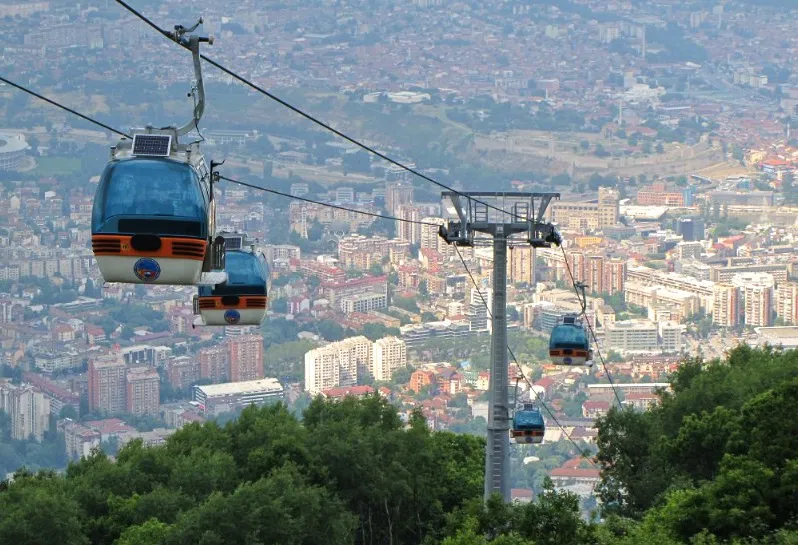
Три од четирите сензори не работеле, сајлите биле оштетени над минимумот. Државна проверка во август лани не најде ништо. Разликата...
Стефковски го воведува ова по Муцунски. Уставот важи за целата држава, а правилото се носи општина по општина — таа...
Ако рокот се искористи целосно, документот стигнува есента 2027 година. Прво наплатено место реално не се очекува во мандатот што...
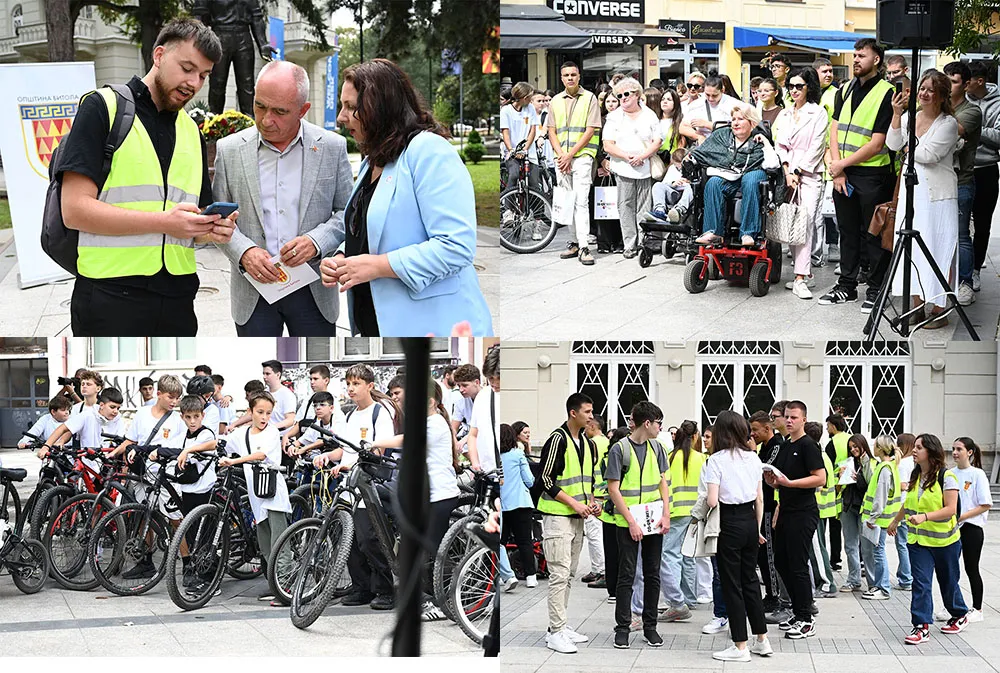
Европската недела на мобилност заврши со податоци со точна локација, а не со анкета. Мапата подоцна ќе покаже колку од...
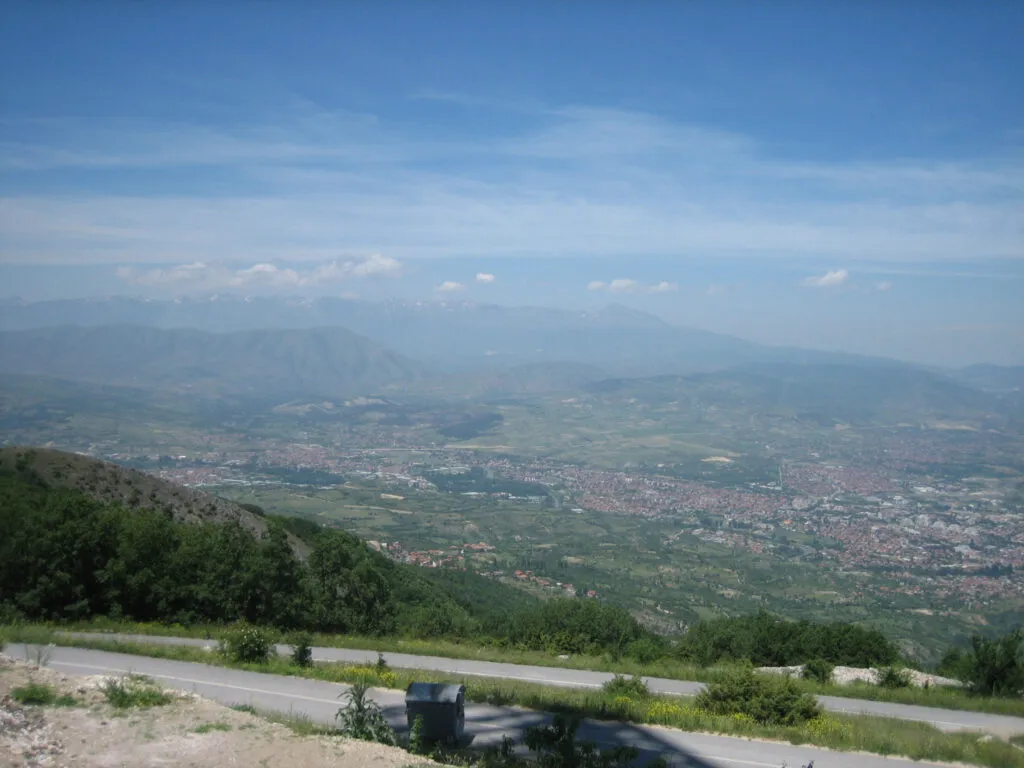
Општината вели една третина помалку градба од стариот план. Во однос на она што денес стои на падината, тоа е...
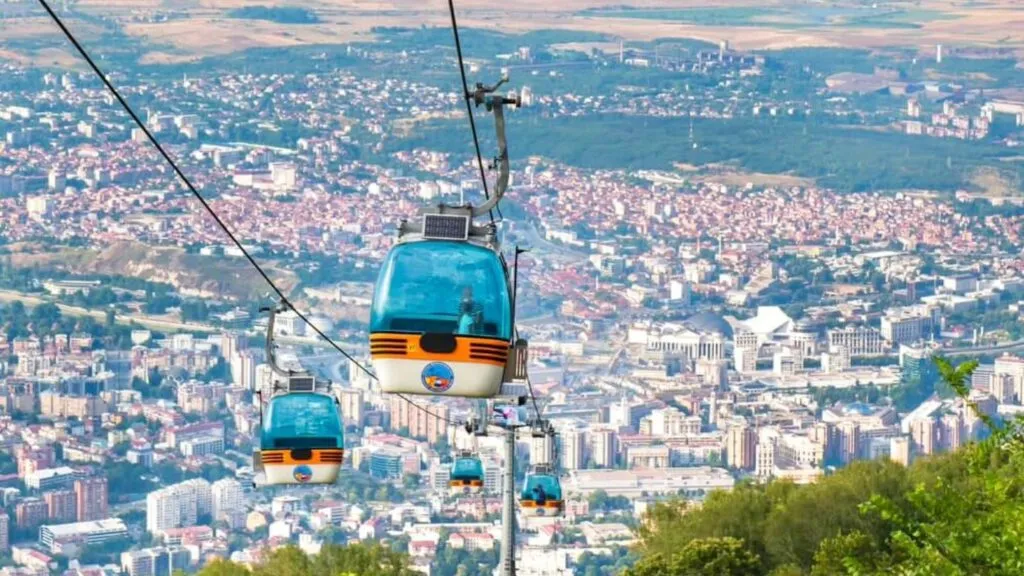
The mayor says the cable car was one step away from tragedy. The manufacturer's report found worn-out parts and dead...
One ticket for both train and bus by the middle of next year, 40 new eco-friendly buses, waits under six...
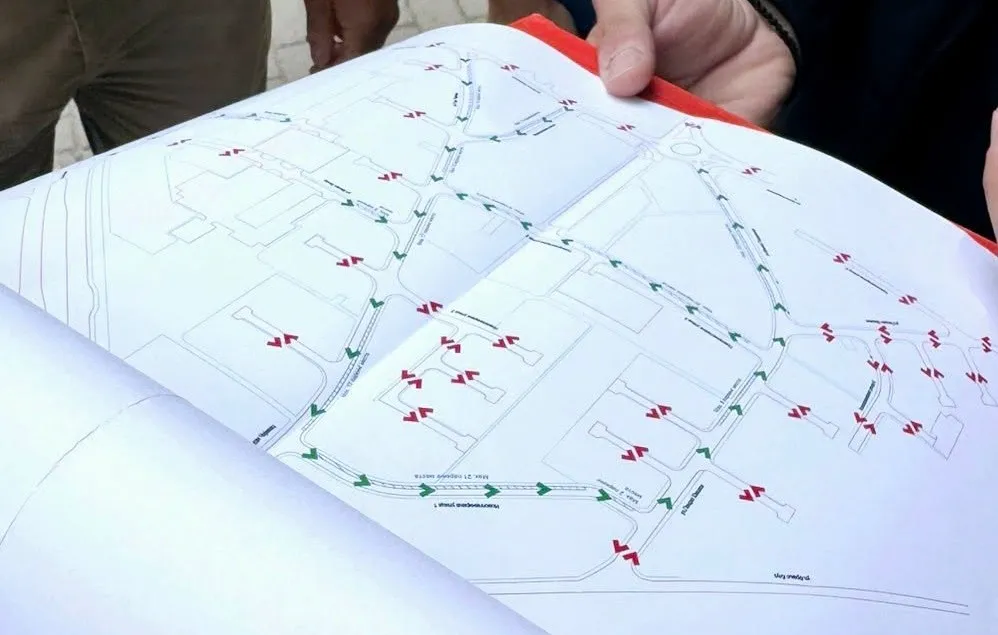
Two streets go one-way, cycle lanes appear and the speed limit drops to 30 km/h. The question nobody answered is...
This site uses cookies - is that okay? Learn more
Be the first to know when Metla launches something new
Leave your email and we will write when there is a new guide or something new on Metla.