A Pole Drove 164 km/h Where the Limit Is 80: The Camera Caught Him, the Border Stopped Him
23.08.2026


23.08.2026
23.08.2026
23.08.2026

23.08.2026
22.08.2026

22.08.2026

23.08.2026

23.08.2026

22.08.2026

23.08.2026

23.08.2026

23.08.2026

23.08.2026

22.08.2026

21.08.2026

23.08.2026

23.08.2026

23.08.2026

23.08.2026

23.08.2026

22.08.2026

09.03.2026

27.02.2026

19.02.2026

23.08.2026
23.08.2026

22.08.2026

23.04.2026

23.04.2026

12.04.2026
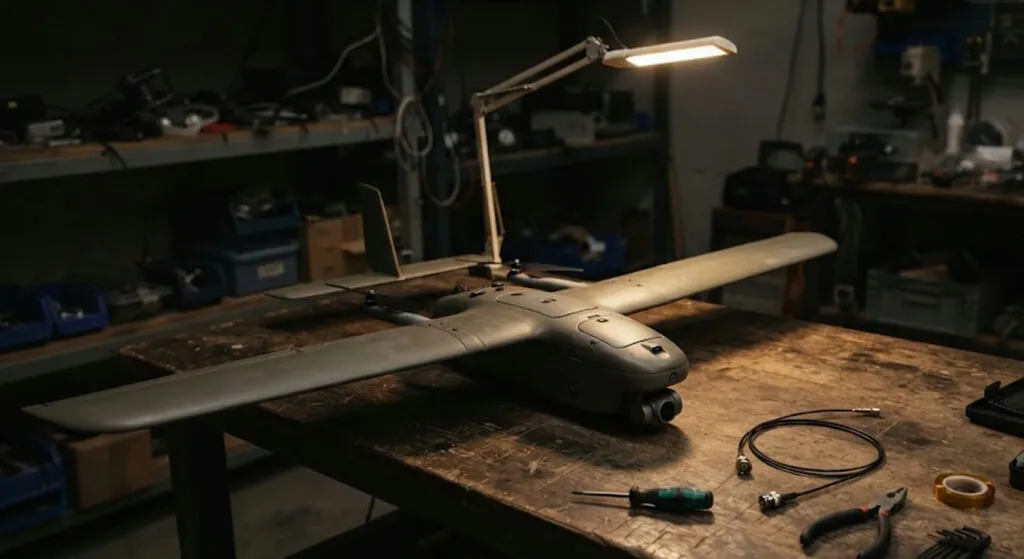
Kyiv requested permission to use drones equipped with Starlink for strikes on Russian territory. Washington said no. According to the Financial Times, citing sources familiar with the situation, US President Donald Trump rejected the request.
The request was specific: Starlink-equipped drones against ballistic missile launchers, up to 200 kilometres inside Russia. Not unlimited, not aimed at cities - aimed at the launchers. The reason behind the request is even more specific: Ukraine is short of interceptors for its air defence.
Why there are not enough missiles
Here the story spreads beyond Ukraine. According to the paper's sources, Volodymyr Zelensky asked Trump and other partners for more ballistic missile interceptors - but their use in the Middle East, including during the US war with Iran, deepened the global shortage of American-made missiles.
Read that sentence again. The stockpiles are not empty because of poor logistics or bureaucracy. They are empty because the same missiles have already been spent on another front. There is a finite number of interceptors in the world, and there are more wars than that number covers - which means somebody is deciding who gets them.
That is why Zelensky proposed to Elon Musk that Ukraine be allowed to use Starlink on long-range drones up to 200 kilometres deep, which would cover ballistic missile launch infrastructure, control systems and other assets. When the state cannot give you enough defensive missiles, you negotiate with a company for permission to use its network - and for operations against another state's military target, at that.
The answer that was not an answer
During his meeting with Zelensky, Trump gave no clear answer. According to those present in the Oval Office, he did not back the plan. It was not refused in a document, nor announced officially - it simply was not supported, and in diplomacy that is quite enough.
The technical logic behind the Ukrainian request is not in dispute. Starlink-equipped drones use SpaceX's satellite network for a more stable link with operators at greater distances than conventional radio channels allow, and they are less vulnerable to standard signal jamming. Such drones have already proved effective on the battlefield in Ukraine, and analysts assess that beyond the Ukrainian border they could be used to hunt Russian missile launch systems.
So the question is not whether the technology works. The question is who grants permission - and that is where this story becomes more interesting than one more dispatch from the front. A state's defensive capacity in wartime depends on another state's decision, and its communications capacity on the decision of one man who owns a satellite network. That is the new architecture of power, and it is written into no treaty.
Is anyone in the Balkans seriously thinking about what it means if tomorrow a country's defence depends on whether a private company approves access to its own network?
The latest 10 news from this category
Zelensky said Russia attacked a crossing on the Moldovan border with drones. Three days earlier something had already exploded on...
A night missile strike on Kyiv and the surrounding region, warehouses and plants hit. The heaviest accusation did not come...
The general tied to a harsher phase of the war is back in play, and an American colonel claims Odesa...
The front line is not moving, the negotiating table is empty, so what remains is striking deeper into the other...

Over 30,000 killed and wounded a month, a thousand new soldiers a day - and they only plug the holes....
Before the war it had almost 60 gigawatts. Today it has twelve. And if the strikes continue at the same...

A former defence minister said the number out loud. When a state spends resources finding the people it already mobilised,...
Drones and ballistic missiles on four residential districts of a European capital. The Balkans know this scene by heart -...
A refinery producing five percent of Russian refining capacity and a 173,000-square-metre logistics hub in flames. Above it all, transponder...

A Russian strike hit a drone exhibition near Kyiv. Moscow claims it hit a legitimate military target, Ukraine counts ten...
This site uses cookies - is that okay? Learn more
Be the first to know when Metla launches something new
Leave your email and we will write when there is a new guide or something new on Metla.