
"Crime as a service" with call centres in Macedonia too: over 4 million euros in damage, victims in 50 countries
04.11.2026


04.11.2026

04.11.2026

04.11.2026

04.11.2026

04.11.2026

04.11.2026

04.11.2026

03.11.2026
03.11.2026

04.11.2026

04.11.2026

03.11.2026

04.11.2026

04.11.2026

04.11.2026

04.11.2026

03.11.2026

02.11.2026

04.11.2026

04.11.2026

04.11.2026

04.11.2026

04.11.2026

03.11.2026
04.11.2026

03.11.2026

02.11.2026

23.04.2026

23.04.2026

12.04.2026

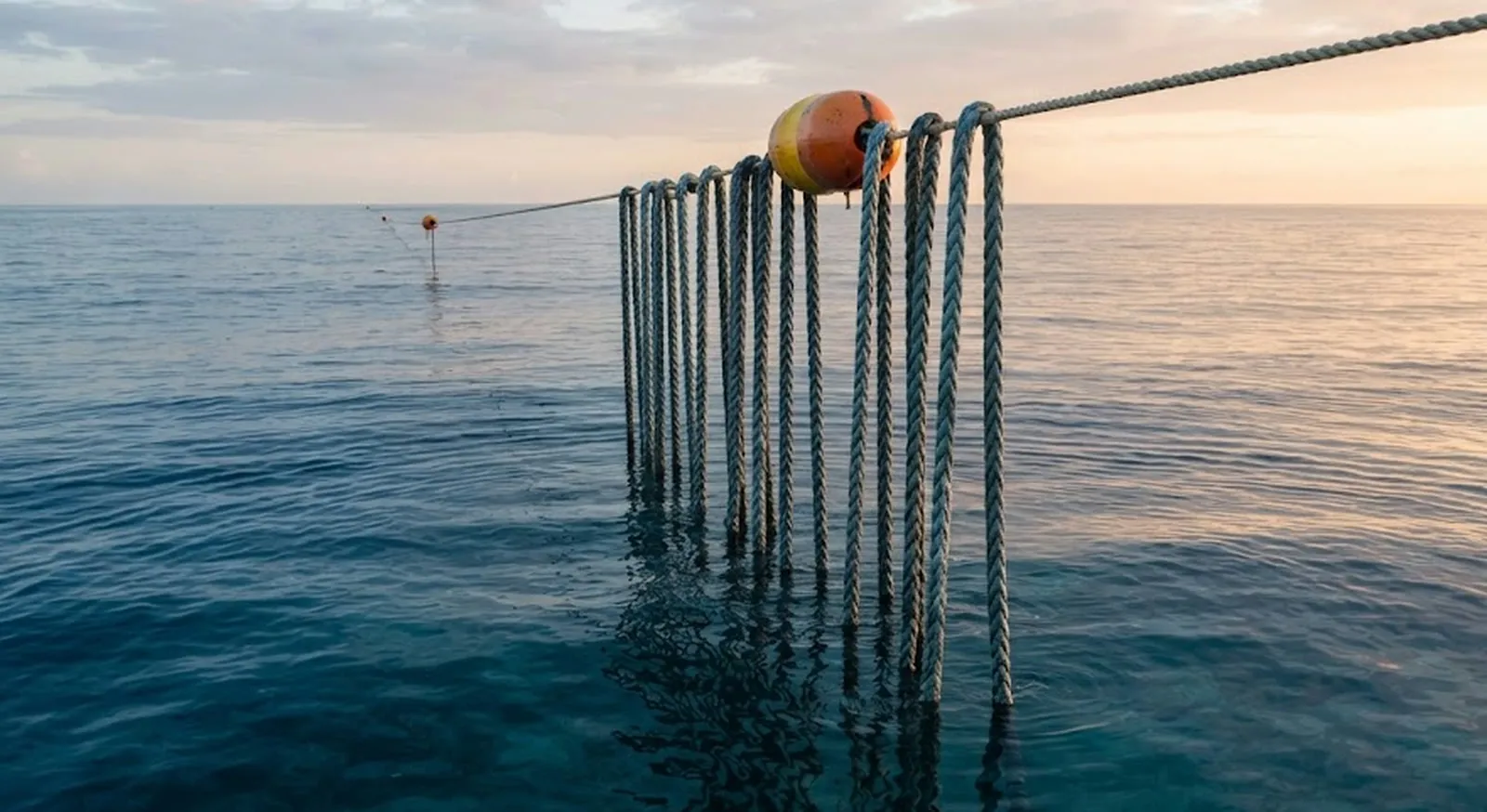
The world's oceans hold over 4 billion tonnes of uranium, dissolved in the water - enough for around 50,000 years of nuclear plant operation. "That is about a thousand times more than all identified hard-rock mines put together", says Jeff Green, founder and director of the startup Fluxnium. The quantity was never the problem. The problem was the cost of extraction.
Fluxnium claims to have solved that problem. The firm worked in stealth while developing the technology, licensed from the national laboratories of the US Department of Energy, and recently closed a seed round of 7 million dollars (around 6.4 million euros) led by Congruent Ventures, with participation from Active Impact Investments and Constellation Energy - the operator of the largest nuclear fleet in the US. Seven million is a small figure for an industry measured in billions, which says something: this is an attempt, not a victory.
How it works. Specially made polymer fibres attract the uranium dissolved in seawater. The fibres are braided into long ropes, taken out to open sea and attached to buoys - literally the way seaweed is farmed. After 30 to 60 days in the water they come back to land, the uranium is extracted leaving no toxic tailings behind, and each rope can be used several times. At the end it is refined into yellowcake and enters the supply chain like uranium from any mine.
The key was in the surface area of the fibres. When the technology was demonstrated at the national laboratory, uranium came out at over 200 dollars a pound - more than double what Western suppliers charge today. By increasing the surface area the firm extracts more uranium from the same volume of water, and the price falls. "Not a single component of this process is new. All of it has been done in different ways", Green says. "Our job is to drive the cost out of the chain."
And now the part that is not technical. Green says out loud what European governments say only behind closed doors: "If you are in the West, two thirds to three quarters of the world's uranium supply comes from Kazakhstan, Uzbekistan, Russia, Namibia, Niger, China. There is geopolitical risk there." The price of yellowcake is up 75 percent over the last five years, according to the US Energy Information Administration. The US plans to triple the capacity of its nuclear plants by 2050 - and has no significant reserves of its own.
The list of countries in the paragraph above is worth reading twice. That is not a list of mines - it is a list of levers. Europe has already learned once what it means to depend on a single supplier for a single energy commodity, and that lesson was not cheap. Now the same arithmetic is repeating with uranium, except this time it involves a fuel whose supply chain is even more concentrated than gas. When Green says we are "structurally short of uranium" if demand moves the way it is projected to, he is talking about a market - but the sentence holds as geopolitics too.
Will fibres hanging from buoys in the open sea really compete with a mine in Kazakhstan? That is not yet proven - the firm has seven million dollars and a technology coming out of a laboratory, which is the first step, not the last. But the nuclear industry in the US is experiencing a renaissance precisely because technology companies are looking for electricity for their artificial intelligence data centres. The demand is real and it is already here. The only question is who will be holding the valve when things get genuinely tight.
The latest 10 news from this category

Three Stanford classmates are selling the idea that AI can build up experience like an employee. Nvidia is both investor...

It had an independent privacy audit and money from Khosla Ventures, but not the capital for the race with Muse...

The National Bank says the license pulled in Belgrade doesn't automatically mean anything for Bitola. Legally, that's true. But the...
Profit is slightly down on last year but above plan. The biggest interest growth comes from the state, and fees...
The model learned from building permits across America and promises buildings that stand. What remains is the question everyone in...

A firm of 1,200 lawyers is preparing to vote on its own shutdown, and a startup that only came out...
Изградбата на автопатот Кичево – Охрид започна во февруари 2014 година, а по 12 години и 8 месеци, проектот сè...

Restaurant delivery and grocery delivery end up in the same hands. There's a year and a half until the deal...
The four-year-old firm rejected a takeover bid because it didn't top its valuation, then raised fresh money. The bet is...
Former Amazon executives raised $2.1 billion for factories, not chatbots. They call deindustrialisation a security risk - the Balkans know...
This site uses cookies - is that okay? Learn more
Be the first to know when Metla launches something new
Leave your email and we'll write to you when there's a new guide or something new on Metla.