
„Тоа не е моја работа“: судењето за 13-те полицајци од Пулс почна одново, а сведоците раскажуваат за одбиена помош
22.09.2026


22.09.2026

22.09.2026

22.09.2026

22.09.2026

22.09.2026

22.09.2026

22.09.2026

21.09.2026

20.09.2026

22.09.2026

22.09.2026

21.09.2026

22.09.2026

22.09.2026

22.09.2026

22.09.2026

21.09.2026

20.09.2026

22.09.2026

22.09.2026

22.09.2026

22.09.2026

22.09.2026

22.09.2026

09.03.2026

27.02.2026

19.02.2026

21.09.2026

21.09.2026

20.09.2026

23.04.2026

23.04.2026

12.04.2026

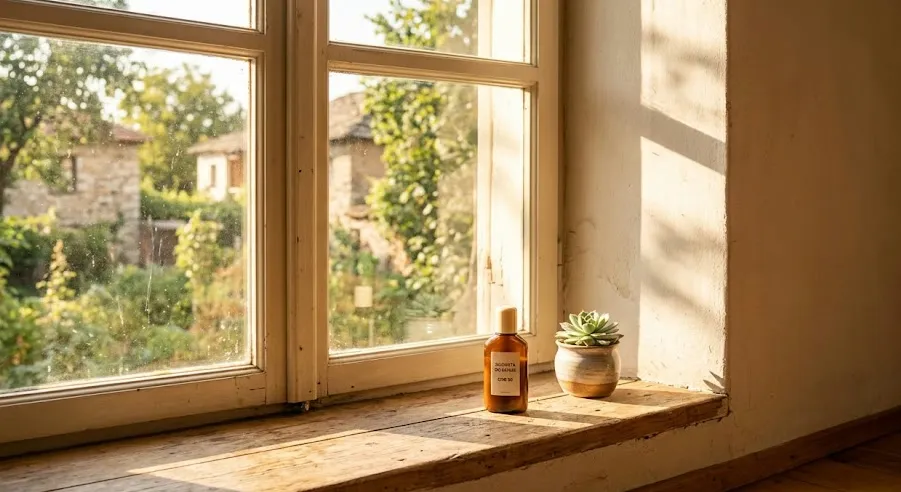
You sit by a window, the sun outside, you're in the shade and you think your skin is safe. It isn't. Glass protects you from only half the problem - and the less important half at that. Dermatologist Dr. Carlos Morales Raya explains why hours spent behind glass, in a car or by a big window, quietly age the skin without you ever burning.
The issue is the two kinds of ultraviolet radiation. UVB rays - the ones that cause burns and help produce vitamin D - are almost entirely blocked by glass. That's why behind a window there's neither redness nor vitamin D. But UVA rays pass through glass without trouble and reach the skin even indoors. "UVA rays pass through glass much more easily and reach the skin even inside," says Morales Raya.
And UVA is exactly the culprit behind aging. It breaks down collagen and elastin, increases oxidative stress in cells and causes pigment spots. The result over years: wrinkles, sagging, spots and accelerated aging - often stronger on one side of the face, the one closer to the window.
The most famous example is the case of a truck driver whose face was exposed to the sun through the side window on one side only for years - the difference between the two halves of his face is so drastic that it's used in textbooks. One half looks twenty years older than the other. That's not a burn, it's quiet damage piled up over hours.
The dermatologist's conclusion is simple: people who spend hours driving or working by big windows should use protection there too, not just at the beach. Especially those prone to spots and pigmentation. Sunscreen isn't only for summer and the sand - it's for everywhere daylight reaches, including the other side of the glass behind which you think you're safe.
The latest 10 news from this category

Кај нас половина гардероба се купува со пресметка колку години ќе издржи. Кожната во кафеава боја ќе изгледа исто и...

Деценија во која естетската медицина продаваше трансформација завршува со реченица: сакаат да изгледаат подобро, но не поинаку.

Кетерингот го водеше вујкото, музиката ја свиреше вујкото. Ако тоа ви звучи познато, значи сте биле на најмалку една ваква...

Three days in a lab coat with colorimetry scientists to produce a collection in lime and tangerine. The design director...

Cream concealer instead of powder, a brown pencil instead of black eyeliner, and a curler before the mascara. Not one...

A boat-neck gown and wildflowers that deliberately refuse to compete with the jewellery. A fourth generation under the same diadem,...

A communications expert says the trouser suit sidesteps sexist readings of hemlines and necklines. The same expert warns that the...

Dermatologists explain why the shedding arrives with a two to three month delay and why iron and vitamins do not...

Silk bambula muslin, a hand-draped waist and a veil of crystal organza. The wedding was held in Cadiz, where the...

An industry that spent decades selling a flawless illusion is suddenly showing the shoot itself. That is not candour -...
This site uses cookies - is that okay? Learn more
Be the first to know when Metla launches something new
Leave your email and we will write when there is a new guide or something new on Metla.