Five Fire Fronts in One Night Near Raec: The Mayor Sounds the Alarm on Facebook, Prevention Is Once Again a Topic for September
03.08.2026


03.08.2026

03.08.2026

03.08.2026

03.08.2026

03.08.2026

03.08.2026
03.08.2026
02.08.2026
02.08.2026
03.08.2026

03.08.2026

02.08.2026

03.08.2026
02.08.2026
01.08.2026

03.08.2026

03.08.2026

03.08.2026

03.08.2026
03.08.2026

03.08.2026

09.03.2026

27.02.2026

19.02.2026
03.08.2026
03.08.2026
03.08.2026

23.04.2026

23.04.2026

12.04.2026
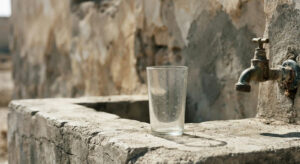
Pumps were feeding water from an open canal straight into the town's mains. Not for a day - for twenty-two days. The result: 4,303 people ill and a town drinking from bottles. Tests found 2,419.6 coliform bacteria per 100 millilitres against a permitted 50 - and according to the investigation, those pumps were installed deliberately. They did not simply fail. The head of the municipal utility is in custody, her replacement was appointed for a two-month term, and at the end of July the water still was not drinkable. What tells you the most is the sequence: first the patients, then the analyses, only then the word epidemic. The institutions did not react slowly. They reacted in order - and the order was wrong.
The storm hit Skopje and Štip with a force meteorologists called rare. A rare event is not a defence for infrastructure nobody maintains, and July proved that more precisely than any report could. In Karpoš, the roof came down three days after a court ruled the contractor had done the work properly - the residents lost the case, paid the costs, and then the thing they had warned about fell on them. In Štip the wind tore the roof off the hospital and patients were moved out of orthopaedics. Ten days later the roof was still gaping above intensive care, and the response was project documentation and waiting on the insurer. The compensation says it best: a 30-day deadline in Karpoš, two months in Centar - and among the requirements, a police report from a force that spent that day at dozens of locations. Same wind, same city, different paperwork.
Tanja Mileva scored 197 points, the highest rating among the judges. The Judicial Council voted nine to two for the other candidate. If the evaluation is not decisive, what exactly is it for? That same week parliament elected a constitutional judge with 64 votes, even though her CV has the bar exam passed seven months before she graduated and her traineeship two years before university. The Judicial Council called it a technical error, already corrected - just not in the copy MPs voted on. And third: a three-judge panel returned the passport of a man charged over a 1.7 million euro tender, and three days later the panel's president stopped being a judge. Three separate procedures, not one of them irregular.
First the draft decision on the In Danger list, then the mutual blame between national government and the municipality, then the number that tells the whole story: 4,847 illegal buildings and 456 demolition orders, not one of them carried out. UNESCO ultimately did not blacklist the lake. It granted another five years. And while the argument ran, the Institute of Public Health filed the same report it has filed for years - the beaches pass, and beneath the surface sit septic tanks and pesticides. The decision the country waited on all July was never about the lake. It was about how long this can keep being postponed.
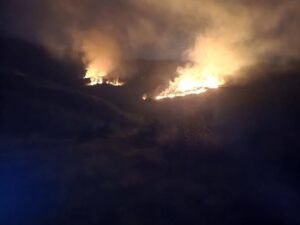
Twelve fires in a single day, from Mogila to Gevgelija. Near Prilep the fire burned for twenty hours and the Treskavec monastery survived only thanks to a firebreak - on a site everyone knows burns every summer. Near Veles smoke swallowed the motorway, and the response was two aircraft, six firefighters and villagers with shovels. The agency simultaneously announced the danger was reduced and requested police for the motorway. This is not a question about clouds or temperature - the Spanish summer showed what it means when firefighting helicopters sit grounded while the country burns. Same hills every summer, same improvisation every summer.
The average wage reached 49,544 denars - but IT sits above 90,000, hospitality below 37,000, and the minimum wage is half the average. "Average" is a number very few people actually live. In the same month diesel hit 98.50 denars, meaning a full 50-litre tank takes 9.4 percent of the average wage here against 5.0 percent in Croatia. Same car, same job, a journey roughly half as long. Meanwhile the state borrowed from three of its own companies to pay an instalment to a Chinese bank and called it standard procedure. And in Ilinden, BMZ closed its plant and moved to Poland - less than two years after a ribbon was cut on a 65 million euro investment.
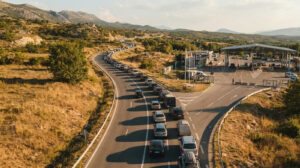
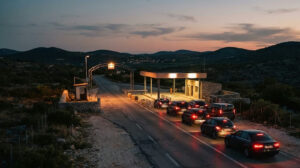
We spent July waiting. More than 22,000 travellers crossed at Bogorodica and Dojran in a single day, with queues forming before dawn. The revealing part is the gap in the numbers: drivers reported four hours, the official estimate said thirty minutes. When the state and the traveller measure differently, the traveller stops asking the state. Which is why Metla's Greece guide - with live cameras from Bogorodica, Medžitlija and Star Dojran - was the most-read page on this site for the whole of July, ahead of any news story. Not because it is cleverly built, but because the question "how long is the wait right now" had nowhere else to be answered.
65,280 euros, 29,840 francs and 161,500 denars found in people's homes. A student transferred money to a professor over Viber, the professor leaned on the head of the examination board, and the certificate was issued. Not refused, not delayed - issued. The question is not whether there will be an indictment. The question is how many such certificates are already in circulation, and who will end up in the chair in front of one. That same week the "Skopje 2028" law was withdrawn without explanation after the anti-corruption commission flagged high risk on 21 million euros sitting outside public procurement. The only announcement was that it will be revised.
July opened with Kisela Voda underwater after a single downpour. Rain is not a disaster. A disaster is a network that cannot handle a few hours of it. Then Bitola, where one hour of rain flooded homes on nine streets and the same street caved in twice in three weeks. Experts point to systemic failures in planning. In the same period, a four-million-denar tender was earmarked for catering services. Rescue after the flood photographs better than the quiet work that would have prevented it - which is exactly why July kept repeating itself.
In mid-July snow whitened Pelister, Musala and Bjelasica while thermometers below refused to drop under thirty. Near Resen a bear attacked a mushroom picker - another summer, another man in hospital, and a question that goes unanswered every year: the state protects the bear, but who protects the person who happens to be in its path. And near the end of the month forty riders set off for Kruševo, 200 kilometres to Mečkin Kamen, people from the Strumica, Gostivar and Radoviš regions. Ilinden is the holiday most talked about and least agreed upon. These people did not ask for a microphone. They just rode.
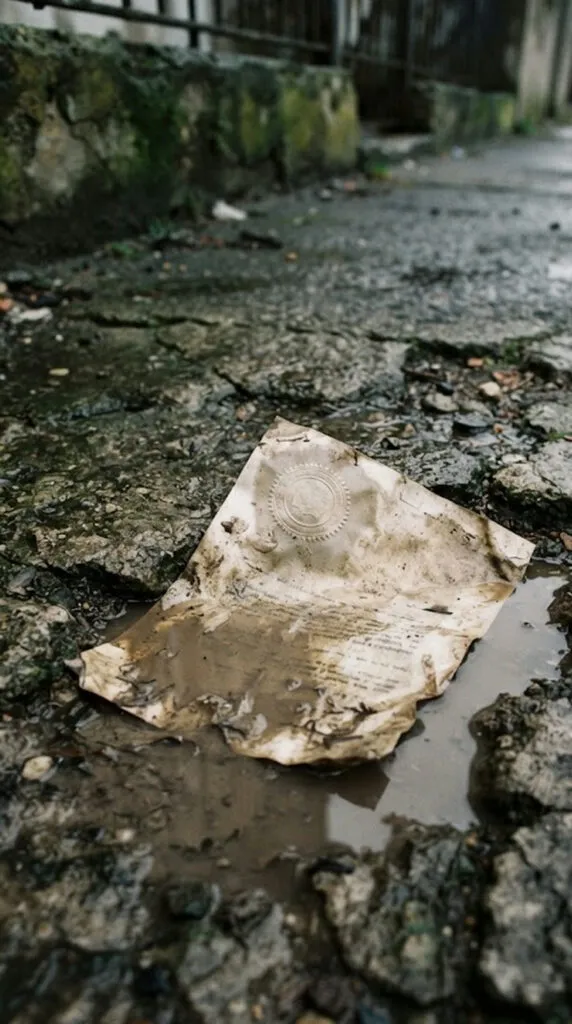
What these stories share is not misfortune, or bad weather, or a bad month. Every one of them has a document, a signature, a deadline and a procedure behind it. The pumps were installed. The vote was held. The demolition orders were written. The certificate was issued. When all of that is in order and the town still drinks sewage and the roof still falls over intensive care, then the procedure did not fail. It worked exactly as it was built to. That is the harder news than any collapsed roof.
The latest 1 news from this category
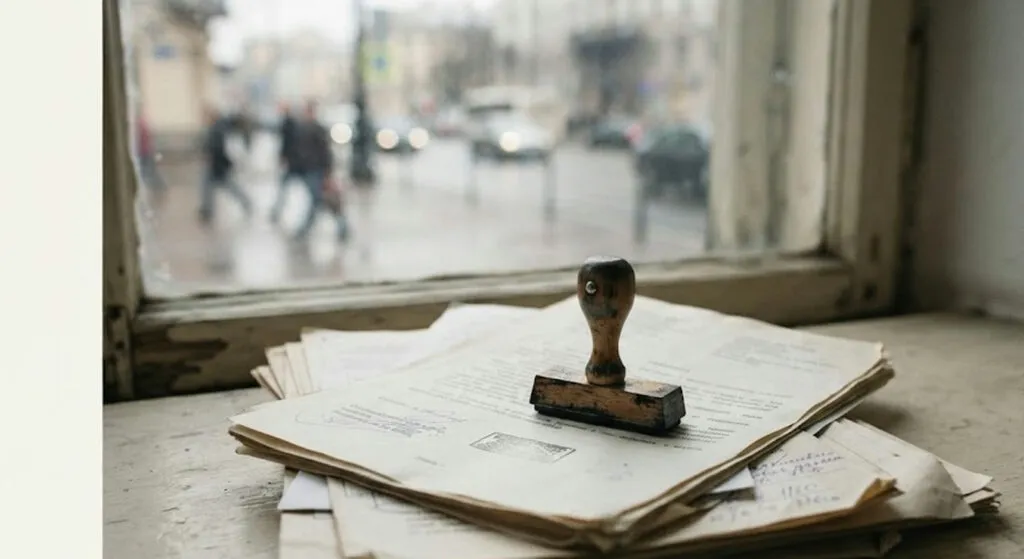
A month in which nearly every domestic story ended with the same sentence - "it's all by the book" -...
This site uses cookies - is that okay? Learn more
Be the first to know when Metla launches something new
Leave your email and we will write when there is a new guide or something new on Metla.