A New Criminal Complaint Against Jakimovski: A Building Permit Based on a Plan Struck Down Back in 2018
16.09.2026


16.09.2026
16.09.2026

16.09.2026

16.09.2026
16.09.2026

16.09.2026

16.09.2026

15.09.2026

14.09.2026

16.09.2026

16.09.2026

15.09.2026

16.09.2026

15.09.2026

14.09.2026

16.09.2026

16.09.2026

16.09.2026

16.09.2026

15.09.2026
15.09.2026

09.03.2026

27.02.2026

19.02.2026

16.09.2026

15.09.2026

14.09.2026

23.04.2026

23.04.2026

12.04.2026

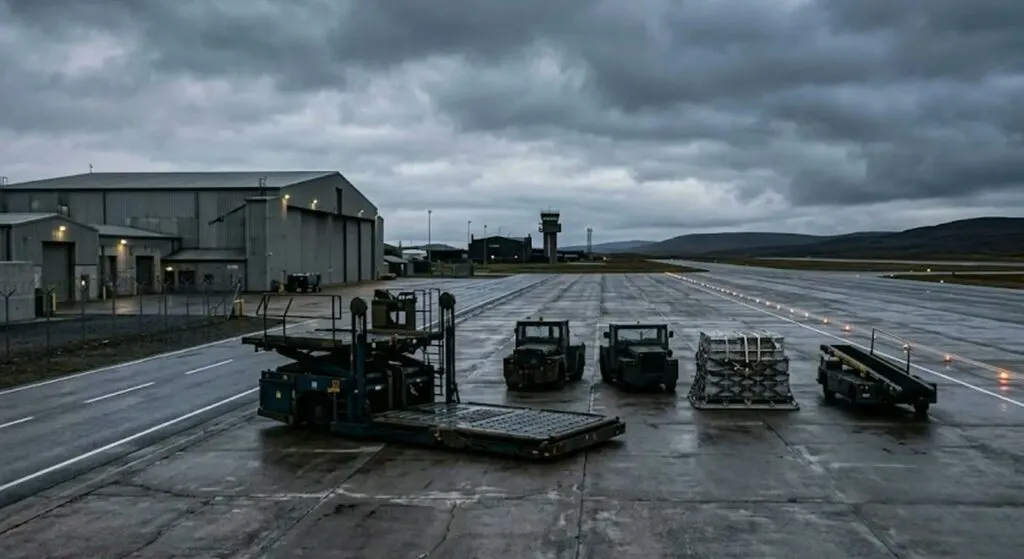
The Pentagon stopped them. Over 4,000 US soldiers, who were to be deployed to Poland, are being turned around. The decision, as reported, surprised even military officers at EUCOM (the US European Command). Part of the equipment and personnel was already on the way - and will now head back to bases in the US.
The soldiers were to be deployed on a 9-month rotation in Poland, as part of Operation „Atlantic Resolve" - the programme the US launched in 2014, immediately after Russia's annexation of Crimea, as a symbolic confirmation that NATO protects its eastern members.
What changed? Last month, Defense Secretary Pete Hegseth ordered the withdrawal of about 5,000 US troops from Germany. Now this - another 4,000 who won't come. Poland's President Karol Nawrocki, still holding the tone of an ally, confirmed that around 10,000 US troops remain in Poland, with many rotating through bases across Europe.
That's also true. But the reality is in the numbers - with 4,000 who won't come and 5,000 being withdrawn from Germany, that's 9,000 fewer troops in NATO's European structure within a span of months. That's not „restructuring". That's a reduction.
For the Balkans - all NATO members in the Balkans (Albania, North Macedonia, Bulgaria, Romania, Croatia, Montenegro) operated on the assumption that in „the moment of need", US soldiers would be on the eastern flank immediately. With 9,000 fewer, that guarantee becomes softer. It doesn't mean we'll be abandoned; it means the „the US will show up in 48 hours" scenario has to be planned around a longer timeline.
What is most lost in this story? That Poland - the country that took its own life into its hands to be a major Eastern European military power, with procurements of hundreds of tanks and helicopters - understood in a single moment that it will have to rely on its own capacity. And that at a moment when Russia is still actively ramping up military production.
This isn't good news. It's the reality of the new US military doctrine: less Europe, more Pacific. And the Balkans need to understand that.
The latest 10 news from this category

Sanctions imposed over one war are being offered as currency in an entirely different dispute. Most member states are against...
El Nino in the Pacific shifts the currents that decide where snow falls. An area that usually gets a metre...

The easiest way to dismiss an uncomfortable argument is to point at who is making it. But that does not...
The appeals court ruled the entire trial must start over. The son of Norway's queen is waiting for it on...
Trump scaled back the military exercises to ease the tension, and Wonsan answered in the form of projectiles. What does...

The sanctions list got a seven-day extension instead of one measured in months, a move diplomats themselves call unprecedented. Two...

Switzerland offered a table for talks on Ukraine, Moscow replied that the table stopped being neutral once Bern adopted EU...

The will says one thing, a committee of twenty-one men decided another. The queen mother says the army pulled the...
A country that was Europe's byword for stability for decades now has a parliament split into two blocs by a...
Sixteen years in power, defeat at a regular election, five months of quiet - and now the election result is...
This site uses cookies - is that okay? Learn more
Be the first to know when Metla launches something new
Leave your email and we will write when there is a new guide or something new on Metla.