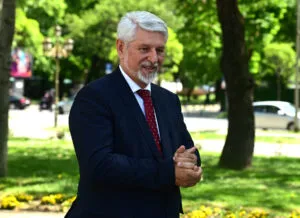
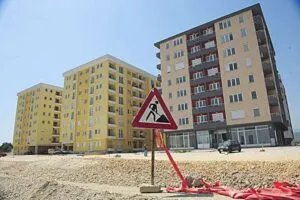
A New Criminal Complaint Against Jakimovski: A Building Permit Based on a Plan Struck Down Back in 2018
16.09.2026


16.09.2026
16.09.2026

16.09.2026
16.09.2026
16.09.2026

16.09.2026

16.09.2026

15.09.2026

14.09.2026
16.09.2026
16.09.2026

15.09.2026

16.09.2026

15.09.2026

14.09.2026

16.09.2026

16.09.2026

16.09.2026

16.09.2026

15.09.2026
15.09.2026

09.03.2026

27.02.2026

19.02.2026

16.09.2026

15.09.2026

14.09.2026

23.04.2026

23.04.2026

12.04.2026

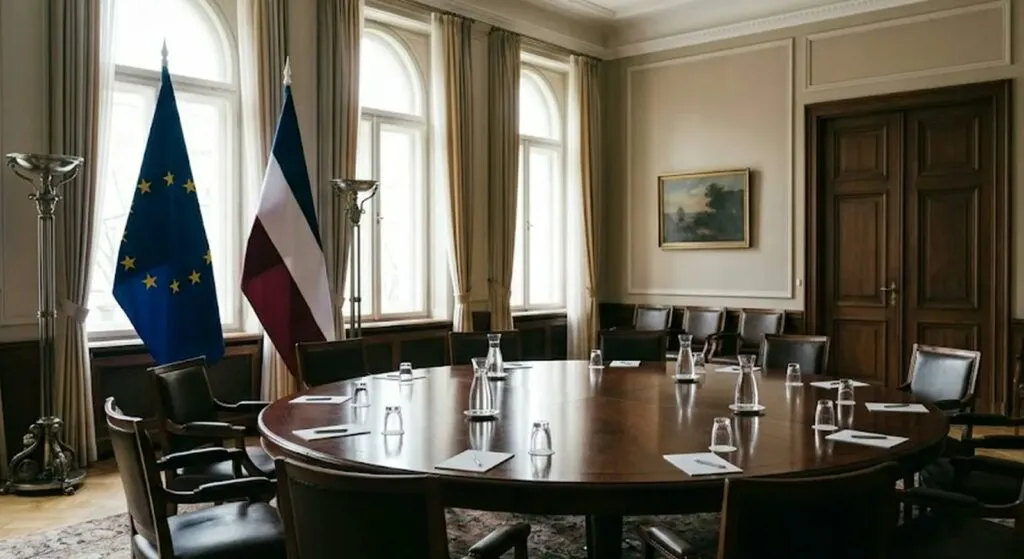
Donald Trump arrived in Beijing, and the scene was exactly as the media predicted: pomp, red carpets, slow photographers, and a salvo of phrases from two leaders who each have a very specific audience to address.
The summit - the first formal Trump-Xi meeting in the second term - touched on everything and on nothing: trade, economic cooperation, Iran, and finally Taiwan. In other words, every possible geopolitical theme was on the table, with no surprise outcome. The expectation is that this is the start, not the finale.
„Constructive strategic stability should be positive stability, marked above all by cooperation, benevolent stability with orderly competition, normal stability with manageable differences and lasting stability with predictable peace," said Xi Jinping. Even by Chinese diplomatic standards, that sentence is ambitious in its count of adjectives.
Trump was much shorter: „It's an honour to be with you. It's an honour to be your friend. The relationship between China and the US will be better than ever." That's „Trumpism" in its purest form - superlatives without specifics.
But specifics did show up in one move - China reopened export licences for US beef processors. Small on paper, but symbolic: this was one of the first casualties of the „trade war" in Trump's first term, and now it's being repackaged as a „gesture of goodwill". Midwest farmers, who elected Trump, will notice.
Taiwan remained the central unresolved issue. „Taiwan is the most important question in China-US relations," said Xi. „If handled correctly, bilateral relations can preserve their overall stability. Otherwise, the two countries could face conflicts and even clashes." That's a red line, said in front of the cameras, with no nuance.
For the Balkans - and for Europe as a whole - what matters isn't what was said, but the timing. Simultaneously with the summit, Russia carried out one of the largest missile attacks on Kyiv. Zelensky openly linked the action to the visit: Moscow doesn't want a successful Trump-Xi, because that could weaken Russia's weight as a „geopolitical factor". China plays both sides. The US is trying to split them.
At the end, the one question that closes every such summit: what could go wrong? Taiwan. An economic crisis. A tech decoupling. Anything could. Both leaders know it - but neither has any interest in saying so publicly.
The latest 10 news from this category
Sanctions imposed over one war are being offered as currency in an entirely different dispute. Most member states are against...
El Nino in the Pacific shifts the currents that decide where snow falls. An area that usually gets a metre...
The easiest way to dismiss an uncomfortable argument is to point at who is making it. But that does not...
The appeals court ruled the entire trial must start over. The son of Norway's queen is waiting for it on...
Trump scaled back the military exercises to ease the tension, and Wonsan answered in the form of projectiles. What does...
The sanctions list got a seven-day extension instead of one measured in months, a move diplomats themselves call unprecedented. Two...
Switzerland offered a table for talks on Ukraine, Moscow replied that the table stopped being neutral once Bern adopted EU...
The will says one thing, a committee of twenty-one men decided another. The queen mother says the army pulled the...
A country that was Europe's byword for stability for decades now has a parliament split into two blocs by a...
Sixteen years in power, defeat at a regular election, five months of quiet - and now the election result is...
This site uses cookies - is that okay? Learn more
Be the first to know when Metla launches something new
Leave your email and we will write when there is a new guide or something new on Metla.