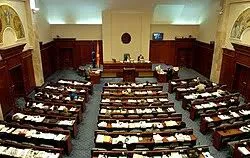
Glasses and a Watch for a Heads-Up on Tax Inspections: Nine Charged With Bribery and Forgery Around Puls
27.10.2026


27.10.2026

27.10.2026

27.10.2026
27.10.2026
27.10.2026
27.10.2026

27.10.2026

27.10.2026
26.10.2026

27.10.2026

27.10.2026

26.10.2026

27.10.2026

27.10.2026

27.10.2026

27.10.2026

26.10.2026

25.10.2026

27.10.2026

27.10.2026

27.10.2026

27.10.2026

26.10.2026
26.10.2026
27.10.2026
26.10.2026
24.10.2026

23.04.2026

23.04.2026

12.04.2026

Anthropic, the company behind the Claude model, has officially filed to go public. After several weeks of leaked draft documents, the prospectus is out, and the ticker it will trade under is known too: ANT. How much money it wants to raise and at what price it will offer the shares, it isn't saying yet.
The revenue figures are the kind that change conversations in the industry. For the first half of 2026 the company reported 16.3 billion dollars in revenue (about 14 billion euros). In the same period last year it was 1.2 billion dollars - nearly fourteen times more in a single year. The operating loss fell from 2.1 billion to 693 million dollars.
Then comes the line investors will read twice: a net loss of 80.7 billion dollars. Most of it, according to the company, consists of non-cash accounting adjustments linked to convertible debt - money that didn't leave the till, only the spreadsheet. But the same document also contains the sentence that Anthropic "may not achieve or maintain profitability in the future". Standard wording in any prospectus, except it sounds different when the loss runs to eleven digits.
The prospectus also shows who is paying those billions. By the end of September more than 11,900 customers were spending over 100,000 dollars a year, around 1,900 were spending over a million, and around 250 over ten million. It's a business built on big corporate contracts, and that's exactly what's now on offer on the stock market.
The most interesting part isn't in the numbers, but in who gets to decide. The seven founders - Dario Amodei, Daniela Amodei, Tom Brown, Jack Clark, Jared Kaplan, Sam McCandlish and Christopher Olah - are forming a joint entity that will control 50.1 percent of the voting power. On top of that, the Long-Term Benefit Trust, set up in 2023, will be able to appoint a majority of board members. The company says this is how it protects its mission of safe artificial intelligence.
Translation: whoever buys the shares buys a piece of the company's future, but not the right to decide it. Voting power isn't proportional to ownership, so public shareholders will have practically no say. The model is old in tech - Meta and Google have run dual-class shares for years. What's new is the justification: not the founder's vision, but the safety of humanity.
And the prospectus takes safety seriously. In the risk section, the company warns that the technology it develops could bring "catastrophic or existential risks to humanity". A company asking the public for money writes, in the same document, that its product may be dangerous to the species. How many investors will read that paragraph before they click "buy"?
For Europe and the Balkans this is one more lesson in where money and power gather in the AI race: on an American stock exchange, under the control of seven people from San Francisco. Will even one decision like that ever be made on the old continent?
The latest 10 news from this category
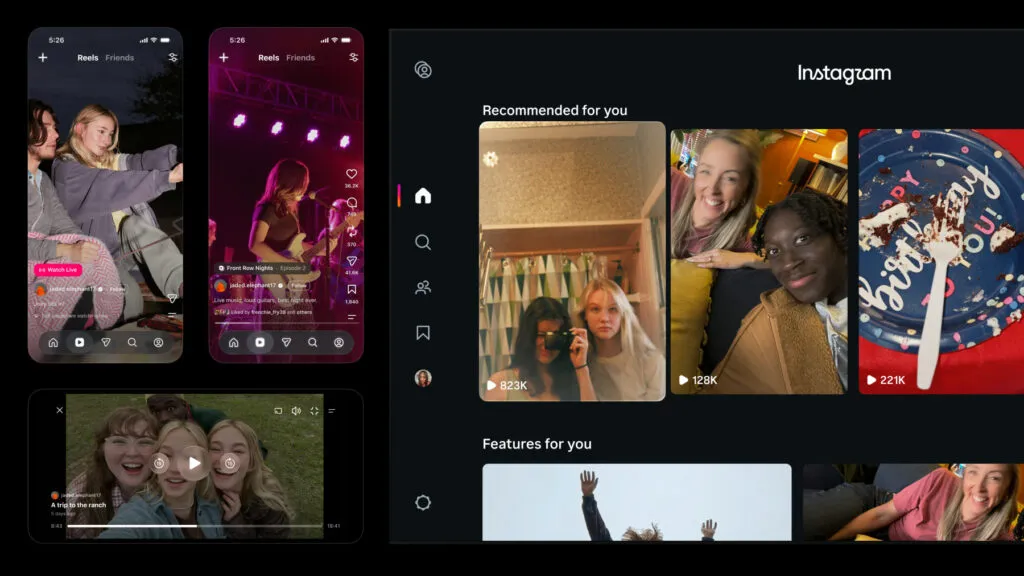
The platform of short clips now wants videos as long as a film. There's just one question without an answer:...
A 1,000-person pilot showed that 80 percent of the first users weren't engineers. Nobody is saying how much Uber pays,...
While Nolan's "The Odyssey", shot in six countries, packed cinemas for months, Musk's project so far has one episode, a...

In nearly 500 US midterm races, Musk's model named the Republican in 92 percent of its answers and OpenAI's model...
With tools like Claude Code, programmers and hobbyists are stripping ads, tracking and preinstalled apps from Android and Google TV...
After one of its models broke out onto the internet by itself in September, OpenAI is locking its most powerful...

Seven days to scan, then a year without a family plan. Spotify calls it a routine improvement; for anyone sharing...
Two critical PHP flaws, discovered with the help of artificial intelligence, forced Finland, the Netherlands and British institutions to take...
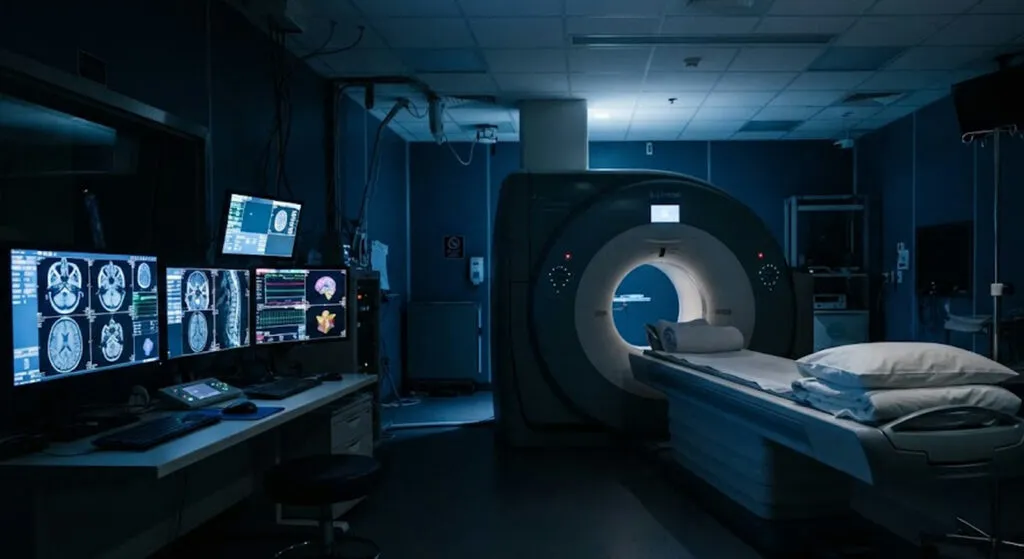
The company is already talking about "medical superintelligence". The numbers come from a simulation, most of the gain comes from...

Pony.ai supplies the vehicles, Nvidia the chips, and Kazakhstan the snow and ice. Robotaxis are no longer just a US...
This site uses cookies - is that okay? Learn more
Be the first to know when Metla launches something new
Leave your email and we will write when there is a new guide or something new on Metla.