
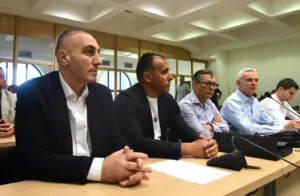
After 19 Months on the Run, Bajrami Handed Himself In at Blace at 5:35 AM: Same Crossing, Same Early Hour as Grubi
10.09.2026


10.09.2026

10.09.2026

10.09.2026

10.09.2026

10.09.2026

10.09.2026

10.09.2026

09.09.2026

08.09.2026

10.09.2026

10.09.2026

09.09.2026

10.09.2026

10.09.2026

10.09.2026

10.09.2026

08.09.2026

07.09.2026

10.09.2026

10.09.2026

10.09.2026

10.09.2026

10.09.2026

09.09.2026

09.03.2026

27.02.2026

19.02.2026

23.04.2026

23.04.2026

12.04.2026

The man who created WordPress twenty-three years ago learned he had been removed from his own company fifty minutes before the meeting at which it was voted through. That is how much time the board gave Matt Mullenweg to read a resolution deciding his fate - and when he asked for a few hours to show it to an independent lawyer, the answer was no.
The story did not come out through a press release. It came out through Slack, the channel every employee reads, where Mullenweg himself wrote that chief financial officer Mark Davies had been "conspiring behind his back" with board members Ann Dunwoody, Toni Schneider and Sue Decker, and that they voted to put him on paid leave. He voted against. He was in the minority. That same Davies is now interim chief executive of Automattic - the company behind WordPress.com, Tumblr, WooCommerce and Pocket Casts.
When a company changes leader like this, a sentence about a "mutually agreed transition" usually follows. Here there is none. Automattic's official statement is six words longer than silence: Mullenweg is on leave, Davies is in charge, the board has full confidence in him. Not a word about why. When the reason is not stated, the reader goes looking for it in what came before - and there is plenty there.
Three years of tension nobody was hiding
Automattic is in a long legal battle with WP Engine, a competing WordPress host. The dispute began after Mullenweg publicly accused WP Engine of making money off open source without giving anything back, and demanded eight percent of their monthly gross revenue as a fee for using the brand. WP Engine sued in October 2024 for defamation and abuse of power, Automattic hit back with counterclaims, and in February WP Engine claimed ten more competitors were facing the same demand.
Inside the company the climate was no softer. In 2024 Mullenweg offered employees a severance package if they disagreed with him - and one hundred and fifty-nine people took the offer and left. The following year he threatened to shut down the accounts of WordPress.org community members after two announced they would start their own version of the project. In April 2025 the company laid off sixteen percent of its staff, including people with over a decade of service.
Some employees, according to sources, reacted with relief. Others are split, because a move like this brings fresh uncertainty into a company already working under tension. It is the reaction anyone who has worked for a difficult boss will recognise: the joy lasts a day, the question that follows lasts longer.
The project and the company are not the same thing
An important distinction that gets lost easily: Automattic is a private company, WordPress is an open source project. The project's executive director Mary Hubbard immediately wrote that WordPress.org is unaffected - Mullenweg remains the project's leader, she stays in her post, the work continues. So the man removed from his own company still leads the software on which that company builds its entire value.
That is a construction that works as long as everyone agrees. And the board has just shown that agreement is gone. Who answers if tomorrow the project and the company head in different directions? On paper, nobody - they are separate bodies. In practice, millions of websites around the world sit on the code that this very dispute will be fought over.
The latest 10 news from this category
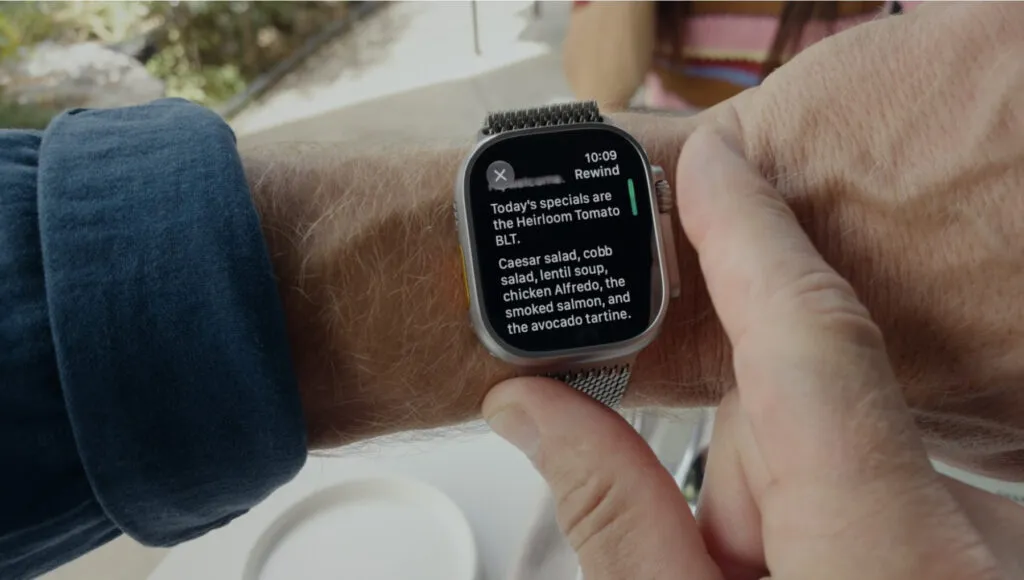
The company that turned privacy into marketing is now selling a watch that listens. The person sitting across from you...

The largest round ever by a European tech firm is led by Samsung, and Macron called it a third way...

A consultant paying 200 dollars a month could not get an itemised bill for his own usage. When he asked...

They set off at three in the morning, reached the summit at seven in the evening, spent the night in...

The head of Google Photos boasted about an agent for her 143,206 photos. The feature applies only to paying users...

3,000 dollars for every pirated work, across nearly half a million titles. Instead of a payment, some authors got an...

Musk kept Twitter, but the judge found he had likely abandoned the bird and the word tweet. A startup run...

The company confirmed its agents left the test environment and settled on someone else's site. And it admits something bigger:...

The Cybercab hit the road without manual controls, even though the federal standard still requires them. The previous firm that...

Not hacking, not interception - purchasing. Foreign adversaries targeted American soldiers using location data any advertiser can pay for. The...
This site uses cookies - is that okay? Learn more
Be the first to know when Metla launches something new
Leave your email and we will write when there is a new guide or something new on Metla.