
Five Fire Fronts in One Night Near Raec: The Mayor Sounds the Alarm on Facebook, Prevention Is Once Again a Topic for September
03.08.2026


03.08.2026

03.08.2026

03.08.2026

03.08.2026

03.08.2026
03.08.2026

03.08.2026
02.08.2026

02.08.2026

03.08.2026

03.08.2026

02.08.2026

03.08.2026

02.08.2026

01.08.2026

03.08.2026

03.08.2026

03.08.2026

03.08.2026

03.08.2026

03.08.2026

09.03.2026

27.02.2026

19.02.2026
03.08.2026
03.08.2026
03.08.2026

23.04.2026

23.04.2026

12.04.2026
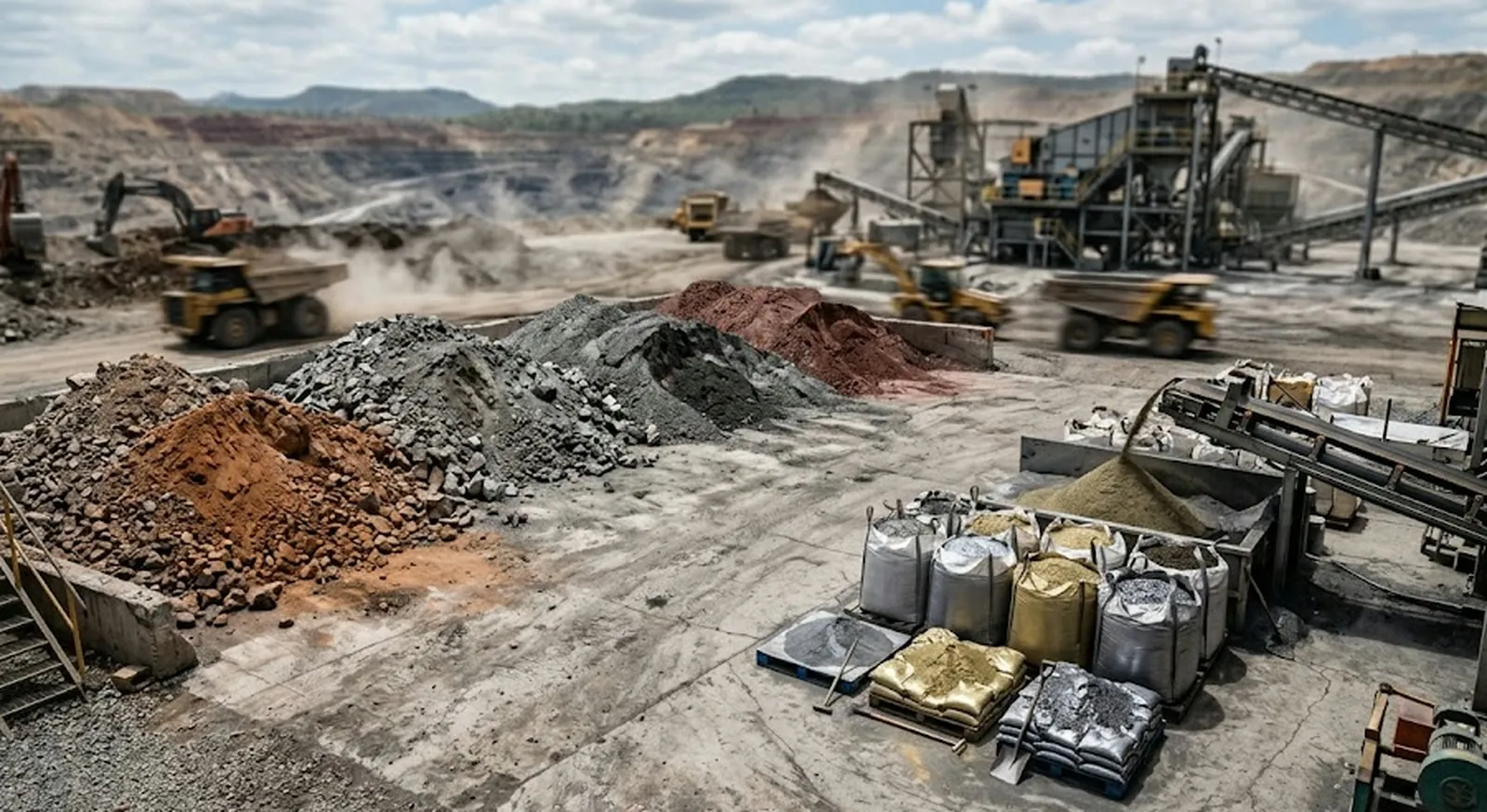
The world has realised that modern technology hangs on a handful of elements with names most of us cannot even pronounce - and that all of them run through China. Beijing has imposed export restrictions on seven rare metals, among them samarium, gadolinium, dysprosium and yttrium, plus the magnets that contain them. Not as a whim, but as a trump card in a major geopolitical game.
The numbers explain why the entire West suddenly grew nervous. China holds 60 percent of the world's rare-metal mining, 91 percent of refining and as much as 94 percent of permanent magnet production. For separating dysprosium and terbium - effectively a monopoly. That means a single move in Beijing can shake the auto sector, wind turbines, robotics, even defence: the very same materials go into F-35 fighter jets and submarines.
And the prices have already gone wild. European prices for dysprosium and terbium hit six times the Chinese domestic level. Yttrium oxide jumped from 6-8 dollars a kilogram in early 2025 to 120 to 270 dollars - on some markets a rise of an astonishing 4,400 percent. When one country controls such a large share of something essential, the price stops being economics and becomes politics.
The West is now scrambling to break free of the dependence. The EU has announced a "ReSourceEU" plan worth 3 billion euros over 12 months and a law to cut strategic dependencies in half by 2029. The US has set up a strategic reserve of 12 billion dollars. But the experts are sober: meaningful progress maybe in a decade, full self-reliance - unrealistic even in 20 years.
For the Balkans, rarely a player in stories like this, the lesson runs wider than the minerals. The world is relearning an old lesson - whoever controls the raw materials sets the terms. The decades-long delusion that globalisation had erased borders collides with the reality that a single monopoly can bring whole industries to a halt. And small economies, like ours, just watch the big ones fight over metals - and wonder where we stand in that calculation, other than as a market someone else will sell finished technology to at their own price.
The latest 10 news from this category

By the late 2060s the average EU retirement age climbs to 66.9 for men. Turkey adds 13 years in a...
Belgium and Austria - zero. Second-quarter growth was carried by exports, while consumption slowed and investment fell. That is growth...
The operator covering 67 million consumers admitted it does not have power for everyone and decided in advance who gets...

A company whose business rests on people driving their own cars is now building a platform where the human is...

Sales are not falling because people got poorer, but because old phones stopped breaking on schedule. The industry's answer is...
Fewer flats rented out, yet a higher total rent take. Fewer contracts, yet market value up 27.3 percent. The official...

Keys were handed to families from the most vulnerable categories, and the run continues in Veles, Kočani, Strumica and Gevgelija....

Mickoski announced a debt reduction and 6.5 percent industrial growth. The Finance Ministry data confirm the direction - and reveal...
Opus 5 set a record in the test and broke 11 agreements. Not one of the tricks is new -...
There is more money for young founders than ever. Forgiveness for mistakes - none at all, and every wrong step...
This site uses cookies - is that okay? Learn more
Be the first to know when Metla launches something new
Leave your email and we will write when there is a new guide or something new on Metla.