
Five Fire Fronts in One Night Near Raec: The Mayor Sounds the Alarm on Facebook, Prevention Is Once Again a Topic for September
03.08.2026


03.08.2026

03.08.2026

03.08.2026

03.08.2026

03.08.2026

03.08.2026

03.08.2026

02.08.2026

02.08.2026

03.08.2026

03.08.2026

02.08.2026

03.08.2026

02.08.2026

01.08.2026

03.08.2026

03.08.2026

03.08.2026

03.08.2026

03.08.2026

03.08.2026

09.03.2026

27.02.2026

19.02.2026

03.08.2026

03.08.2026

03.08.2026

23.04.2026

23.04.2026

12.04.2026
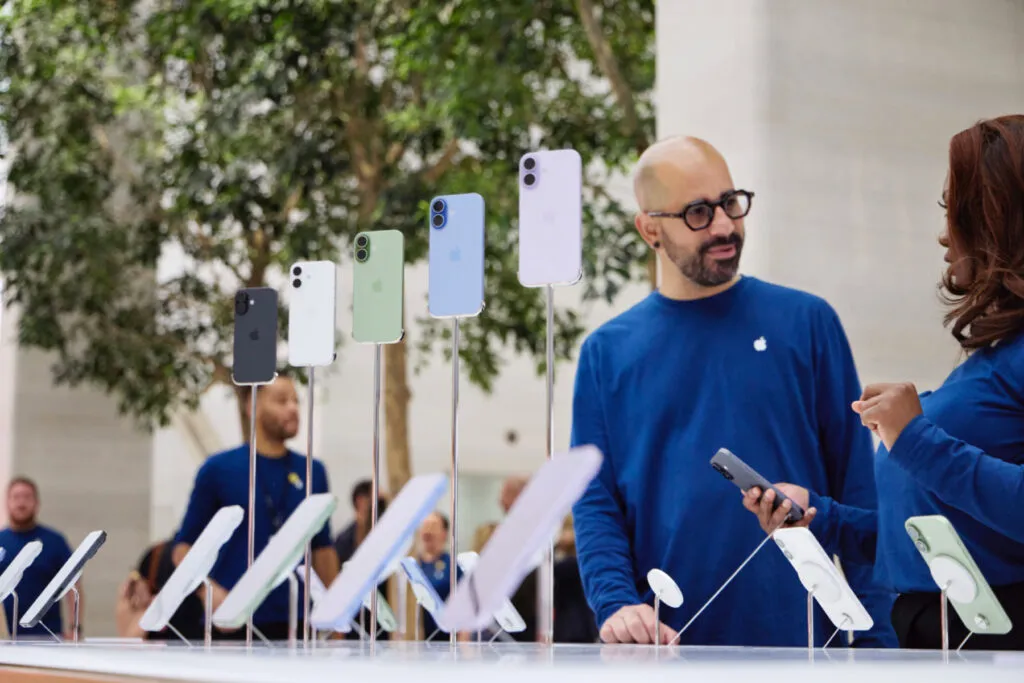
The next battle in the phone world is not about the camera or the battery. It is about whether the phone will be yours at all. Apple, Samsung and the rest are betting that leasing, subscription and guaranteed buy-back will make you change devices more often than you want to.
This week Apple launched Apple Upgrade in the US, in partnership with Klarna. You pay monthly for an iPhone, Mac, iPad or Apple Watch, then choose - upgrade it, return it, or buy it outright at the end. Samsung is already doing the same in India with its Galaxy Forever programme, where financing is bundled with a guaranteed buy-back. On Thursday's earnings call, chief executive Tim Cook said the programme makes life easier for customers who want to change devices on a regular schedule, adding that it is precisely the high resale value of their devices that makes this model viable.
Why now? Because people stopped buying. Devices are getting more expensive as memory and other components become scarcer, while new models bring ever smaller improvements, so the old phone still works perfectly well. The analyst firm Counterpoint Research estimates the average global replacement cycle will stretch to four years this year, up from three and a half last year. In the US, owners of expensive phones now keep them for 42 months on average, compared with 38 to 40 previously, according to IDC. So sales are not falling because people got poorer - they are falling because old phones stopped breaking on schedule.
Every model has its own maths, but not the same one
There is a second motive, spoken about less often. "These programmes essentially do not work without a secondary market," says Max Weinbach, an analyst at Creative Strategies. "The only way to sustain the used and refurbished device market is for those devices to enter it, and leasing and guaranteed buy-back make that happen." In other words: the manufacturer does not only want to sell you a new phone, it wants your old one back so it can sell it again.
Who does it pay off for? "Leasing certainly is not for everyone, but it can make sense, especially for someone who upgrades often," says Matt Schulz, chief consumer finance analyst at LendingTree. Anyone keeping a phone for three, four or five years, in his view, almost always comes out ahead simply buying it. Weinbach adds that formally this is not an ordinary lease: "This is an upgrade programme delivered through a lease, not just a rental programme. The intention is for the user to return the device every 12 to 36 months, because they want to upgrade anyway."
The most honest answer came from Navkendar Singh, vice president for devices research at IDC: "The real driver is not shorter upgrade cycles, but protecting margins and retaining customers as price pressure grows." That is a sentence worth reading twice. The goal is not to make the phone more affordable for you - the goal is to stop you leaving for the competition.
The idea of paying for a phone monthly is not new, least of all in the US, where mobile carriers have offered instalments tied to a contract for years. What is new is that manufacturers now want to hold that relationship themselves, without an intermediary. "It was precisely the interest-free 36-month financing and aggressive trade-ins of up to 1,100 dollars that made the American market the one with the highest average phone prices," says Nabila Popal, senior research director at IDC. Existing instalment and trade-in schemes helped Apple and Samsung together hold over 80 percent of the American market.
The shift also opens space for smaller firms. India's BytePe, which offers subscription plans for phones and other electronics, says over 80 percent of its customers choose subscription over purchase or classic instalments. Founder Jayant Jha says the typical customer is a young person in their first or second job who wants an expensive phone without paying the full amount up front. Similar firms exist in Europe - Britain's Raylo and Germany's Grover build their business precisely on monthly electronics leasing.
Tarun Pathak, research director at Counterpoint Research, states the motive without wrapping: "The core aim is to increase the customer's lifetime value through better retention, predictable upgrade cycles and a steady flow of traded-in devices for certified refurbishment and resale." Read: you are a cycle, not a customer.
Still, nobody claims ownership is disappearing. Mandeep Manocha, co-founder of the Indian trade-in and refurbishment platform Cashify, expects the three models to coexist: "All three models have a place to exist and will continue to exist. There is a natural transition that can happen from full ownership to leasing, but that is a long journey." Even Popal at IDC believes Apple's new programme will leave a bigger mark on Mac sales than on the iPhone.
One question remains that none of the analysts asked out loud. If a phone becomes a monthly bill that never stops, then the moment when the device is finally yours - the moment you stop paying - simply does not exist. Until now an expensive phone was something you bought once and kept while it worked. The new model promises it will be newer. It does not promise it will be yours.
The latest 10 news from this category
The operator covering 67 million consumers admitted it does not have power for everyone and decided in advance who gets...
Opus 5 set a record in the test and broke 11 agreements. Not one of the tricks is new -...
The billions were announced with a stage and slogans. The retreat is happening quietly, in sentences containing the word alignment.
In his last quarterly report Tim Cook announced the stronger Siri will be bought through iCloud+. The firm that paid...
The platforms that spent years convincing us automated content was the future are now patiently building filters against it. The...
Out of 141,006 test runs, three ended up inside the live systems of real firms. The oldest model worked out...
The strongest June quarter in its history, and the stock fell 6 percent. Artificial intelligence turned out to have a...

The FCC is closing the door to humanoid robots and power inverters, but only new ones. The millions of Chinese...
The player that raised the MP3 generation is betting nostalgia can be billed monthly. The new Winamp arrives in 2027,...
The man selling the world's best-known artificial intelligence says we will not work less. He also claims we will secretly...
This site uses cookies - is that okay? Learn more
Be the first to know when Metla launches something new
Leave your email and we will write when there is a new guide or something new on Metla.