

Studeničani: 35-year-old dies after being electrocuted while washing his car with a pressure washer
18.09.2026


18.09.2026
18.09.2026

18.09.2026
18.09.2026
18.09.2026
18.09.2026
18.09.2026

17.09.2026

16.09.2026

18.09.2026
18.09.2026

17.09.2026

18.09.2026
18.09.2026

18.09.2026

18.09.2026

17.09.2026

16.09.2026

18.09.2026

18.09.2026
18.09.2026

18.09.2026

17.09.2026

17.09.2026

09.03.2026

27.02.2026

19.02.2026

18.09.2026
17.09.2026

16.09.2026

23.04.2026

23.04.2026

12.04.2026

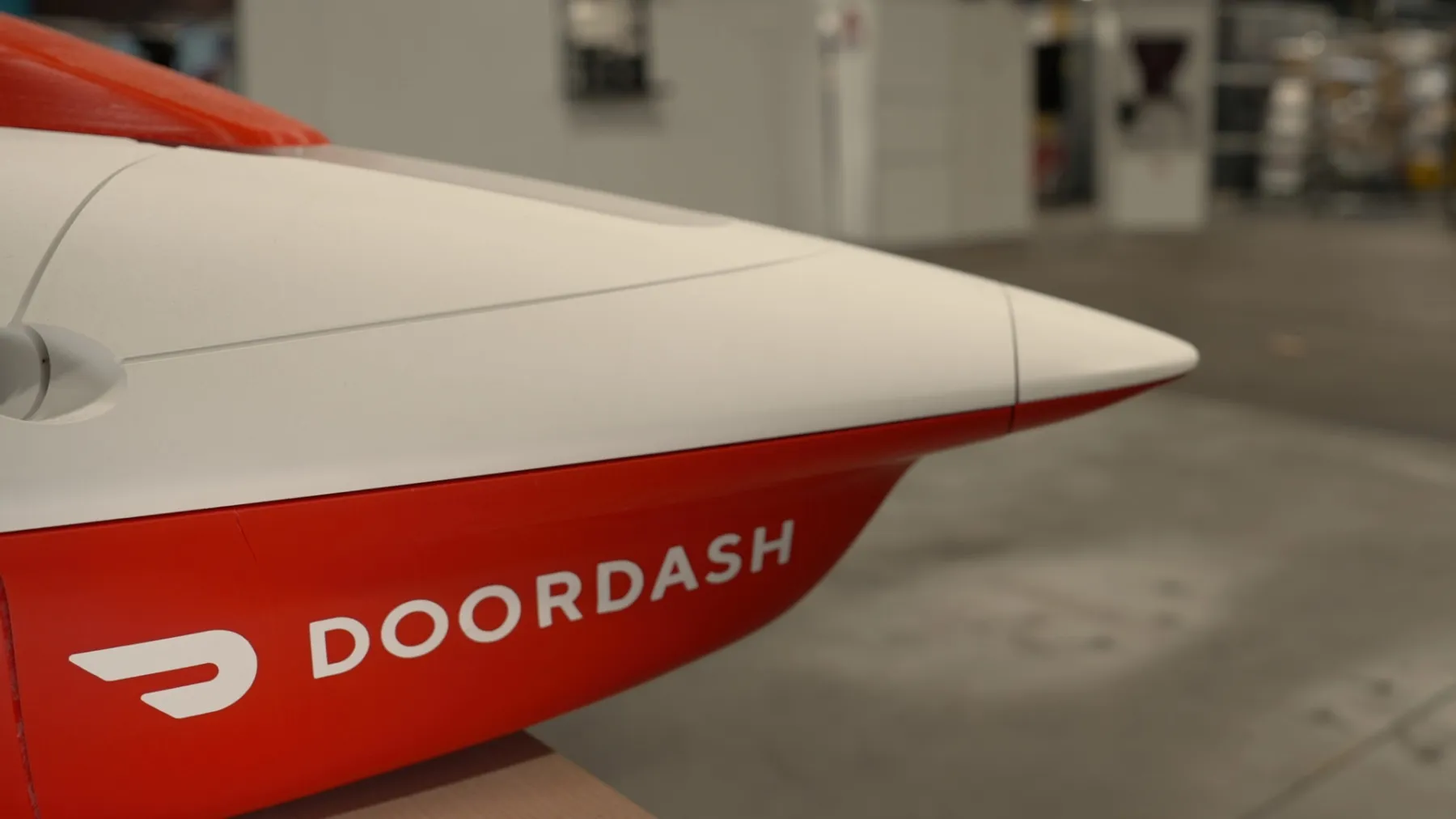
The food delivery company DoorDash has decided it no longer wants to be just an app connecting restaurants with people driving their own cars. It has unveiled DoorDash Air - its own drone delivery business, including an aircraft it is designing itself.
The announcement came after the company obtained a Part 135 certificate from the US Federal Aviation Administration, the document allowing it to operate legally as a commercial drone carrier in the United States. That is the licence, not the start. The company gave no concrete date for when the aircraft will begin operating, and the first steps will most likely be limited pilot programmes over short distances, with the drone staying within the operator's line of sight.
To fly autonomously over longer routes, DoorDash will need another approval - the one for beyond-visual-line-of-sight flight, so far granted to Amazon, Wing and Zipline. So the queue at the counter is a familiar one, and it is not short.
Interestingly, the company is not breaking off its existing partnerships. Its collaboration with Wing, an Alphabet company, began in 2022 in Australia and expanded to several US cities, including Dallas-Fort Worth in 2024. The partnership with Flytrex also stands. In other words: build your own, but do not let go of anyone else's drones until yours are flying. That is not enthusiasm, that is arithmetic.
DoorDash Air came out of DoorDash Labs, the same research team behind Dot - the autonomous pavement robot unveiled in September 2025. That robot now operates in the Phoenix suburbs - Tempe, Mesa, Gilbert and Chandler - as well as in Fremont, California.
Co-founder and chief product officer Stanley Tang argues that all of this has a common thread. "We didn't start from the question: what is the coolest autonomous technology we can build? We started from the basics: what is the real customer problem that needs solving," he wrote in the post announcing DoorDash Air.
By his account, the most important element is neither the drone nor the 160-kilogram robot, but the software deciding which delivery method gets used for a given order. The team has already built a system called the Autonomous Delivery Platform, which coordinates Dot, the human drivers, and soon the drones. Tang also used it as a recruitment pitch: "Most autonomy companies work on one layer. At DoorDash you work on all of them at once; nobody else runs systems like this on a single network."
The sentence is well constructed, but it is worth reading in reverse too. A company whose model rests on people driving their own cars without a guaranteed wage is now building a platform where an algorithm chooses whether a human, a robot or an aircraft takes the order. The human stays in the system - but as one of the options, not as the whole system. Every new layer of autonomy means one fewer call to somebody waiting for an order on their phone.
Will this reach our streets soon? Hardly - the whole story currently hangs on an American regulator and pilot programmes in a few suburbs. But the model being tested there is not a model for drones. It is a model for who stays necessary in the delivery chain once the software learns to count better than we do.
The latest 10 news from this category
An eight-year-old firm that started out mining crypto has tripled its value in ten months. It did not discover anything...
The price of uranium has jumped 75 percent in five years, and the list of countries that mine it reads...
Exein raised 270 million dollars and its valuation jumped thirtyfold in two years. The European regulation coming into force in...
A startup valued at 94 million dollars changed hands, and both sides said openly what was being bought - not...
A technology sold for decades as the answer to the climate is now taking money from the defence industry. The...
The board voted, the founder kicked the administrators out of Slack and held out for three days. What does a...

Three months ago the company raised 60 million. Now it is worth almost ten times that, and its product is...

After Ohridska Banka, Sparkasse has gone after a second one. The approvals come from Podgorica, Belgrade and Frankfurt. The market...

They had offers and visas to stay in the US. They went back to Munich because the numbers worked better...

A signed term sheet in venture capital is treated as a word of honour. When the buyer offers sixty-seven years...
This site uses cookies - is that okay? Learn more
Be the first to know when Metla launches something new
Leave your email and we will write when there is a new guide or something new on Metla.
