

Two failing grades and you're out: parliament brings in automatic dismissal for civil servants, but who will write the appraisals?
20.10.2026


20.10.2026
20.10.2026
20.10.2026
20.10.2026
20.10.2026

20.10.2026
20.10.2026

19.10.2026

19.10.2026

20.10.2026

20.10.2026

19.10.2026

20.10.2026

20.10.2026

20.10.2026

20.10.2026

19.10.2026

18.10.2026

20.10.2026

20.10.2026

20.10.2026

20.10.2026

20.10.2026

20.10.2026
20.10.2026

19.10.2026

18.10.2026
19.10.2026
17.10.2026

15.10.2026

23.04.2026

23.04.2026

12.04.2026

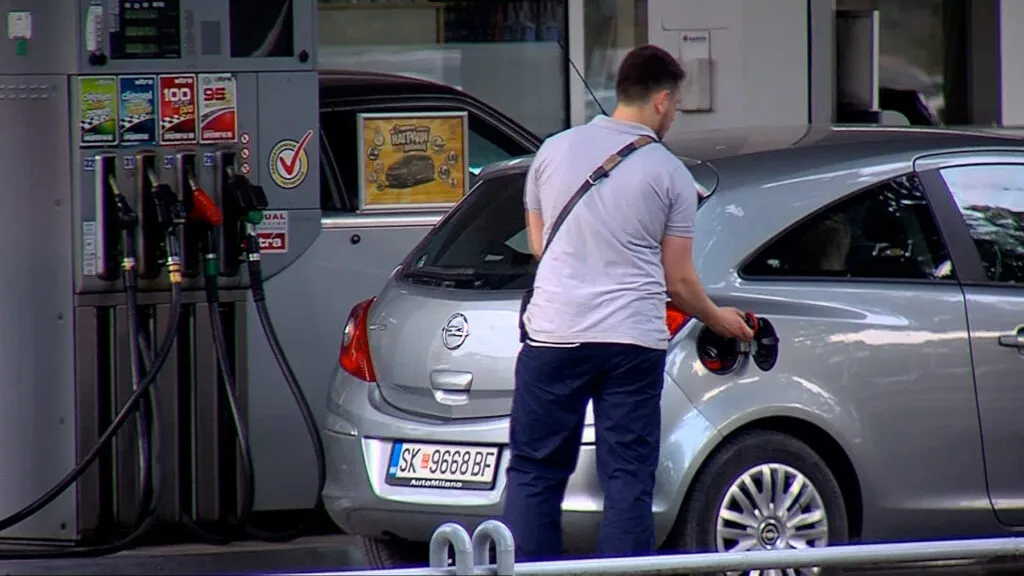
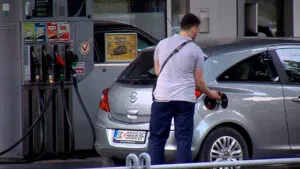
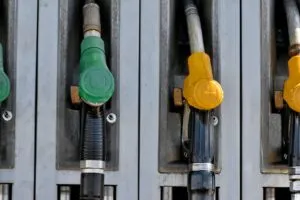
Since midnight, a litre of diesel at Macedonian pumps costs 99 denars. That is two denars more than yesterday and, more importantly, more than both grades of petrol. Eurosuper BS-95 fell to 96 denars and BS-98 to 98 denars, after a cut of 2.50 denars a litre. The new prices were set by the Energy Regulatory Commission (RKE) and apply from 20 October.
The maths is simple. A full 50-litre tank of diesel is now 100 denars more expensive, while 50 litres of petrol are 125 denars cheaper. For a private driver that is the price of a coffee. For hauliers, delivery drivers and farmers, diesel is a working tool, so every increase pushes up operating costs - and whether it reaches the price of whatever they carry depends on how much of it they can absorb.
Why this way round? According to the RKE, benchmark petrol prices on the world market fell by an average of 4.142 percent, while diesel rose by 2.966 percent. Extra-light heating oil for households, now 110.50 denars a litre, and fuel oil are also going up. The calculation still includes the government's relief measures: 10 percent VAT on diesel and excise duty cut by four denars a litre.
Prime Minister Hristijan Mickoski, for his part, announced that the reduced VAT on diesel will continue and that the government is close to a deal with OKTA for an extra two-denar discount per litre of diesel. "Unlike every other government in Europe, this government takes the least through VAT and excise, and that is why citizens today have the lowest prices when it comes to diesel and unleaded petrol," he said.
That is worth pausing on. "The lowest in Europe" is a comparison in euros, and Macedonian salaries are nowhere near European levels. How many litres of fuel one Macedonian salary buys - that figure rarely comes up at press conferences. And why is the two-denar discount always "close", while the price rise arrives bang on midnight?
Meanwhile parliament extended the state of crisis over oil supply risks for another six months, until April. The government insists there will be enough fuel. The price is another story: the new maximum prices last seven days, and the next RKE decision will show whether the promised discount actually reaches the pumps.
The latest 10 news from this category
On paper wages are rising, in litres they are falling: purchasing power measured in petrol is down by about 18.5...
Nvidia did not win on chips alone, but on the software around them. Amazon is now attacking exactly that wall,...

The app for emotions and to-dos claims revenue in the tens of millions of dollars. Seventy percent of its users...
Apple says App Store review blocked more than 150,000 apps last year. So how did "undressing" apps get through the...
The opposition is counting: 4 billion euros of new debt in two years, a deficit above 900 million and interest...
On paper, Macedonia is doing better than Europe. But 2.7 percent is the speed at which prices rise, not the...
The EU average is 26.3, and young people in Croatia and Greece are the last to move out. There is...

The company that sells automation has published the numbers on its own staff: the beginners are disappearing, while the experienced...

Blood tests and ice baths will no longer be a privilege of the rich - or so the Hollywood actor...

The woman who fooled Silicon Valley with blood tests that didn't work is now filling cinemas. The Musk film, meanwhile,...
This site uses cookies - is that okay? Learn more
Be the first to know when Metla launches something new
Leave your email and we will write when there is a new guide or something new on Metla.


