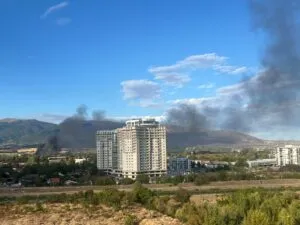
Black Smoke Over Skopje: A Paint and Varnish Warehouse Burned Inside the Old Steelworks
23.09.2026


23.09.2026

23.09.2026

23.09.2026

23.09.2026

23.09.2026

23.09.2026

23.09.2026

22.09.2026

21.09.2026

23.09.2026

23.09.2026

22.09.2026

23.09.2026

23.09.2026

23.09.2026

23.09.2026

22.09.2026

21.09.2026

23.09.2026

23.09.2026

23.09.2026

23.09.2026

23.09.2026

23.09.2026

09.03.2026

27.02.2026

19.02.2026

23.09.2026

22.09.2026

21.09.2026

23.04.2026

23.04.2026

12.04.2026

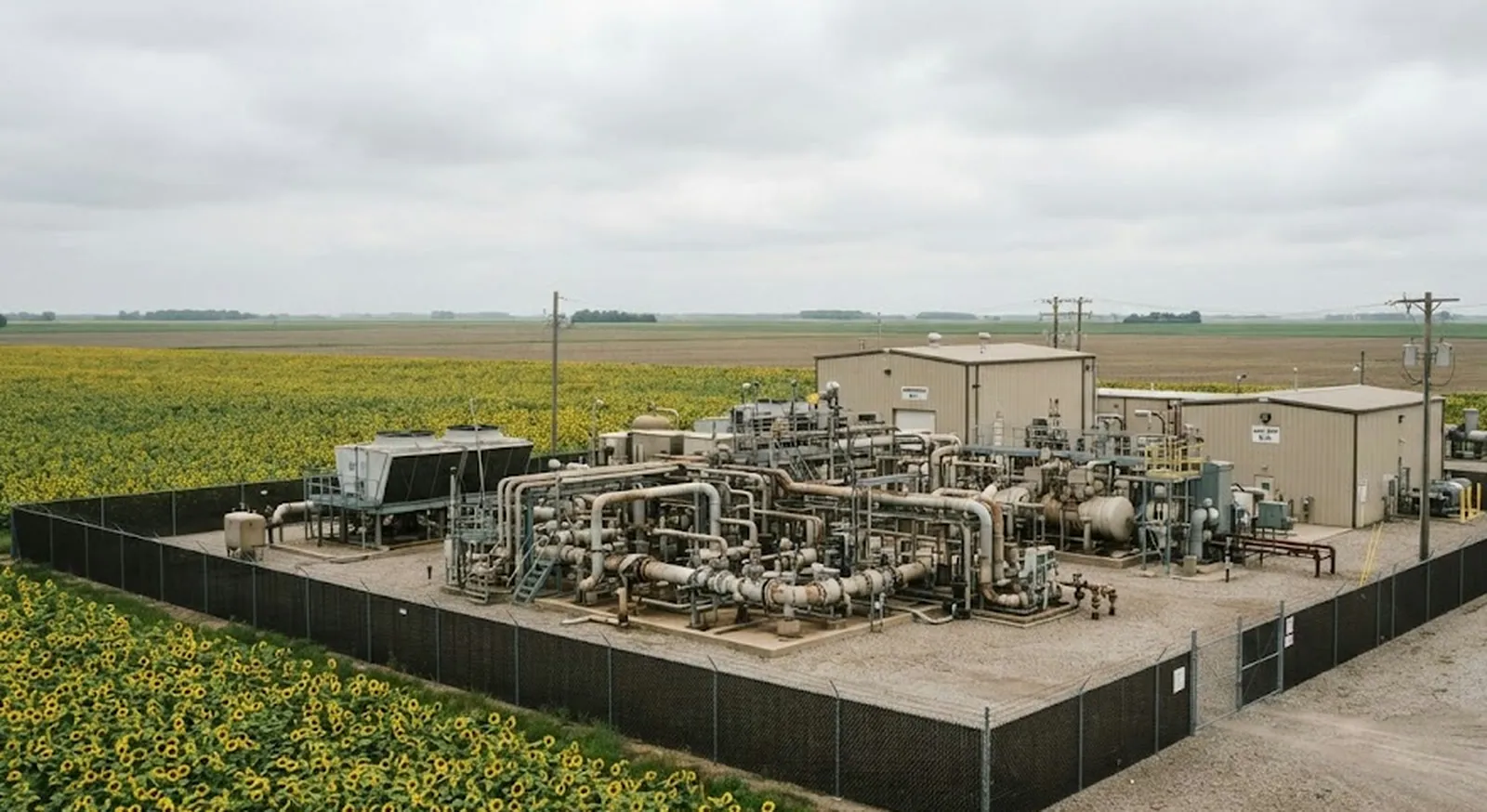
A drone carrying a significant quantity of explosives entered Bulgarian airspace and blew up around a kilometre from a compressor station on the Trans-Balkan gas pipeline. It came down in a sunflower field near the Kardam border crossing with Romania. No casualties. This time.
Bulgarian President Rumen Radev, after an emergency session of the security council, confirmed there were no victims and explained how anyone found out at all. Romanian border police heard the sound first. Then Bulgarian border patrols heard a powerful explosion and saw black smoke.
Notice what is missing from that description. Nobody saw the drone on radar. Neither country detected it before it exploded. Two neighbours, two NATO members, and the entire early detection came down to people hearing something.
Radev stressed that this was a larger drone, not recreational equipment, and that the quantity of explosives is evident from how far the sound carried and from the column of smoke. He also admits that detecting and neutralising such aircraft is a serious challenge.
Who launched it
The Bulgarian Defence Ministry said the drone resembles those widely used by Ukrainian armed forces, but also that there is so far no evidence of a deliberate incident. Sofia summoned the Ukrainian ambassador for talks on Monday - she is currently in Kyiv, so it could not happen sooner.
Kyiv replied that it had not deliberately targeted Bulgaria and promised an investigation. The answer is probably sincere. And that is precisely the part that should worry people.
Because if it was deliberate, it is a message, and messages get answered. If it was not deliberate, it means an aircraft carrying explosives can cross a NATO border, pass unnoticed through two airspaces and burst apart beside a pipeline connecting Turkey with Ukraine - with nobody having planned it.
Drone incidents along NATO's eastern flank have been multiplying for months. Each of them individually passes as a technical event with the same soothing formula: no casualties, no evidence of intent, an investigation is under way.
Kardam is around 400 kilometres from the nearest Macedonian border. That is a distance that looks solid on a map and means almost nothing in the air. The pipeline that escaped by a hair is not a Bulgarian problem - it is part of the network that keeps the region warm.
The question is simple and nobody is asking it out loud: how many times does a drone like this have to come down beside some piece of critical infrastructure before we accept that the sunflower field was luck, not defence?
The latest 10 news from this category
Two presidents, the same podium, a few hours apart and two contradictory realities. Macron did not argue about signatures -...

The mechanism he describes - decision before evidence, evidence retrofitted to the decision - is real, and Iraq proved it....

Peter Magyar compared it to a club that puts you in the team without asking, then tells you to bring...
Washington, Copenhagen and Nuuk are signing off on a military presence on an island of 56,000 people - and the...
Phones in Krāslava rang by themselves, the fighters took off, and what exactly triggered the alert - nobody is saying....
In Mecklenburg the CDU finished on 4.9 percent and, for the first time in the history of the Federal Republic,...

Tisza took 16 years of power off Fidesz and won 141 of 199 parliamentary seats. Orbán now says Brussels is...
With 75 percent of protocols counted, the governing party leads in 208 of the 225 single-mandate districts. A parliament of...
He never sat on the throne, and the emirate is lowering its flags for ten days. Sometimes the surname says...

Three options on the table in Washington - military pressure, economic strangulation or a deal - and the president frames...
This site uses cookies - is that okay? Learn more
Be the first to know when Metla launches something new
Leave your email and we will write when there is a new guide or something new on Metla.