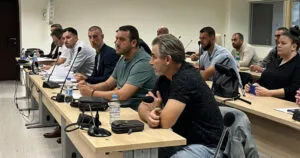
"That's not my job": the trial of the 13 Puls police officers restarted from scratch, and witnesses describe help being refused
22.09.2026


22.09.2026
22.09.2026
22.09.2026

22.09.2026
22.09.2026

22.09.2026

22.09.2026

21.09.2026

20.09.2026

22.09.2026

22.09.2026

21.09.2026

22.09.2026

22.09.2026

22.09.2026

22.09.2026

21.09.2026

20.09.2026

22.09.2026

22.09.2026

22.09.2026
22.09.2026

22.09.2026

22.09.2026

09.03.2026

27.02.2026

19.02.2026
22.09.2026

21.09.2026

21.09.2026

23.04.2026

23.04.2026

12.04.2026


For five months Viktor Orbán said nothing. Then he stepped in front of a camera and announced that the silence was over.
The former Hungarian prime minister and Fidesz leader declared the end of the political truce with Péter Magyar's new government and called on his supporters for "national resistance". "We were patient, perhaps even more than we should have been. And we were fair, given the way they behaved, perhaps even more than we should have been. Five months have passed. This phase is over. That is it, the end," Orbán said. In the message posted with the video he was even shorter: "We accept the challenge and we fight."
Five months after a historic defeat
The call comes five months after the parliamentary elections in which Fidesz suffered the heaviest defeat in its recent history. Péter Magyar's Tisza party won convincingly in April, ending Orbán's 16 uninterrupted years as prime minister. The final results gave Tisza as many as 141 of the 199 parliamentary seats - a two-thirds majority, enough to change constitutional rules without a single opposition vote.
Magyar ran his campaign on a promise to dismantle the system Fidesz had built across four terms, to return Hungary to the political centre of the European Union and to unlock the billions in European money frozen during the Orbán era.
Brussels unfroze the billions
And that did not stay a promise. In late May, Magyar reached a political agreement with European Commission president Ursula von der Leyen, opening the way to unfreezing a total of 16.4 billion euros in European funds. In July the EU Council also approved Hungary's new recovery plan, releasing another 10 billion - around 6.5 billion in grants and 3.5 billion in loans. In return, Budapest had to accept a series of reforms on the rule of law, anti-corruption and the protection of fundamental rights. The Commission had previously set 27 key conditions.
This is exactly where Orbán sees his thesis confirmed. In his account, foreign political and economic structures stand behind the new government, and he names Brussels as the centre of that influence - with intelligence services, networks linked to George Soros and large multinational companies as its instruments. He called the new government "neo-communist", the Hungarian portal 24.hu reports.
A Macedonian reader has heard that sentence in their own language. When power changes hands, the defeated side almost never says it lost an election - it says the country was taken over from outside. The difference is that in Hungary the number on the new government's side is 141 out of 199, and that figure is hard to explain with foreign influence.
Dismantling the system
The new government did not wait long. In July, thanks to Tisza's two-thirds majority, parliament adopted the 17th amendment to the constitution. It introduced a limit of at most 12 years in parliament for an MP, that is three terms, and an age limit of 70 for Constitutional Court judges. The change directly hit a large number of long-serving figures linked to Fidesz, among them Constitutional Court president Péter Polt, a long-time Orbán ally and former chief prosecutor.
The most dramatic case was that of head of state Tamás Sulyok, who in July signed a constitutional change that effectively ended his own term - while warning at the same time that the way the changes were carried out had dealt a serious blow to the principle of separation of powers.
Magyar's government argues it is not dismantling democracy but a system in which key state institutions had been staffed with people tied to Fidesz, often on terms long enough to outlive the government itself. Fidesz argues precisely the opposite. The first substantial response came back at the start of July, when Fidesz and the KDNP organised a protest in front of the presidential palace under the slogan "Stop the arbitrary rule", drawing several thousand people.
What makes this story worth attention from Skopje is not who is right. What is worth it is the question it opens: does a government dismantling institutions full of its predecessor's appointees carry out reform - or does it only change the names of the people in the same chairs? Hungary is now a laboratory where that answer is being written live, and the Balkans has been running the same experiment for decades, always with a promise that this time it is different.
The latest 10 news from this category
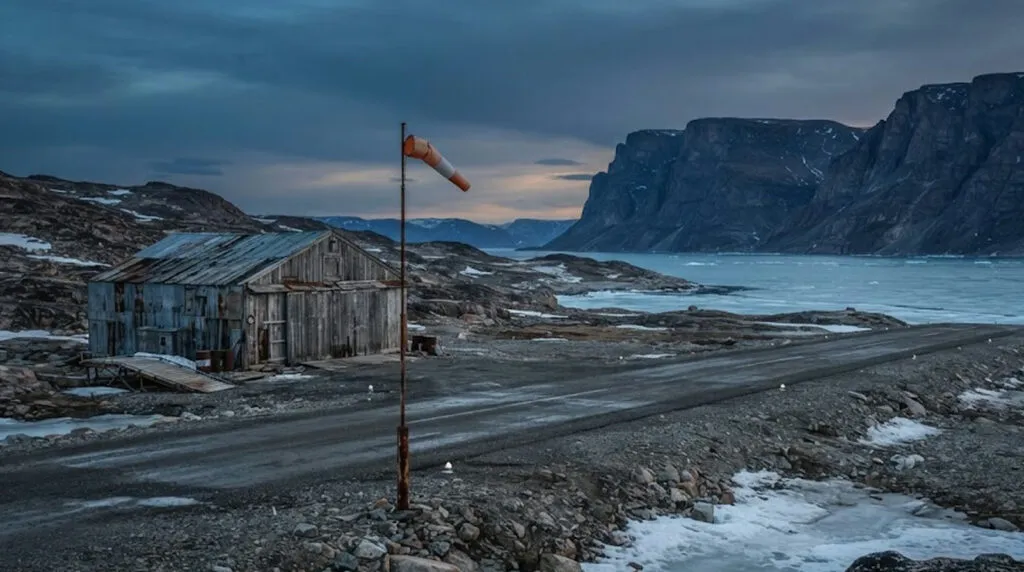
Washington, Copenhagen and Nuuk are signing off on a military presence on an island of 56,000 people - and the...
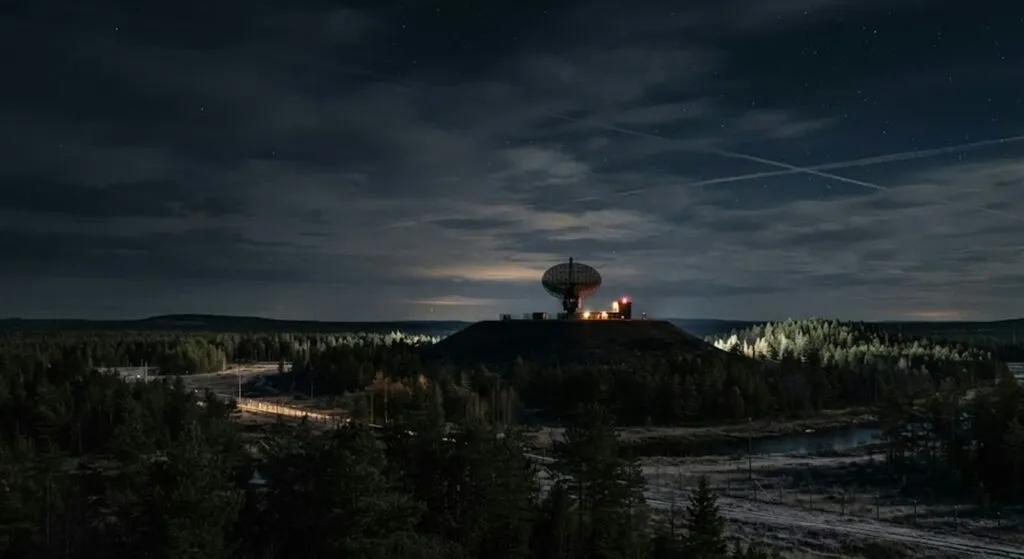
Phones in Krāslava rang by themselves, the fighters took off, and what exactly triggered the alert - nobody is saying....
In Mecklenburg the CDU finished on 4.9 percent and, for the first time in the history of the Federal Republic,...
With 75 percent of protocols counted, the governing party leads in 208 of the 225 single-mandate districts. A parliament of...

He never sat on the throne, and the emirate is lowering its flags for ten days. Sometimes the surname says...

Three options on the table in Washington - military pressure, economic strangulation or a deal - and the president frames...
The party of Adenauer and Kohl slid to the electoral threshold in Mecklenburg, the AfD is already demanding the chancellor's...
Two prime ministers in the same Union, the same month, completely opposite diagnoses of who is provoking whom. There is...

A broken aircraft in a field usually ends up in a police note. This one ended up with federal investigators,...

Beijing will easily find another supplier. The harder question is what Washington is actually testing: whether private Chinese companies will...
This site uses cookies - is that okay? Learn more
Be the first to know when Metla launches something new
Leave your email and we will write when there is a new guide or something new on Metla.