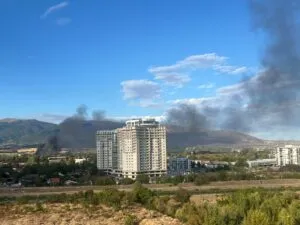
Black Smoke Over Skopje: A Paint and Varnish Warehouse Burned Inside the Old Steelworks
23.09.2026


23.09.2026
23.09.2026
23.09.2026

23.09.2026

23.09.2026
23.09.2026
23.09.2026

22.09.2026

21.09.2026

23.09.2026

23.09.2026

22.09.2026

23.09.2026

23.09.2026

23.09.2026

23.09.2026

22.09.2026

21.09.2026
23.09.2026

23.09.2026

23.09.2026

23.09.2026

23.09.2026

23.09.2026

09.03.2026

27.02.2026

19.02.2026

23.09.2026

22.09.2026

21.09.2026

23.04.2026

23.04.2026

12.04.2026

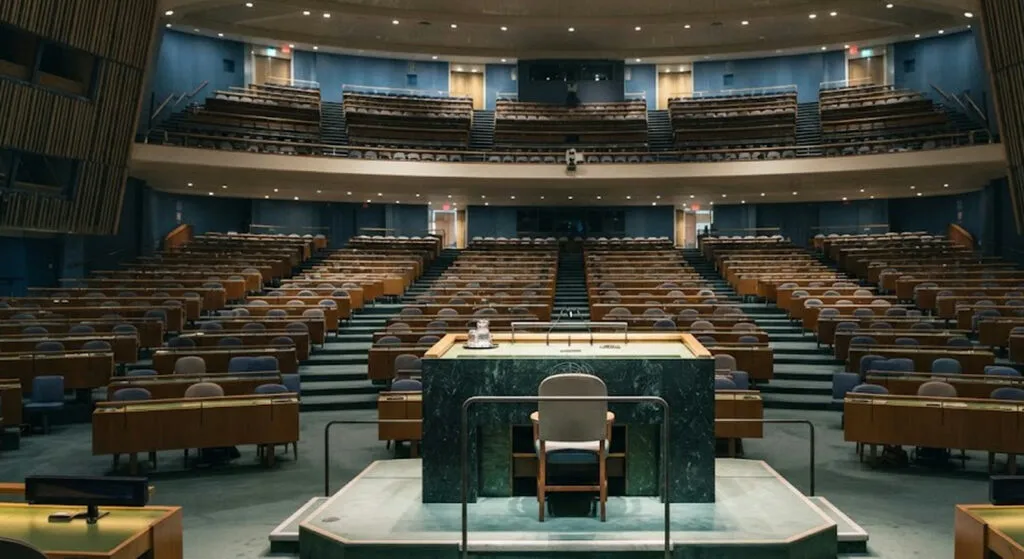
From the same podium, hours apart, the world got two contradictory versions of the same reality. First US President Donald Trump told the assembled delegates in New York that a year ago the war in Gaza was "raging at full force", and that weeks later his plan had ended it and saved, as he put it, countless thousands of lives. Then came French President Emmanuel Macron, who calmly and without a single diplomatic filter took that account apart.
Macron did not get into a debate about who signed what. He went after the only question that carries weight on the ground: did humanitarian aid get through. The answer he offered was no. A ceasefire has been declared, he said, but the humanitarian corridors into the enclave are not open - not for a second. That is not interpretation, it is a verifiable fact, and that is exactly why it lands harder than any speech.
"I hear cynicism from some: recognition is just paper, look at reality," Macron said, striking the lectern. And then he put the question diplomacy usually walks around: how credible is it to stand still and boast of a peace that has not opened a single crossing?
Peace as a press release
This is a model the Balkans recognise without translation. The agreement is signed, the cameras are satisfied, everyone gets a photograph for the history books - and nothing changes on the ground. The only difference is that our agreements were never declared a global triumph from a podium in New York.
Macron was delivering his final address to the General Assembly - his term expires next May - and had clearly decided there was nothing left to hold back. He warned about the daily violations in the West Bank, and about something larger than Gaza: that the world is quietly getting used to a return to a state where the rules apply to the weaker and not to the stronger.
That warning is not abstract for countries of our size. International law is the only thing a small state has instead of an army. When that law becomes something the big players cite when it suits them, it is not Paris that pays the bill.
The question neither speech answered remains: if peace has been concluded, who answers for the fact that aid is still not getting in? Declaring it is quick. Opening a crossing is not.
The latest 10 news from this category

The mechanism he describes - decision before evidence, evidence retrofitted to the decision - is real, and Iraq proved it....

Peter Magyar compared it to a club that puts you in the team without asking, then tells you to bring...
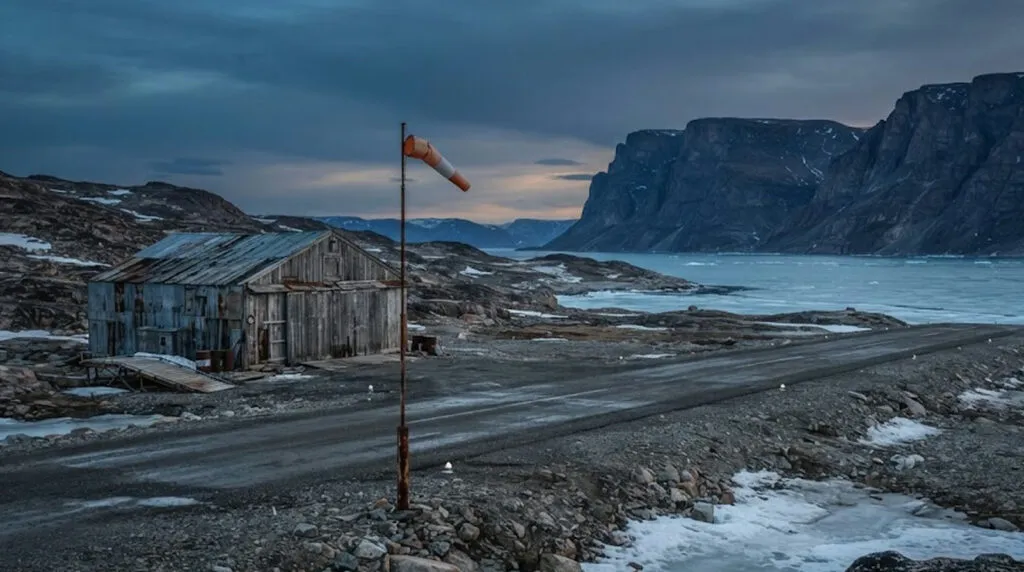
Washington, Copenhagen and Nuuk are signing off on a military presence on an island of 56,000 people - and the...
Phones in Krāslava rang by themselves, the fighters took off, and what exactly triggered the alert - nobody is saying....
In Mecklenburg the CDU finished on 4.9 percent and, for the first time in the history of the Federal Republic,...
Tisza took 16 years of power off Fidesz and won 141 of 199 parliamentary seats. Orbán now says Brussels is...
With 75 percent of protocols counted, the governing party leads in 208 of the 225 single-mandate districts. A parliament of...
He never sat on the throne, and the emirate is lowering its flags for ten days. Sometimes the surname says...
Three options on the table in Washington - military pressure, economic strangulation or a deal - and the president frames...
The party of Adenauer and Kohl slid to the electoral threshold in Mecklenburg, the AfD is already demanding the chancellor's...
This site uses cookies - is that okay? Learn more
Be the first to know when Metla launches something new
Leave your email and we will write when there is a new guide or something new on Metla.