Six Years of Fake Licence Categories Issued From an Interior Ministry Desk: Six Charged, 21 More Under Investigation
21.09.2026


21.09.2026
21.09.2026
21.09.2026
21.09.2026

21.09.2026
21.09.2026
21.09.2026

20.09.2026
20.09.2026
21.09.2026
21.09.2026

20.09.2026
21.09.2026

21.09.2026
21.09.2026

21.09.2026
20.09.2026
19.09.2026
21.09.2026

21.09.2026
21.09.2026
21.09.2026
21.09.2026

21.09.2026

09.03.2026

27.02.2026

19.02.2026
21.09.2026
21.09.2026
20.09.2026

23.04.2026

23.04.2026

12.04.2026

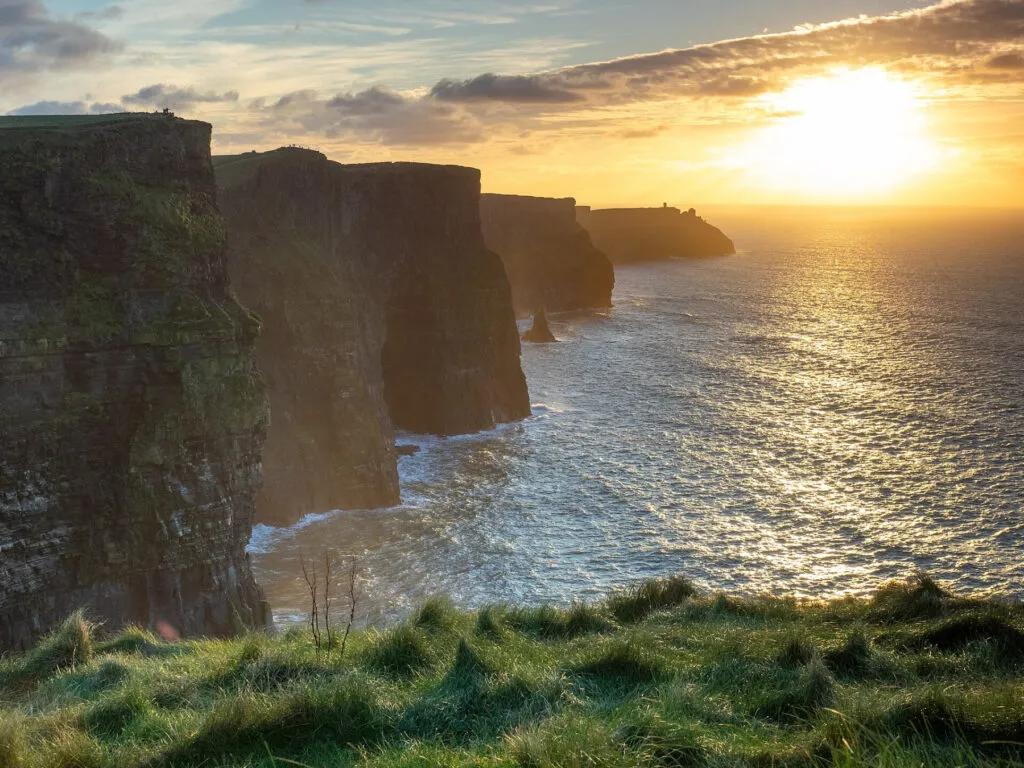
Shannon Airport, on Ireland's west coast, is where the world's first duty-free shop was born in 1947. Almost 80 years later it is still the best gateway to the west of the island: you pick up the rental car a few metres from the baggage belt and ten minutes later you are standing in front of a 15th-century tower. The whole of County Clare fits inside a ninety-minute radius. Breakfast by a lake, seafood facing the Atlantic at lunch, and sleep in the same room that night.
The castle with a banquet every evening. Bunratty is the fourth fortress raised on the same spot. The current one was built by the MacNamaras around 1425 and passed around 1500 to the O'Briens, the most powerful clan in Munster. When the owners moved into a more comfortable house beside it in 1804, the tower was left abandoned, the roof collapsed, and nobody touched it until the 1950s, when the seventh Viscount Gort restored it and opened it to visitors. A folk park surrounds it: a 19th-century street with a school, a print works and a drapery, farmhouses moved stone by stone, and people in costume grinding, brewing and baking in front of visitors. Watch the clock: the complex closes at half past five, but the last admission to the castle itself is at four sharp, because that is when preparations begin for the medieval banquet served every night. Fifty metres below is Durty Nelly's, a pub opened in 1620, with traditional music seven nights a week.
The city everyone skips. Twenty minutes south lies Limerick. On the bank of the Shannon stands King John's Castle, a 13th-century Norman fortress, beside it St Mary's Cathedral, and across the bridge the Hunt Museum, a collection of art and archaeology assembled by a couple of antiquarians. For food: the covered Milk Market, where producers from across the county lay out cheese, bread and seafood at weekends. A quarter of an hour further on is Adare, a village that competes every year for the title of prettiest in Ireland: a main street of thatched cottages built by the third Earl of Dunraven in the 1830s when he remodelled the village as part of his estate.
The bridge the locals closed themselves. Half an hour inland, where the river widens into Lough Derg, is Killaloe, which a thousand years ago was the capital of Ireland and the seat of Brian Boru, the last high king. Mostly names and the odd stone survive from that time, but the 13th-century St Flannan's Cathedral is intact, and it holds a slab carved by a Viking named Thorgrim, bearing both runic and ogham inscriptions. The thirteen-arch bridge linking Killaloe with Ballina, already in County Tipperary, is less than five metres wide and carried all the traffic between the two banks for two and a half centuries, lorries included. In May 2025 a new bridge opened a kilometre to the south, the first new road bridge on the Shannon in more than three decades. Then came a trial pedestrian zone on the old bridge, which people resolved in their own way: the moment the sun came out, they brought picnic tables onto the water. There were protests from traders, but on 17 October that year the two councils closed it to traffic for good. When people want a bridge for themselves, do the institutions listen? Here, evidently, yes.
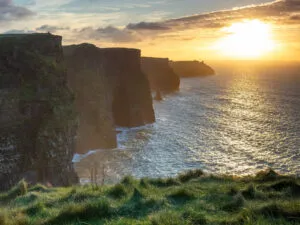
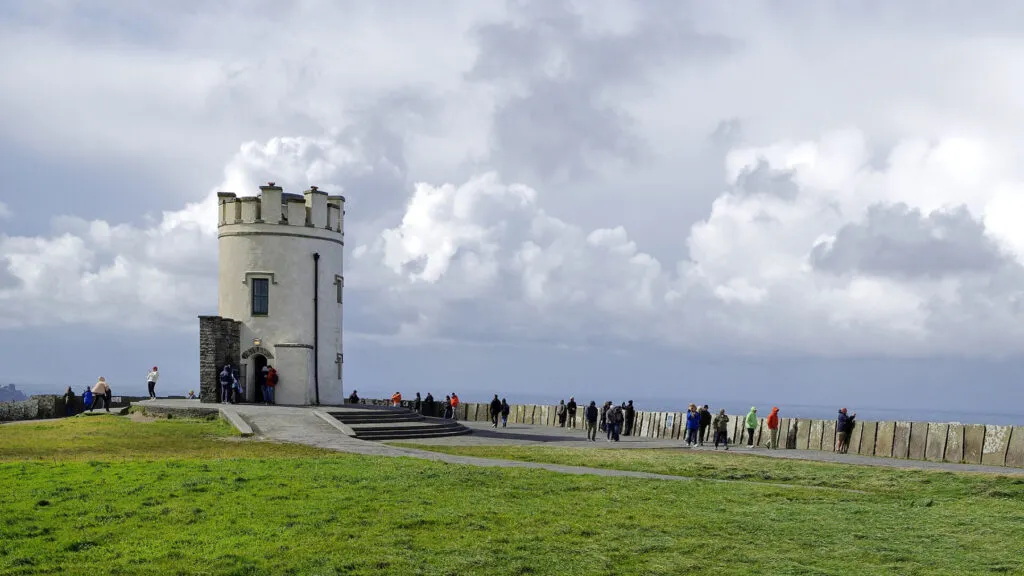
The edge of the Atlantic. The Cliffs of Moher start at 120 metres above the water at their southern end, at Hag's Head, and eight kilometres north they reach 214 metres. That is where O'Brien's Tower stands, built in 1835 by Sir Cornelius O'Brien, a local landowner and descendant of Brian Boru, convinced tourism could lift his neighbours out of poverty. The dark and light bands in the rock are layers deposited more than three hundred million years ago, and the ledges host the largest seabird colony in mainland Ireland, up to thirty thousand pairs. The other side of the story: in 2024 almost a million and a half people passed through, 59 percent of them between eleven and four. Hence a walk-up ticket costs 15 euros, while booked online it starts at eight for the morning and evening slots. In September and October the site stays open until seven, enough for the last of the light, when the clifftop empties and all that remains is the sound of the sea 200 metres below.
Stone that flowers. Burren in Irish means "rocky place", and at first glance it is nothing more than kilometres of cracked limestone with no trees. The geopark that joins it to the cliffs covers 530 square kilometres and carries a UNESCO stamp. The miracle is in the cracks: around 1,100 plant species grow in them, three quarters of all those found in the country, mixed in a way found nowhere else in Europe. Half an hour's walk away, on a bare rock platform, waits the Poulnabrone dolmen. Excavations in the 1980s found the remains of 33 people beneath the slab and showed it was in use for around 600 years. An arrowhead still sits in one of the pelvises. The oldest dated megalithic monument in the country, open at all hours, free.
Under the ground and over the sea. Doolin Cave is reached down 125 steps to a chamber more than 60 metres deep, where Europe's longest free-hanging stalactite hangs: 7.3 metres and around ten tonnes. From Doolin pier runs the shortest crossing to the Aran Islands, 15 minutes to Inis Oírr, 35 to Inis Mór, where the prehistoric fort of Dún Aonghasa sits on the very lip of the cliff. The same boat offers a 50-minute cruise beneath the Cliffs of Moher, the only way to truly grasp their height, looking up instead of down. The Atlantic has the final word on the timetable, so book ahead. Doolin itself is a small, straggling village that functions as the unofficial capital of traditional Irish music, with three pubs where there is playing almost every night.
The month of the singles. In Lisdoonvarna, a one-street village between the Burren and the sea, every September hosts the largest singles festival in Europe, with more than 165 years of history and, the organisers say, around sixty thousand visitors. Music and dancing in every bar from noon until dawn, and in the Matchmaker Bar sits Willie Daly, a third-generation matchmaker and the last to practise the trade the traditional way. Custom says that if you touch his book with both hands, there will be a wedding within six months. The origin of the legend is less romantic: after the harvest, unmarried farmers came down to the spa town to meet the ladies who had arrived for the mineral water. Where in the Balkans is there not a similar story - only without the book and without the matchmaker?
The edge with no railing. Anyone who wants vertigo without the coach queues drives south-west to the Loop Head peninsula, a tongue of land dividing the calm waters of the estuary from the open ocean. The road ends at a lighthouse whose origins date to 1670. In the grass on the hill you can still read the white letters E-I-R-E, a remnant of the Second World War intended for pilots flying over a neutral country. There is no visitor centre here, no ticket office, no railing - which means both absolute peace and an obligation not to approach the edge. No café, no shop between Kilkee and the headland, so you set out with water and food. Anyone wanting to take the solitude all the way can sleep in the lighthouse keeper's house, restored and let out by a foundation.
The latest 10 news from this category
Tremezzo, Bellagio, Varenna and the villa where Star Wars and Casino Royale were filmed - all on the same line...
Every airport on the planet copies that model, and almost nobody knows where it started. Around it - cliffs 214...
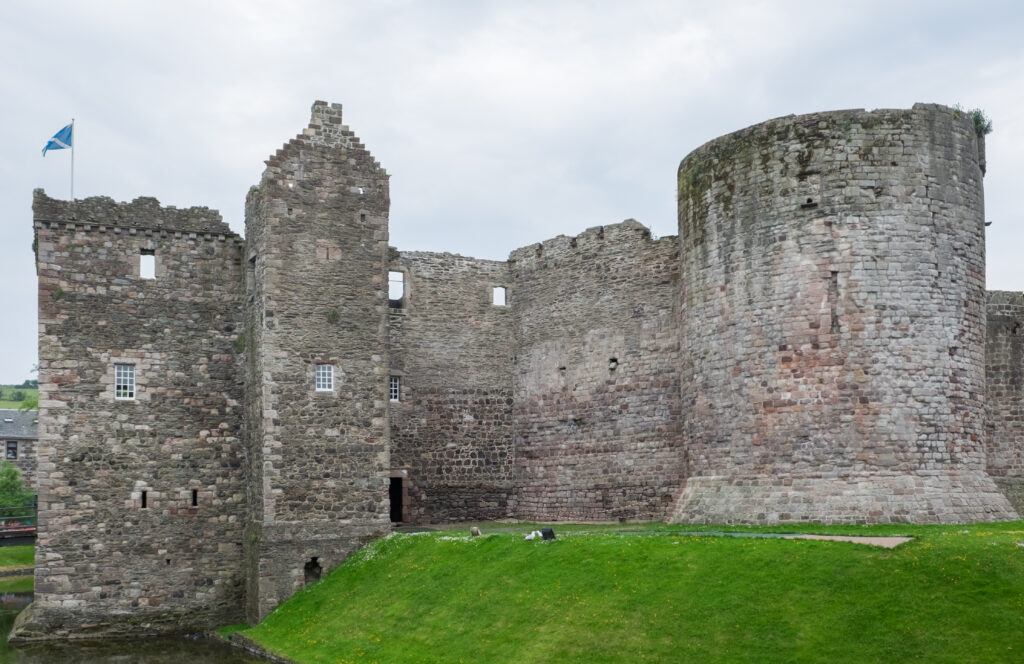
The royal couple walked yesterday into a pub the village bought back for itself. How many buildings like that sit...

Of twenty-five new inscriptions, five are natural - and only one is in Europe. For the richest of them, the...
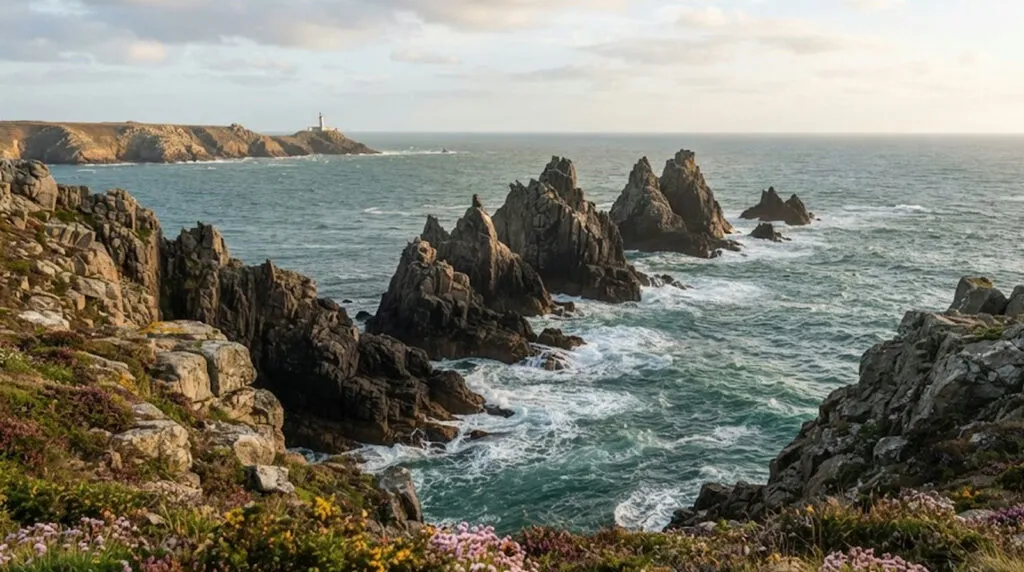
Fifty beaches, more than 120 villages and a trail France voted its favourite. Monet came for a few days and...
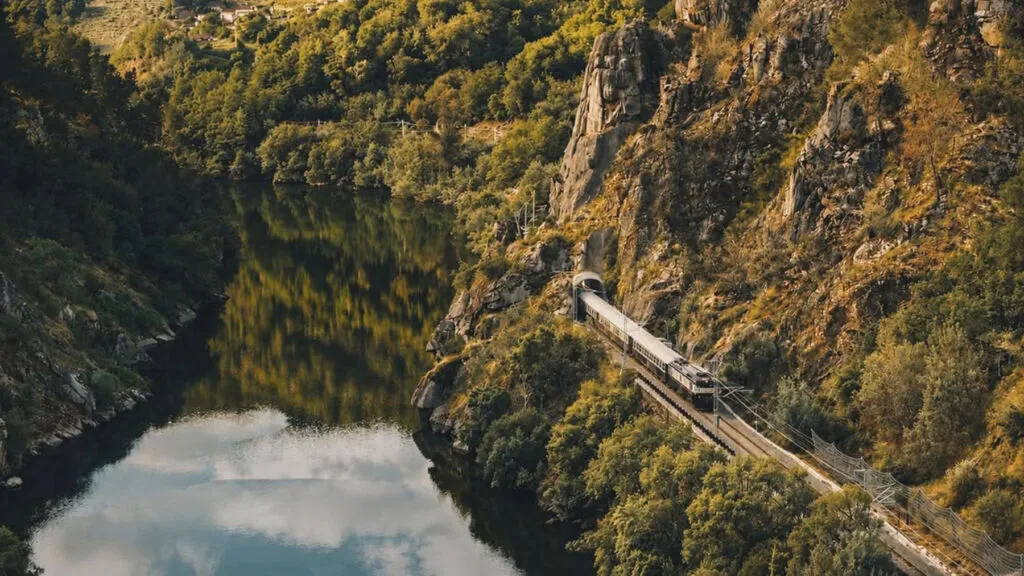
Restored carriages, a locomotive they call the Japanese Woman and a 28.95 euro return ticket. What it sells is not...
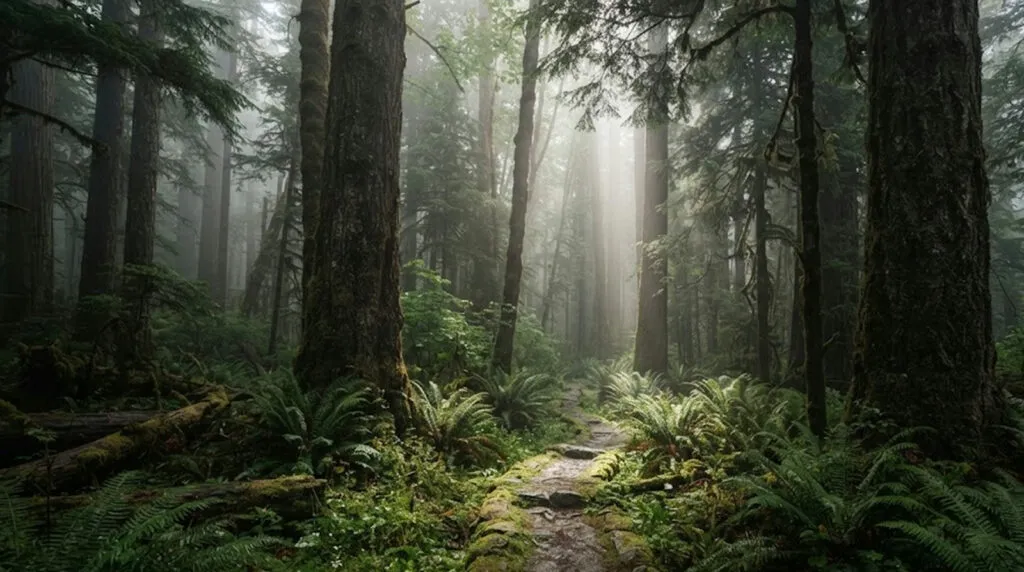
Two hundred and fifty tree species from every corner of the world, a monastery from 1628 and a palace that...
The same places cost more in August, look crowded and are experienced at half strength. The difference is made by...
The Beckhams have a place there, so do Kate Moss and Ellen DeGeneres. But the Cotswolds needs none of those...

Down on the coast the buses pass each other with centimetres to spare and all you see is people. Up...
This site uses cookies - is that okay? Learn more
Be the first to know when Metla launches something new
Leave your email and we will write when there is a new guide or something new on Metla.