UGD's E-Transcripts Were "Fixed" for Money for Five Years: Two Employees Held in Custody
05.11.2026


05.11.2026

05.11.2026

05.11.2026

05.11.2026

05.11.2026

05.11.2026

05.11.2026

04.11.2026

03.11.2026

05.11.2026

05.11.2026

04.11.2026

05.11.2026

05.11.2026

05.11.2026

05.11.2026

04.11.2026

03.11.2026

05.11.2026

05.11.2026

05.11.2026

05.11.2026

05.11.2026

04.11.2026

05.11.2026

04.11.2026

03.11.2026

23.04.2026

23.04.2026

12.04.2026

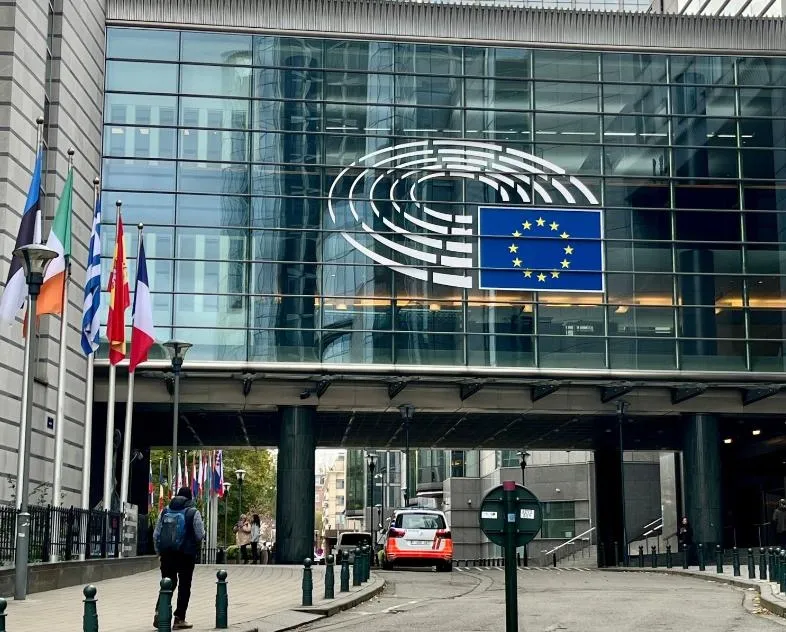
The European Commission has good news and bad news for the Macedonian economy - and both are in the new report. The good: real GDP grew by 3.5 percent in 2025, and growth in the first half of 2026 averaged 3.3 percent. The bad: what that growth is made of.
According to the Commission, growth was "mainly driven by consumption, credit expansion and state-supported demand", not by higher productivity. Strong growth in wages and pensions, accelerating lending, higher public spending due to public sector wages, and state-subsidised loans for companies. Net exports, meanwhile, dragged growth down.
The result shows in the number that hurts most: GDP per capita in purchasing power rose from 40 percent of the EU average in 2017 to 43 percent in 2025. Three percentage points in eight years.
Tenders without competition
On public procurement the Commission writes "no progress". In 2025, 33.9 percent of tenders had only one bid, 28.7 percent of procedures were cancelled, and electronic auctions were used in 22 percent of calls - against a target of 40 percent. The most economically advantageous tender criterion, which allows quality to be assessed alongside price, was applied in just 6 percent of contracts.
A single bid isn't proof of corruption. But when almost every third tender ends without real competition, the mechanism that's supposed to protect the state from inflated prices disappears. Who sets the price then?
Spending more, building less
Only 64.6 percent of the revised capital expenditure plan for 2025 was carried out. Through budget revisions, capital spending was cut by 6.6 percent and current spending raised by 3 percent. Pensions already cost 11.8 percent of GDP, compared with 9.8 percent in 2021, and the Commission notes that the increases in September 2025 and March 2026 were made ad hoc rather than through regular indexation.
The deficit in 2025 was 4 percent of GDP. With the July budget revision the 2026 target was raised from 3.5 to 4.1 percent, and the deadline for getting back under 3 percent was pushed from 2027 to 2028. Only 14.3 percent of VAT refunds were paid within the legal deadline - which, according to the Commission, hits companies' liquidity directly.
The Commission also questions the 250-million-euro credit line from the Hungarian loan. The loans carry a fixed interest rate of 1.9 percent, subsidising the difference to the market rate cost the budget around 3.8 million euros, and the purpose of the measure remains unclear, since the money wasn't directed to any specific industry.
An economy growing on wages, pensions and loans sounds good at a press conference. The question Brussels asks is simpler and more uncomfortable: what will be left when the spending stops?
The latest 10 news from this category

Pensioners and welfare recipients without cards get an appointment by text message. Pelagonia farmers say one tank of fuel for...

Energy in the eurozone is a fifth more expensive than last year. Here, statistics show 0 percent month on month,...

A company founded in 2024, with a product launched last summer and agents borrowed from Anthropic and OpenAI - now...

The tool anyone could use to make a poster or a presentation now has a competitor in every chatbot. The...

A web host with about 400,000 paying customers admits to an attack that lasted since August. How many were affected?...

Queues at ATMs in Bitola, cards stuck in the machines, public-sector salaries in question. Deposits are insured up to 30,000...
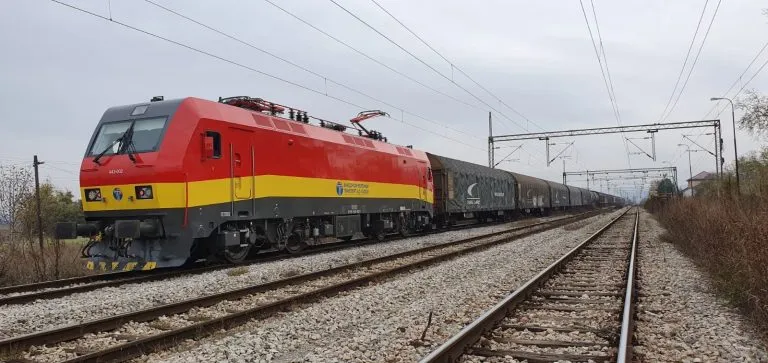
Of 47 passenger carriages, two are in regular service. Of 1,382 freight wagons, more than a thousand aren't allowed on...

In one shipment - a pesticide banned in the EU, in the other - residues above the permitted limits. Farmers...

Geoffrey Hinton isn't afraid of robots, he's afraid of the dark: power grids and banks down for days. And he...

The most popular AI companions have 220 million downloads, and many of them aim squarely at younger users. Apple now...
This site uses cookies - is that okay? Learn more
Be the first to know when Metla launches something new
Leave your email and we'll write to you when there's a new guide or something new on Metla.