
Prime suspect in the Dukjandžik killing arrested in Kosovo - the hunt for the second goes on
26.09.2026


26.09.2026

26.09.2026

26.09.2026

26.09.2026
26.09.2026

26.09.2026

26.09.2026
25.09.2026

24.09.2026

26.09.2026

26.09.2026

25.09.2026

26.09.2026

26.09.2026
26.09.2026

26.09.2026

25.09.2026
24.09.2026
26.09.2026
26.09.2026
25.09.2026
26.09.2026

26.09.2026

26.09.2026

09.03.2026

27.02.2026

19.02.2026

26.09.2026

25.09.2026

24.09.2026

23.04.2026

23.04.2026

12.04.2026

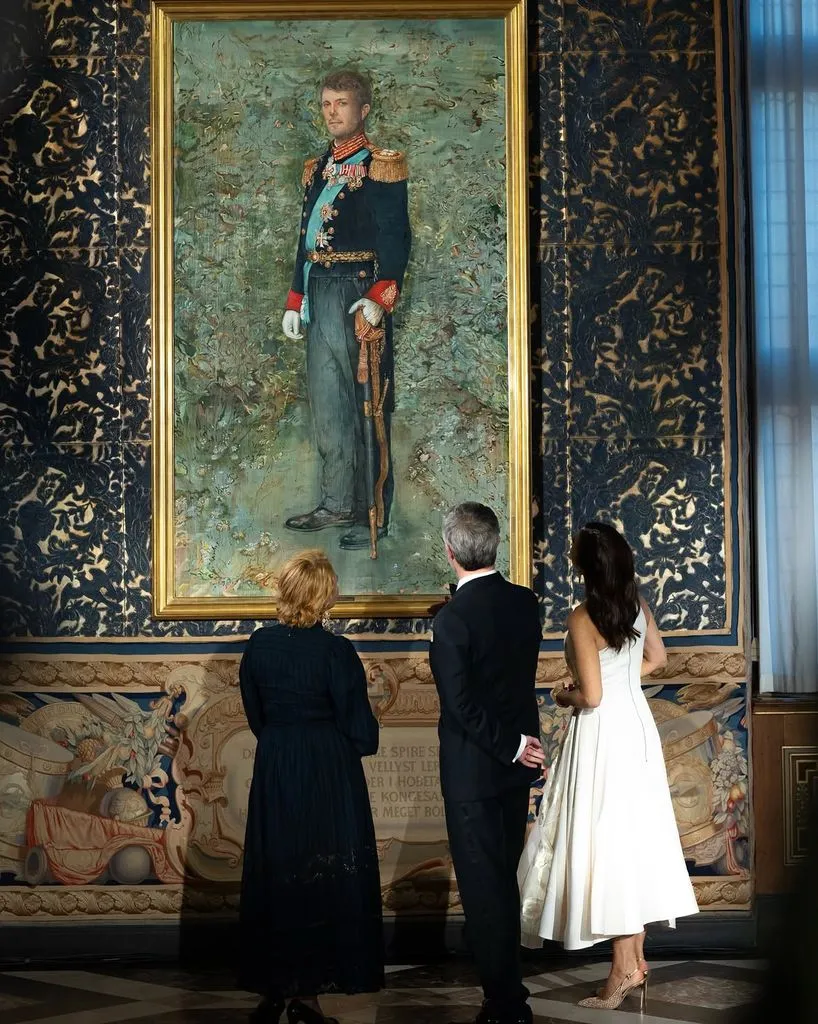
In January 2024 Margrethe II signed her abdication, and Denmark saw something that hadn't happened in almost 900 years: a monarch stepping down voluntarily. Her son became Frederik X. Now, two and a half years later, the Royal Court has taken the next step in building the new reign - unveiling the king's first official oil portrait.
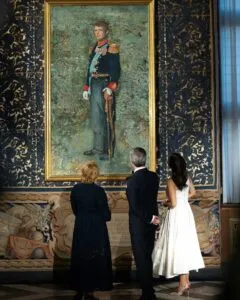
The portrait was painted by visual artist Kathrine Raben Davidsen, who spent two full years on it. Frederik didn't pose from a photograph. He went to her studio in person several times, and in spring 2026 he saw a prototype of the canvas. The work was unveiled on 25 September at Frederiksborg Castle, at a gala dinner marking 150 years of the Carlsberg Foundation.
The location was no accident. The painting will hang in Frederiksborg's Knights' Hall, and a few days before the unveiling the king went there to see the wall waiting for it. A royal portrait isn't meant for a family album but for halls that generations of tourists, diplomats and school trips will walk through.
The canvas holds everything the monarchy wants to say without a single word: a ceremonial military uniform, gold epaulettes in high relief, a light-blue sash and the court's highest decorations, including the Order of the Elephant. The background is in shades of green, blue and gold and is meant to evoke nature and Nordic light. The court describes the work as a contemporary figurative style within Frederiksborg's tradition of painting.
That's exactly the point. The brushstrokes are contemporary, but the code is as old as the Glücksburg dynasty itself. A monarchy that wants to present itself as renewed and modern still displays power through epaulettes and medals - just as everyone before Frederik did. The packaging changes; the contents stay the same.
And that's not a mistake, it's strategy. A king who came to the throne by signature rather than by his predecessor's death has to build his own image - literally and figuratively. The portrait in the Knights' Hall is part of that work, just like every appearance, every dinner and every chosen outfit. In the Balkans, where for decades the portrait on the wall of every office told you who was boss, this logic needs no translation.
The latest 10 news from this category

The bionic man of the seventies is ageing like the rest of us - he just refuses to turn it...
Daily horoscope - 26.09.2026
A hundred or so guests, a mayor instead of a priest, and a bride without a classic wedding dress. Five...
Daily horoscope - 25.09.2026
Daily horoscope - 24.09.2026
Eleven ritual acts, a purpose-built crematorium and all of it broadcast live. Fourteen months of preparation for five days of...
The book came out on Tuesday, the apology arrived the same day, and a lawsuit is being announced. The publisher...
Daily horoscope - 23.09.2026
A transplanted lung and a ceremony that allows no improvisation. The Norwegian monarchy is learning to operate with absence as...

More than 50 million records sold and six decades on screen. When a public broadcaster celebrates itself, it rarely takes...
This site uses cookies - is that okay? Learn more
Be the first to know when Metla launches something new
Leave your email and we will write when there is a new guide or something new on Metla.