
Food safety inspector detained in Skopje: a clean inspection report allegedly came with a price tag
25.09.2026


25.09.2026

25.09.2026

25.09.2026

25.09.2026

25.09.2026

25.09.2026

25.09.2026

24.09.2026

23.09.2026

25.09.2026

25.09.2026

24.09.2026

25.09.2026

25.09.2026

25.09.2026

25.09.2026

24.09.2026

23.09.2026

25.09.2026

25.09.2026

25.09.2026

25.09.2026

25.09.2026
24.09.2026

09.03.2026

27.02.2026

19.02.2026

25.09.2026

24.09.2026

23.09.2026

23.04.2026

23.04.2026

12.04.2026


It's Friday, the week was exhausting, and at last you have a free afternoon. You sit down on the sofa. Five minutes later you're already thinking about the wardrobe that needs sorting, the work you could get done in advance, the gym. And the afternoon you needed so badly fills up with obligations again, almost without you noticing.
We live in a society that rewards productivity and reads a packed schedule as a virtue. But what if the urge to make use of every minute is no longer a choice? What if behind the apparent virtue lies a way of avoiding what's really bothering us? That's the question raised by Isabel Hernandez, head of the Department of Psychology at the European University of Andalusia.
First, so as not to overstate it: an active life isn't a problem in itself. Some people enjoy stacking up commitments, working out, being involved in ten projects at once. The problem starts when, instead of enjoyment, there's a feeling that they're not allowed to stop. "The difference isn't so much in how many things a person does, but in how they relate to the activity they're doing," Hernandez explains.
When rest brings guilt
If rest brings guilt or anxiety, or you constantly feel the need to be doing something, the activity may be serving another purpose: keeping at bay emotions we find hard to face. The mind stays busy so as not to think and not to feel. The problem is that being busy doesn't mean we're dealing with what's troubling us - we're just putting it off.
There's even a term for it: leisure guilt, the discomfort some people feel when they spend time on something they don't consider useful. It appears even when every task is done, like an inner voice reminding you that you could be doing something more useful. "We can actually learn to associate being busy with doing the right thing, and rest with being unproductive," the psychologist says. And when the pace slows down, the worries we'd successfully swept under the rug come out.
When worth is measured in results
It gets most dangerous when we start measuring our own worth by what we've produced. Then one unproductive day, one mistake or the need for rest feels like a defeat. "If I have to achieve things to feel that I'm worth something, every mistake, every break or every phase of life with lower productivity can feel like a personal threat," Hernandez warns.
She draws a clear line between healthy ambition and toxic productivity. Healthy ambition is tied to motivation, personal growth and curiosity. The toxic kind appears when producing stops being a choice and becomes a compulsive need in order to feel worthy - so even when the goals are reached, the satisfaction is short-lived and the need for more comes straight back. According to her, research links self-esteem built on success with greater exhaustion and burnout. Social media adds its own twist: it "works like a permanent shop window of success", where you see the achievements and the idealised routines but not the cost - burnout, anxiety, irritability. Some people, she says, even lose the ability to recognise what they'd like to do other than work.
Rest isn't something you earn
Psychological recovery requires exactly those moments when the mind switches off from obligations, and a greater ability to switch off is linked to less fatigue, better sleep and greater well-being. Advice for those who recognise themselves here: start gradually. You don't need to jump from a packed schedule to a whole empty afternoon. It's enough to set aside small windows with no productive goal and sit through the discomfort that comes up, without immediately looking for a new task. "Rest isn't wasted time, nor is it something we have to earn after we've produced. It's a basic need for recovery that all people have." If the guilt or anxiety is so strong that it shapes everyday life, Hernandez recommends working on it with a therapist.
In a culture where "don't sit there with your arms folded" is something you hear from childhood, this sounds almost subversive. But maybe that's where the knot is: not in how much we do, but in what we're running from while we do it. Rest shouldn't become one more obligation to tick off.
The latest 10 news from this category
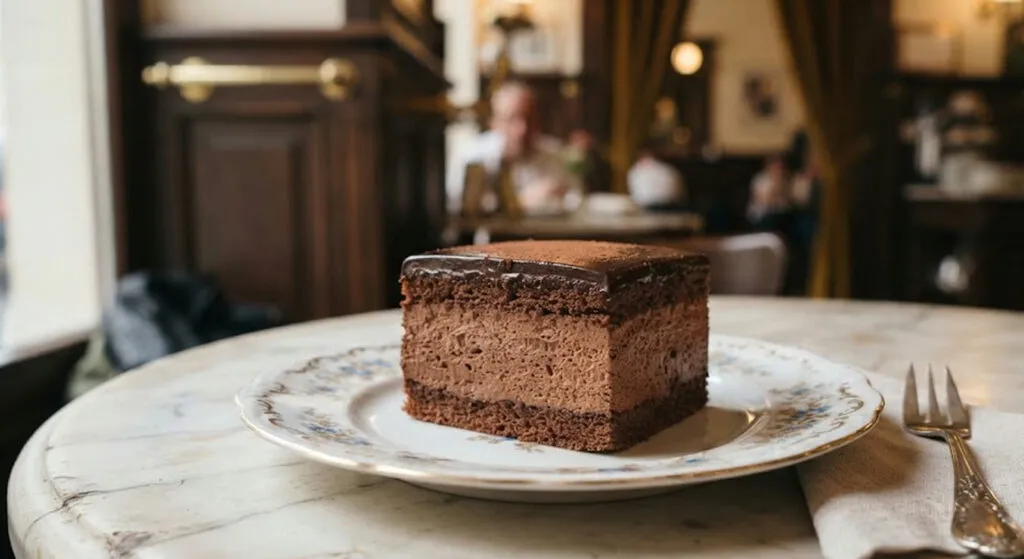
The scandal lasted less than a decade; the cake has survived more than a century. The step that makes it...

An expert says Presley Gerber's death cannot be linked to ibogaine. But the substance he tried carries a risk that...

The five dishes of Chuseok take days of work, and fewer and fewer people have the time. Why slowness is...

Sleep, hormones, metabolism and concentration all depend on a single signal that arrives through the eyes. No capsule, no subscription...

Five ingredients, fifteen minutes of cooking and the name of a nineteenth-century poet. Skip the soaking and you get a...

The sleep industry sells mattresses, lamps and trackers. The psychologist said for free what none of them will tell you.

Cream in carbonara is an invention that took hold outside Rome. If the pan is hot when the eggs go...

He is confident while being praised. When somebody else gets the credit, he goes defensive, gets angry, or belittles them....

Components separately, or full boxes ready to reheat. One gives you variety, the other speed, and blanching your vegetables before...

A Japanese study put participants on a treadmill at three to six kilometres an hour. After ten minutes they solved...
This site uses cookies - is that okay? Learn more
Be the first to know when Metla launches something new
Leave your email and we will write when there is a new guide or something new on Metla.