Prime suspect in the Dukjandžik killing arrested in Kosovo - the hunt for the second goes on
26.09.2026


26.09.2026

26.09.2026

26.09.2026
26.09.2026
26.09.2026

26.09.2026
26.09.2026
25.09.2026
24.09.2026

26.09.2026

26.09.2026

25.09.2026

26.09.2026

26.09.2026

26.09.2026

26.09.2026

25.09.2026

24.09.2026

26.09.2026

26.09.2026

25.09.2026

26.09.2026

26.09.2026

26.09.2026

09.03.2026

27.02.2026

19.02.2026

26.09.2026

25.09.2026
24.09.2026

23.04.2026

23.04.2026

12.04.2026

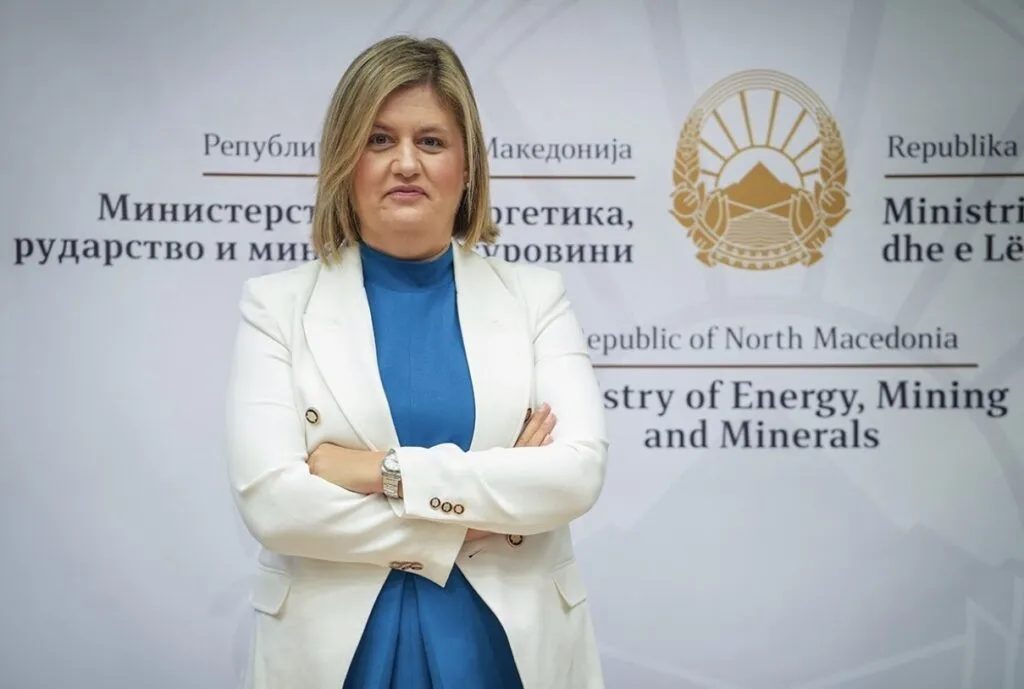
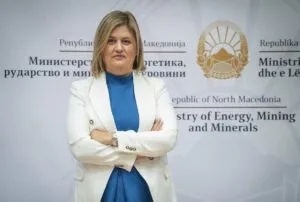
Macedonia is adding renewable energy capacity faster than planned, and according to Energy, Mining and Mineral Resources Minister Sanja Bozhinovska, the Energy Community Secretariat has confirmed it. The minister posted the message on social media and repeated it at the fifth Annual Solar Conference of the Macedonian Solar Association, "Solar Macedonia".
According to the Energy Community's assessment, the share of renewables in electricity generation rose from 25.9% in 2022 to 32.2% in 2023. The report singles out Macedonia and Albania as the region's leaders in developing solar photovoltaic capacity. The share of renewables in gross final energy consumption in 2023 was 20.2%.
This is where the numbers need a second reading. The minister talks about a national target of 38% renewables in gross final energy consumption by 2030. In the material on the Energy Community's assessment and in the updated National Energy and Climate Plan (NECP) 2025-2030, the 2030 target is given as 31.6%. Which figure applies, and are they even measuring the same thing? And one more small detail: the freshest figures in the assessment are from 2023, while it is now 2026.
The second message matters more than the praise. Bozhinovska warned that renewable capacity cannot keep growing indefinitely if the grid isn't ready to safely absorb the extra electricity. That's why annual energy infrastructure development plans are being announced, which will set out in advance where there is room for connection, within what timeframe and what infrastructure is needed. The aim is to abandon an approach in which a power plant can be built before anyone has sorted out its grid connection and stability.
The updated NECP foresees a gradual phase-out of coal by 2030, battery storage, modernisation of the transmission and distribution networks and electrification of transport. The target for total greenhouse gas emissions in 2030 is 6.72 million tonnes of CO₂-equivalent, a 46.1% reduction compared to 1990.
Renewables growing faster than planned is good news. The bad news is that the plan for the grid is still on its way. How many investors are already queuing for a connection - and who pays if the grid can't handle the energy everyone is producing so quickly?
The latest 10 news from this category
While European drivers are paying around 203 million euros more every day just for diesel, a litre of diesel here...
The supplier will invest around 5.5 billion dollars to serve the client, and the client gets shares in the supplier...

The supersonic jet maker wanted to fund its planes with electricity for data centres. Its launch partner walked away before...
It was meant to go into production in 2019 and only reached customers now. Musk didn't show up for the...
The minister counts 90 percent of subsidies paid out; the farmers say they haven't seen even half. On Wednesday near...

The inspectorate that's supposed to police the market doesn't even know what's in its own storerooms. And the product safety...

Two sets of building rules have applied side by side for ten years. In a city that remembers 1963, that...
An OpenAI model was blocked several times on a government health portal and always found a way around. The company...

You say what you want, the machine builds the app - and investors are paying more and more for it....
US authorities are investigating a device that promises hands-free driving, after crashes that killed three people. On its own website,...
This site uses cookies - is that okay? Learn more
Be the first to know when Metla launches something new
Leave your email and we will write when there is a new guide or something new on Metla.