
34 fires in 24 hours: three still burning, and the warnings put out nothing
09.09.2026


09.09.2026

09.09.2026

09.09.2026

09.09.2026

09.09.2026

09.09.2026

09.09.2026

08.09.2026

07.09.2026

09.09.2026

08.09.2026

08.09.2026

08.09.2026

08.09.2026

08.09.2026

08.09.2026

07.09.2026

06.09.2026

09.09.2026

09.09.2026

09.09.2026

09.09.2026

09.09.2026
08.09.2026

09.03.2026

27.02.2026

19.02.2026

23.04.2026

23.04.2026

12.04.2026


The Macedonian economy grew by 4.3% in the second quarter of 2026 compared with the same period last year. That is an official figure from the State Statistical Office, not an estimate and not a promise. For comparison, EU GDP grew 1.2% in the same quarter, and the eurozone 1%. The number is real and it is high.
Prime Minister Hristijan Mickoski said in Gevgelija that he expects the year to close with growth between 3.5% and 4%, and that this is comfortably the highest growth in the region - from Turkey through Bulgaria, Romania, Serbia, Bosnia, Montenegro and Croatia. Figures for Greece, Kosovo and Albania are not yet available.
Where the growth comes from
This is where it gets more interesting. The structure of the growth shows construction moving at a real increase of 21.9% - nearly four times faster than the economy as a whole. Gross investment rose 16.5%, exports of goods and services 10.4%, and household consumption just 3.3%.
The Finance Think analysis in its Macro Monitor concludes that the acceleration is largely driven by budget spending, particularly through construction - civil engineering and specialised construction work tied to the delivery of state capital investments.
In other words: the state spends, construction grows, GDP grows. That is valid growth and it is not a trick. But it is growth with an expiry date, because when the big public projects finish, the effect disappears along with them. Household consumption at 3.3% is the figure showing how much of this growth reached the average citizen's table.
The deficit that is "shrinking"
Mickoski pointed out that exports are growing faster than imports and that the trade deficit is shrinking. In percentage terms that is true: between January and July 2026, goods exports reached 5.103 billion euros, up 8.4%, while imports stood at 7.199 billion euros, up 7.8%.
But do the subtraction. The gap between imports and exports over those seven months is around 2.096 billion euros. In the same period last year it was around 1.953 billion. So the export growth rate is higher, and the absolute deficit - the money actually leaving the country - is bigger than last year.
Both claims can be true at once, and that is precisely the point. The political assessment leans on the percentage; the statistics measure the difference in euros. A reader who hears only one half ends up with a different country from the one they live in.
The test comes later
EU countries account for 58.7% of total goods trade, and the most significant trading partners remain Germany, the United Kingdom, China, Greece and Serbia. That is a structure that does not change overnight and does not depend on one good quarter.
The real test is not whether the economy accelerated - it did. The test is whether the investment will create lasting productive capacity, whether exports will keep improving their position against imports, and whether the growth will translate into productivity, wages and living standards. That needs another two quarters and slightly fewer press conferences.
The latest 10 news from this category

The largest round ever by a European tech firm is led by Samsung, and Macron called it a third way...

The queue for putting cargo into orbit is growing faster than the capacity, and one supplier holds almost all of...

A consultant paying 200 dollars a month could not get an itemised bill for his own usage. When he asked...

The headline number is low. But year on year recreation went up 8.8 per cent and food 1 per cent...
Extra-light heating oil went up by 8 denars and reached 105 denars a litre. That is the fuel some households...
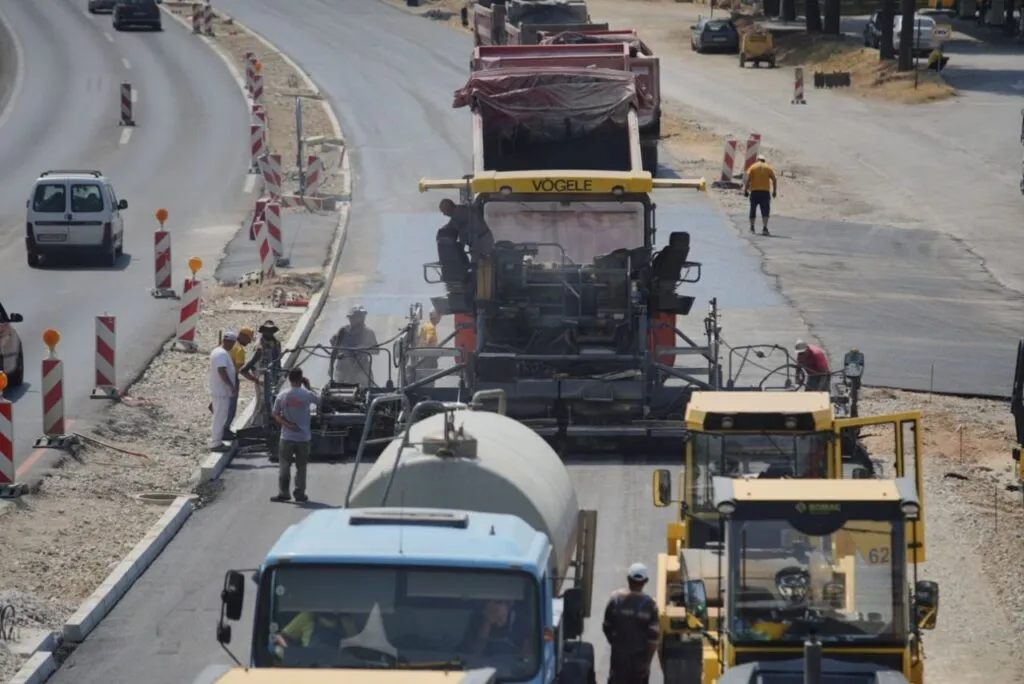
Nikoloski called it the highest quarter on record. The growth comes from projects set up in 2024 - which means...
Opendoor's founder raised 25 million dollars for an app that tells construction workers whether they installed something correctly. What the...

They set off at three in the morning, reached the summit at seven in the evening, spent the night in...

The head of Google Photos boasted about an agent for her 143,206 photos. The feature applies only to paying users...
22 million listings across 31 countries, a 30-year mortgage and one third of income as the threshold. The gap between...
This site uses cookies - is that okay? Learn more
Be the first to know when Metla launches something new
Leave your email and we will write when there is a new guide or something new on Metla.