
The PM Says a Prosecutor Is an Accomplice, but Won't Name Him: Defendant on Five Million Euro Bail Crossed the Border Legally
01.08.2026


01.08.2026

01.08.2026

01.08.2026

01.08.2026

01.08.2026

01.08.2026

01.08.2026

31.07.2026

31.07.2026

01.08.2026

01.08.2026

31.07.2026

01.08.2026

01.08.2026

01.08.2026

01.08.2026

31.07.2026

30.07.2026

01.08.2026

01.08.2026

01.08.2026

01.08.2026

01.08.2026

31.07.2026

09.03.2026

27.02.2026

19.02.2026

01.08.2026

31.07.2026

30.07.2026

23.04.2026

23.04.2026

12.04.2026

There is a person who passed in front of your eyes for months and you never even noticed them. Then they changed their hair, showed up at a big competition, appeared in a few videos - and suddenly they look irresistible. Nothing about them has changed in any real sense. What changed is how many times your brain has seen them.
Psychologists do not call that love. They call it the mere exposure effect and have been documenting it since the sixties, when American psychologist Robert Zajonc demonstrated something that sounded almost insulting at the time: the more often we see something or someone, the more we like them. For no reason. Without a single conversation. Purely from repetition.
Aurora López, a psychologist specialising in relationships and couples therapy, explains that two things are working at once here. The second is the halo effect - when we see one highly visible positive trait in someone and then unconsciously attribute everything else to them as well. „We see someone shine at one thing and we believe they are perfect at everything else. That is a generalisation bias“, she says. Good-looking, famous, the hero of one moment - and we are already assigning them loyalty, kindness, emotional maturity. „The judgement comes fast and without any real data.“
The mechanism is physiological, not romantic. „Every time you see a face, the brain processes it. The second time the cognitive effort is smaller, but by the tenth time that face is already comfortable, predictable and safe to the nervous system“, López explains. The problem is that the brain does not distinguish „this is familiar to me“ from „this attracts me“. It reads comfort as a positive signal.
And here is the part worth saying out loud: today you do not decide what becomes familiar to you. The algorithm decides. Some engineer at some company set the parameters, and the faces that will circle in front of your eyes for the next three weeks have already been chosen. The industry making money from that has no interest whatsoever in explaining to you how it works.
López offers a few questions for checking what is real. What do you actually know about this person - if you like their public image, then you like a character you have filled in yourself with everything you want to find. What happens when they disappear from the screen - log off for two weeks, and if the interest cools, that was familiarity, not attraction. Are you drawn to this person or to the way you imagine they would make you feel. And finally: check in real life, because genuine attraction grows in awkward moments, not in perfectly edited videos.
„We live in a world designed to produce desire, and very few people stop to ask themselves whether what they feel is real or constructed“, the psychologist says. Next time you sigh over a face you had not even registered until now, don't go looking for fate in it. Sometimes it is just an algorithm that did its job well.
The latest 10 news from this category

Three versions, one tin and six hours of setting. A cake you cut after three hours is not a finished...

It is not attraction, it is recognition pretending to be attraction. And whoever decides which face you see ten times...

Thin skin, almost no heat and a protected mark that lifts the price. And the most common frying mistake is...

No powdered supplement, no branded treatment. She works out at home and she dances - and she needs her body...

The acid thickens the filling in the bowl, before the oven. Which is why every extra stir ruins the texture.
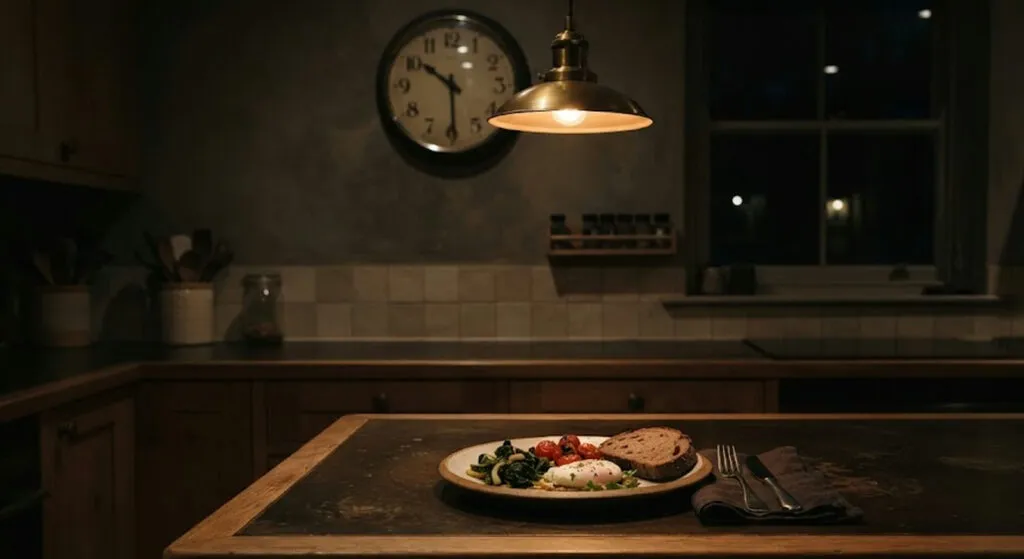
There is no magic hour after which the body stops working. There is only a meal too heavy for an...

Vinegar, onion and pepper smother the taste of the fruit. That is why the cherries go in last, not together...

Not to weep, not to rage, but to understand. A 17th-century philosopher wrote the manual for family group chats, except...

Everyone assumes cannelloni means oven and béchamel. It does not. Four cold versions, not a single degree of oven heat,...

The brain holds on to one criticism longer than to ten compliments. That is not weak willpower - it is...
This site uses cookies - is that okay? Learn more
Be the first to know when Metla launches something new
Leave your email and we will write when there is a new guide or something new on Metla.