The PM Says a Prosecutor Is an Accomplice, but Won't Name Him: Defendant on Five Million Euro Bail Crossed the Border Legally
01.08.2026


01.08.2026
01.08.2026
01.08.2026
01.08.2026
01.08.2026

01.08.2026
01.08.2026
31.07.2026

31.07.2026

01.08.2026

01.08.2026

31.07.2026

01.08.2026

01.08.2026

01.08.2026

01.08.2026

31.07.2026

30.07.2026

01.08.2026

01.08.2026

01.08.2026
01.08.2026

01.08.2026

31.07.2026

09.03.2026

27.02.2026

19.02.2026

01.08.2026

31.07.2026
30.07.2026

23.04.2026

23.04.2026

12.04.2026

The government has declared a nationwide state of crisis over wildfires, lasting thirty days and starting on 1 August. The announcement calls the decision confirmation of a commitment to act proactively. Proactively - on 31 July, after a full month of burning. The main headquarters at the Crisis Management Centre now has twenty-four hours to produce an action plan and an inventory of which human and material resources are actually available. Which means that until yesterday, that document either did not exist or was not good enough to use without a declared crisis. In a country where something burns every single summer, taking stock of your own resources is not a thing you do once the fire is running. It is a thing that should have been sitting finished in a drawer since April.
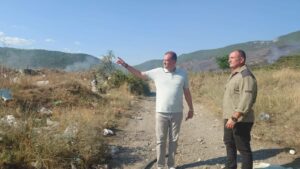
The decision did not come from a forecast. It came from the ground. While the government was in session, two fires broke out near Valandovo on the same day - one in the fields around the village of Udovo, and almost simultaneously another at the municipal landfill. The wind pulled the fire out of the landfill and carried it up into the hills, where the terrain is hard to cross, so two air tractors from the Directorate for Protection and Rescue took off. Mayor Gjoko Kamchev is convinced the landfill was set alight deliberately. That single sentence shifts the story from natural disaster to something with a perpetrator. The appeal not to burn stubble is correct and necessary, but both the appeal and the criminal complaint arrive after the fire is already moving.
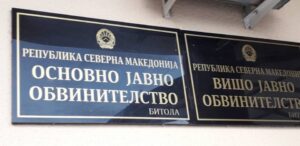
A man charged over public procurement abuses worth 1.7 million euros crossed the state border on 29 July and nobody stopped him. Not because the system failed by accident, but because the system had previously, through its own institutions, handed his passport back. Borche Markovski left detention in January on a property bond of roughly 4.9 million euros. The prosecutor in Struga issued a negative opinion on returning the travel document, but the Higher Prosecutor's Office in Bitola sent down a conclusion instructing the junior prosecutor to file a positive one. Now Prime Minister Hristijan Mickoski says one local prosecutor is an accomplice in the process - but will not name them. That is the heart of it: if you have enough to call someone an accomplice in a criminal case, you have enough to file a complaint. If you do not, then you do not have enough for that description in front of cameras either.
SDSM is announcing two interpellations and a blockade of the „Skopje 2028” bill. Of everything raised at the briefing, the procurement claim is the most checkable: the City of Skopje would set up a separate foundation which, in its purchasing, would not be obliged to apply the Public Procurement Law. The bill was pulled from the agenda with word that it returns in September. Bypassing that law is not a political question - it is a question of who spends the city's money, and how. Venko Filipche also admitted something rarely said out loud: „I think there will be elections when they run out of money.” That is not a plan. That is waiting.
The internal control department at the Interior Ministry has filed a criminal complaint against two Struga police officers for mistreatment in the line of duty. According to the complaint, they punched and kicked a man who was handcuffed, inside a police station. Both are suspended, their weapons have been taken, and disciplinary proceedings are running in parallel. That the system reacted this time is a fact and should not be dismissed. But the detail worth holding onto is the date: the incident happened on 14 May, and the public is only learning about it now. Thoroughness and silence are not the same thing, and the gap between them is paid for in trust.
Seven villages around Novo Selo, Velestovo and Elshani near Ohrid, six water supply facilities in the Kichevo area and the natural spring in Bashino Selo near Veles - all of it is one and the same story, published on one and the same day. In Novo Selo the contamination follows last week's storm: wind, power cut, water supply cut, then contamination. That is a system in which a single night of rain is enough to void the basic guarantee that what comes out of the tap is safe. In the Ohrid villages, faecal contamination was detected. And one figure explains the whole thing better than the rest: fully 90 percent of village water systems sit under local community councils that have neither the money nor the technical capacity for regular disinfection.
The white foam appeared on 24 July in the Lepenec near Zlokukjani and spread down the Vardar. Seven days have passed and we still do not know who released it. What we know, and only unofficially, is that it is a chemical used in detergent production. The report by the public water utility is finished and submitted, but has not been published, while the State Inspectorate waits on its own results. The Inspectorate adds a sentence worth reading closely: water quality in that stretch was influenced by multiple factors - municipal and stormwater runoff, plus the activity of numerous businesses in the area. That is true. It is also the most efficient way to spread one responsibility across so many possible sources that in the end it lands on nobody.
The whole country is in the orange phase with temperatures up to 40 degrees, and a doctor is reminding people that during the previous wave there were strokes among farm workers every single day. In parallel, the figures for West Nile fever stand at thirteen cases and three critical. The severe form appears in one percent of those infected, and the most effective measure is not spraying - spraying kills mosquitoes for one night, while emptying the saucer under your flowerpot stops the next two weeks of them. Both stories share a property: the recommendations are long and obvious, while the part that actually decides the outcome is short and nobody reads it.
The average interest rate on total loans fell to 4.67 percent, but on newly approved loans it is rising - while banks are suddenly offering 2.74 percent on new savings. At the same time, fifty square metres in Centar costs 168,000 euros: flats sold are up 37 percent, their value up 43. When the money grows faster than the quantity, more is not being sold - it is being sold dearer. And the „Estakada” bridge is getting new asphalt across 1.5 kilometres, with the announcement listing square metres and layers but missing the only information thousands of drivers need: from when to when, and by which route.
The Serbian prime minister landed unannounced in Ohrid two days after a no-confidence vote, bringing three ministers for electricity, corridors and food. The statements talk about friendly relations; the composition of the delegation talks about a gas interconnector, a rail corridor, and the winter ahead. In Europe, six large member states reshaped the sanctions package - not Hungary and Slovakia, but Germany, France, Italy, Austria, Greece and Portugal, each shielding something of its own. And Europe's border fell for a single day in Ceuta, where sixty thousand people crossed and returned within that same day, after which Italy proposed that Spain be thrown out of Schengen. Solidarity lasted one night.
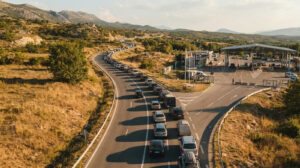
On Ilinden, the 55th All-Macedonian Gathering takes place in Trnovo, and the Municipality of Bitola this time published exactly what a person actually needs - the place, the hour and the stop, with six free buses. For anyone heading to Greece, Evzoni and Dojran carry the whole wave, with the heaviest pressure on Friday and Saturday before noon. In sport, Vardar returns to the Champions League after three years, while Skopje hosts a tournament Macedonia is not playing in. And Franco Baresi has died at 66 - the number six, and with him the last era when football was remembered through people rather than transfer fees.
If there is anything shared across the heavier part of the day, it is not one theme - it is one and the same running order. The wildfire plan gets written after the burning. The passport goes back, and then an investigation is demanded. The complaint against the officers travels two and a half months before it gets a name. The foam waits seven days for a culprit. Everywhere there is an institution, a procedure, a document - it is just that each of them switches on after the thing has already happened. A declared crisis is not a bad thing, quite the opposite: it unlocks resources and a chain of command that does not exist in normal conditions. The problem is not that it was declared. The problem is that it gets declared every year, and every year afterwards everything returns to the start.
The latest 10 news from this category

A judge returned the passport of a man accused over a 1.7 million euro tender, then retired three days later....
In almost every story today, the information existed before the damage: the excavator's plan was visible for two days, the...
Twenty-two days of sewage in the water supply, and the health watch now shifts to hepatitis. A factory that promised...

The river cleaned itself, the tap water in Gostivar still is not drinkable, and the budget revision passed without a...

Today Macedonia's institutions were loudest when announcing things and commemorating things, and quietest when a number was required. „A larger...
Five million euros of damage at a substation nobody was guarding, 456 unenforced demolition orders in Ohrid, and water that...
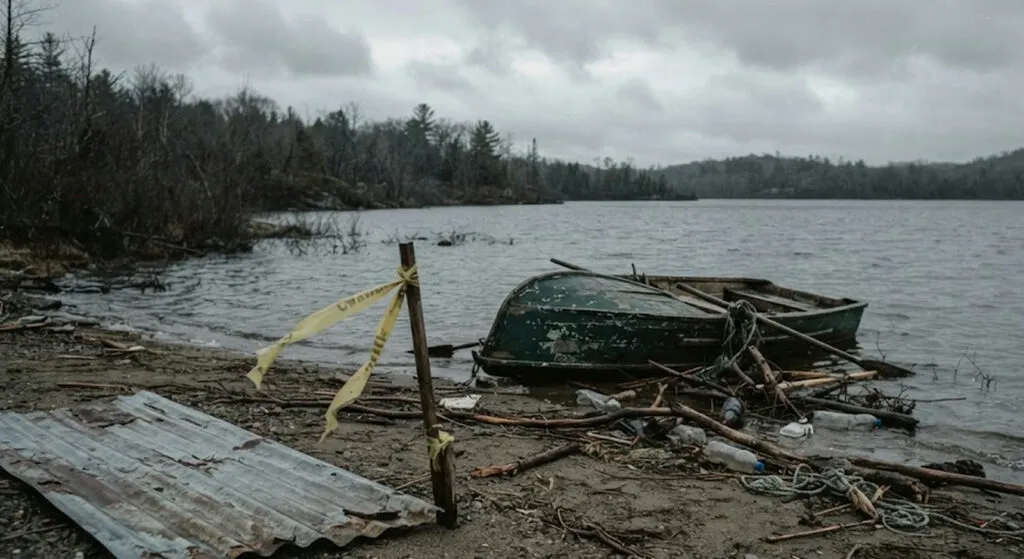
A day of unfinished cleanup: the storm left speedboats on dry land and metal over people's heads, UNESCO gave us...

The day passed under the sign of institutions that announce, inspect and tender - but rarely carry through. From 456...

A day in which the state measures damage, announces inspections and collects selectively - but rarely answers the questions that...
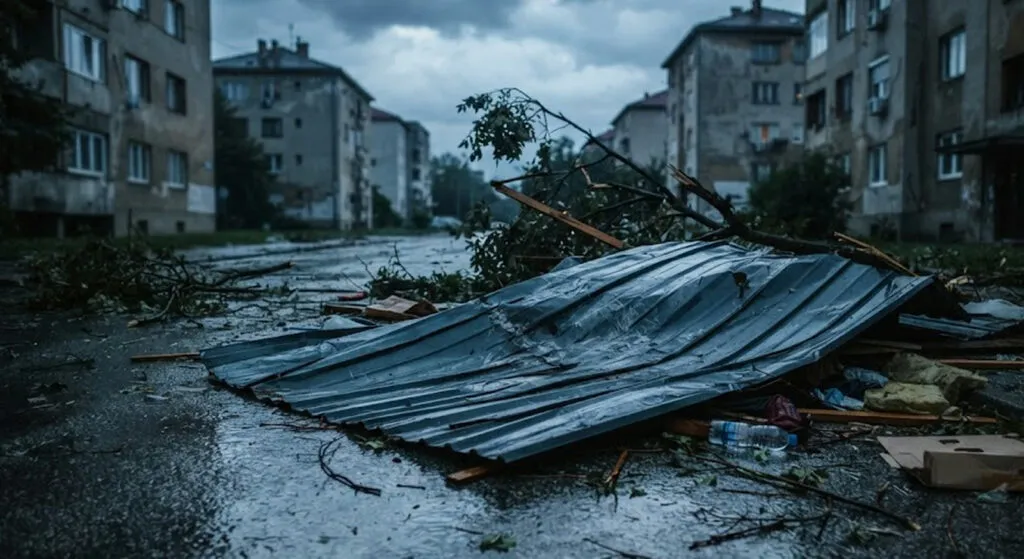
A hurricane-force wind flattened roofs, trees and flagpoles in a matter of hours - and showed how easily infrastructure falls...
This site uses cookies - is that okay? Learn more
Be the first to know when Metla launches something new
Leave your email and we will write when there is a new guide or something new on Metla.