


They Rode In on Scooters, Torched the Shops and Left: The Fire in Shuto Orizari Burned for Three Hours, Setting It Took Fifty Seconds
13.09.2026


13.09.2026

13.09.2026

13.09.2026

13.09.2026

13.09.2026

13.09.2026
13.09.2026

12.09.2026

11.09.2026

13.09.2026

13.09.2026

12.09.2026

13.09.2026

13.09.2026

13.09.2026

13.09.2026

12.09.2026

11.09.2026

13.09.2026

13.09.2026

13.09.2026

13.09.2026

13.09.2026

12.09.2026

09.03.2026

27.02.2026

19.02.2026

13.09.2026

12.09.2026

11.09.2026

23.04.2026

23.04.2026

12.04.2026

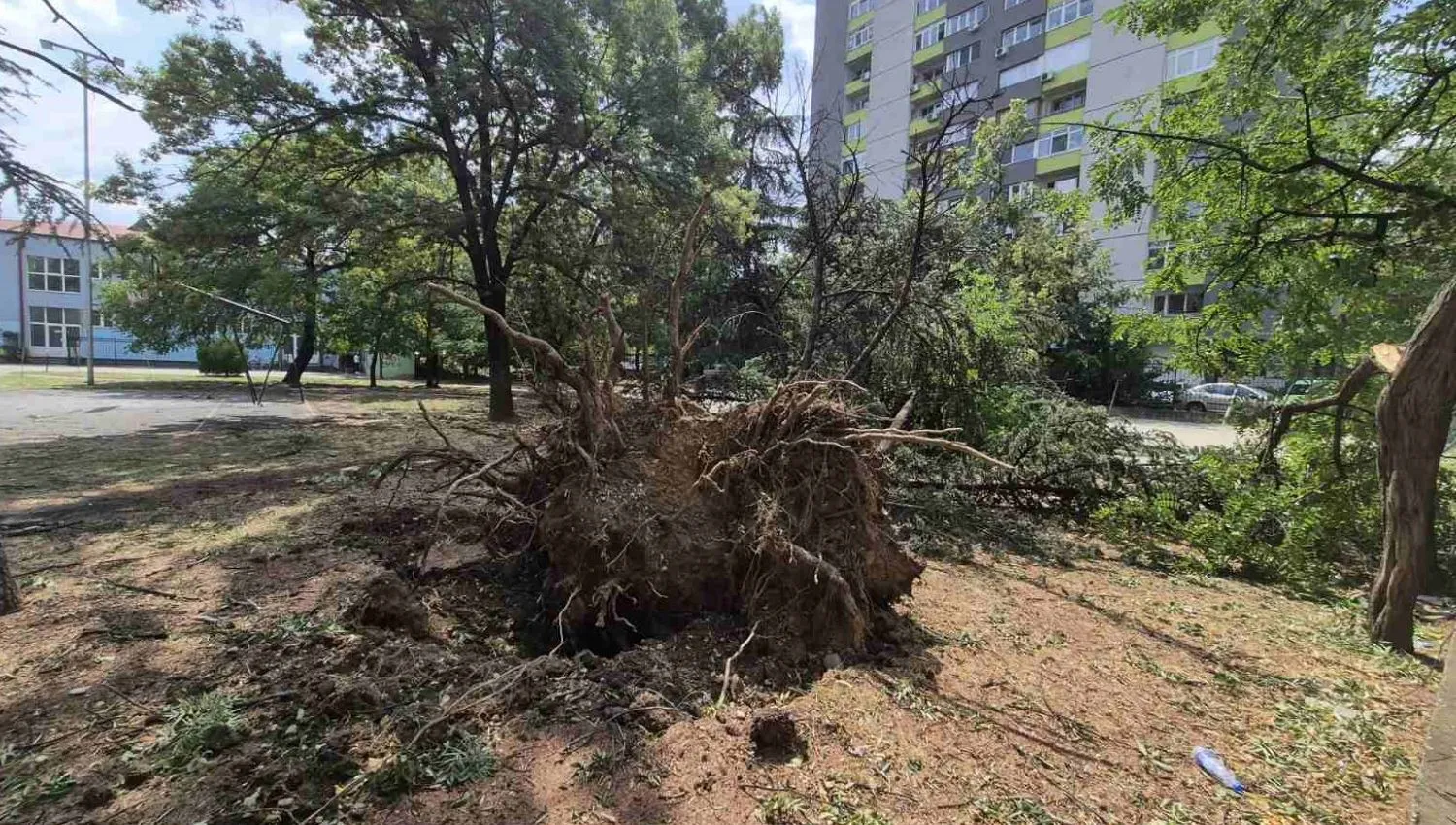
It wasn't a „strong wind." The State Hydrometeorological Administration said what anyone who watched roofs flying yesterday already knew in their gut: the wind that struck Skopje, Štip and Strumica had the strength of a hurricane. By the Administration's own definition, that means speeds over 118 km/h - a phenomenon that, they say, „occurs very rarely in this territory and causes heavy destruction and significant widespread damage."
The automatic stations leave no room for downplaying it. The strongest gust, 134 km/h, was recorded in Štip, with 130 km/h in Skopje and Novo Selo. This isn't a summer storm - it's a number you usually read in reports from the Caribbean, not from the Vardar valley.
The scale is measured in phone calls. Over 9,000 calls for help reached the 112 line in a matter of hours. In Skopje alone, by ten in the evening, there were 117 damaged vehicles, 35 damaged roofs, 189 fallen trees, seven wrecked traffic lights, ten fires and ten injured people on record. Each of those figures is somebody's car, somebody's flat, somebody's morning that starts with cleanup instead of coffee.
In the hospitals, the tally of the injured kept climbing. At the „St. Naum of Ohrid" surgical clinic, 22 people came in for examination, and two were kept for hospital treatment. One was operated on during the night for a broken arm. The other is a foreign tourist, injured by a falling tree around the pelvis - a man who came to Macedonia on holiday and leaves with a hurricane story. At the trauma clinic, according to the health minister, 11 patients were admitted, three of them with serious fractures.
Most injuries are minor and were treated on an outpatient basis, and that's the only good news in the whole picture. But the question left hanging over the ripped-open roofs isn't meteorological. If the Administration says winds like this are expected „very rarely," why does the city - the trees, the traffic lights, the old structures - fall at the first such blow? The rarity of the event is no excuse for the unpreparedness of the infrastructure. Next time it blows 130 an hour, will we count roofs again, or will someone finally count what hasn't been maintained for years?
The latest 10 news from this category
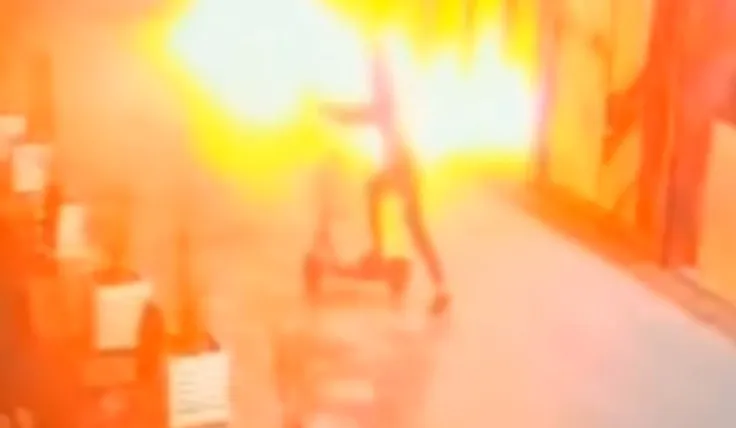
More than 20 shops burned down in a single night, and security camera footage shows the fire was deliberately set....

A head-on crash at two in the morning on the local road to Miladinovci: two dead at the scene, three...

Twenty-seven criminal complaints, four middlemen, and two men who used a forged licence to obtain certification to drive an international...

Five negations in one sentence, pension growth "16 times higher" with not a single figure beside it, and a third...

One side waits for a letter, another waits for a different commission, a third waits for consent. In those same...

The commission's chairman says it only checked whether the documents were complete. The public call says something else entirely -...

Ivanovska recalls why Vodno was forested in the first place. Gerasimovski says the court annulled the old plan and a...

Three Bulgarian ministries, MPs from different parties and flags inside the medical centre. MAEI asks why a check-up in a...
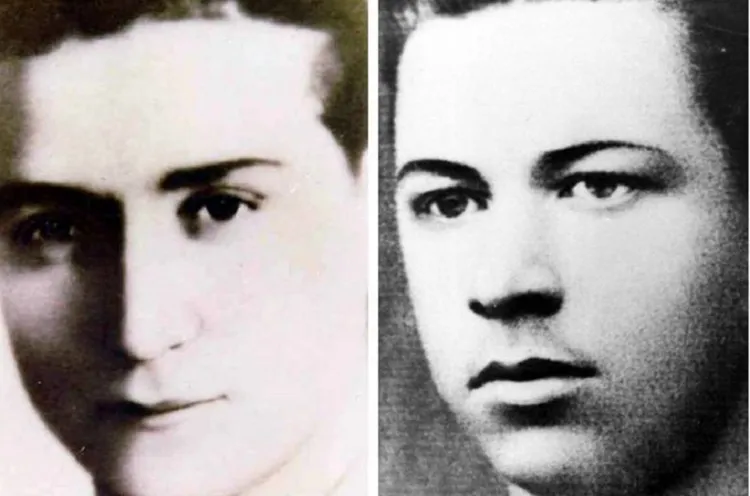
Flowers were laid in Bitola for Stefan Naumov and Dimitar Bogoevski. Behind the anniversary stand two biographies that ended at...

Veles, Berovo, Centar, Prilep, Tetovo. In three cases wives attacked their husbands, in one a father beat his son, in...
This site uses cookies - is that okay? Learn more
Be the first to know when Metla launches something new
Leave your email and we will write when there is a new guide or something new on Metla.
