
Six Men Brawled Outside the Police Station in Kočani: Now They'll Also Check What the Officers Were Doing
17.08.2026


17.08.2026

17.08.2026

17.08.2026

17.08.2026

17.08.2026
17.08.2026

17.08.2026

16.08.2026

15.08.2026

17.08.2026

17.08.2026

16.08.2026

17.08.2026

17.08.2026

17.08.2026

17.08.2026

16.08.2026

15.08.2026

17.08.2026

17.08.2026

17.08.2026

17.08.2026

17.08.2026

16.08.2026

09.03.2026

27.02.2026

19.02.2026

16.08.2026

15.08.2026

14.08.2026

23.04.2026

23.04.2026

12.04.2026
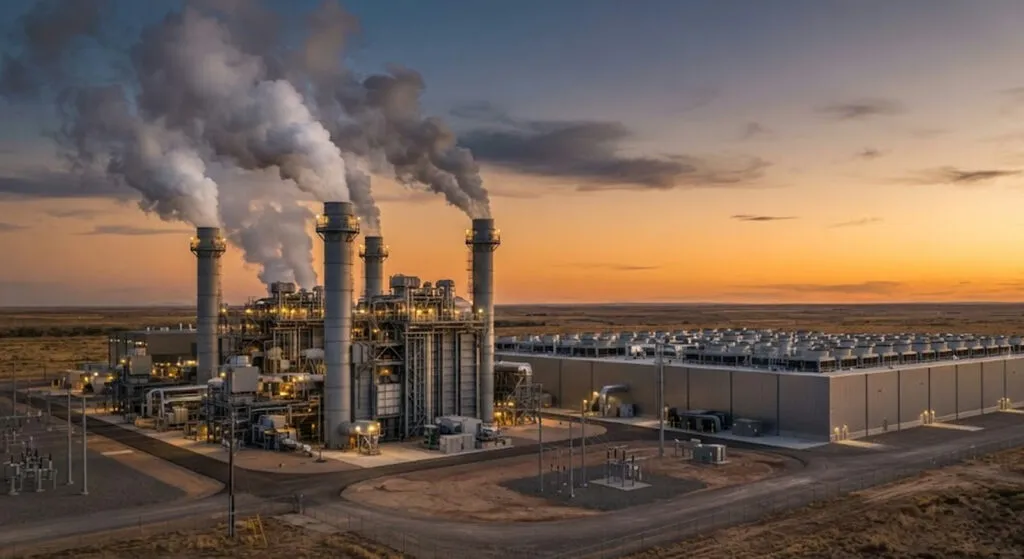
For years Amazon, Google, Meta and Microsoft bought wind turbines and solar farms and then advertised it as proof that artificial intelligence would be clean. Now all four are throwing themselves at natural gas at the same time, and one energy analytics firm argues that is exactly what they will regret.
Noreva's report says the price of natural gas in parts of the US could triple in the coming years. The reason is arithmetic, not ideological: demand from data centres is rising, supply growth is falling, and liquefied gas exports tie the American market to the world market. Today the price ranges from about 2 to 4.5 dollars per million BTU, and the most traded hub, Henry Hub in Louisiana, is under 3 dollars. Noreva expects it to jump past 10 dollars at individual hubs.
"I think everyone in energy markets fooled themselves that the price of gas cannot go up," says Peter Gardett, chief executive of Noreva. "You only need simple arithmetic to arrive at a far tighter gas market than the one it was in just a few years ago."
How big the stake is
The numbers are serious. In March Meta announced it is building a 7.5 gigawatt gas plant in Louisiana for its Hyperion data centre. Within days Microsoft and Google separately announced their own one-gigawatt plants, both in Texas. Amazon is planning 7.6 gigawatts, also in Texas. Companies that spent decades avoiding heavy capital expenditure are now building heavy industry and entering a market they know far less about than software.
Gardett recounts that one investor he spoke to was "surprised" by how much gas price risk these firms are knowingly taking on. "They are doing things that are not normal for someone who just needs to buy energy," he says.
Who pays the difference
Fuel is around half the cost of electricity from a large plant. So gas that is twice or three times more expensive makes these "bring your own power" data centres far costlier to run. From there only two exits remain, and both land on somebody else: either every query to the model gets more expensive, or the hyperscalers plug into the grid and push up the price of electricity for everyone else. Already 80 percent of consumers are worried about the impact of data centres on their electricity bills. Gas is the next column on the same bill.
Gardett does not claim they got it wrong - futures are not signalling any drama for now. "It is not an unreasonable bet," he admits. He is just not convinced it is the right one. And one of his remarks says more than the entire report: "On future Alphabet earnings calls you will hear them talking about the correlation between the natural gas price and Google's results, which is strange, but here we are."
And there is the genuinely interesting part. The industry that talked most about decarbonisation has ended up with quarterly results that will depend on the price of a fossil fuel. Not because anyone forced it, but because it wanted power immediately, and wind and sun do not arrive on a schedule that suits an announced product. What good is a net-zero pledge if the model's deadline moves faster than the grid's?
The latest 10 news from this category

An investor told the Anthropic chief executive to be a „more positive advocate” for his industry. The answer was sharper...
Eleven people in Paris claim the GPUs companies already own are running far below capacity. They set the deadline for...
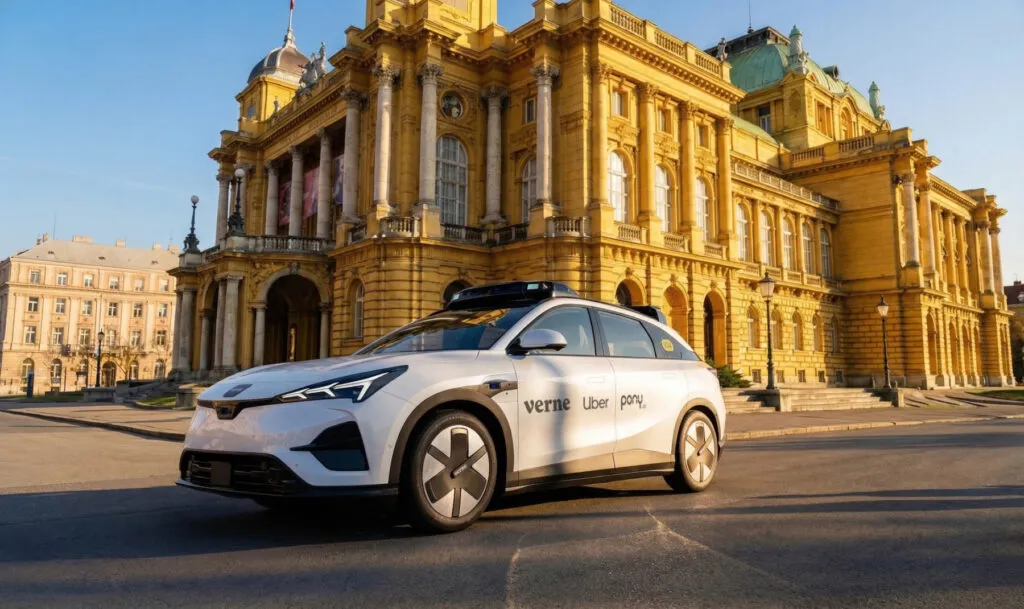
Pony.ai provides the technology, Uber provides the users, and a local partner gets the maintenance, cleaning and charging. Four European...

The ban on autonomous trucks over 4,500 kilograms fell in April, and Aurora and Kodiak got permits immediately. The lawsuit...
The company tried to delay answering until the Supreme Court ruled on something else. It failed - and only then...
The codebase is fifteen times larger than before, and users get a file with the labels attached to their profile....
Nobody told them they were not alone on the project. Each concluded the other was deliberately obstructing it - and...
Until now the private sector was allowed to defend but not to attack. One signature brought that wall down, and...

Same screen, same design, a new processor and an agent that phones a restaurant on the user's behalf. The price...
The product director told 3,000 furious users why the switch is set the wrong way round. Then he admitted he...
This site uses cookies - is that okay? Learn more
Be the first to know when Metla launches something new
Leave your email and we will write when there is a new guide or something new on Metla.