

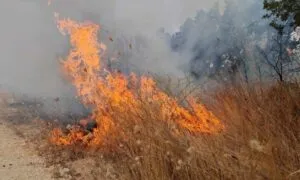
It's October, and Macedonia Is Still Burning: 30 Fires in a Single Day, Five of Them at Landfills and Rubbish Dumps
09.10.2026


09.10.2026

09.10.2026

09.10.2026

09.10.2026

09.10.2026
09.10.2026

09.10.2026

08.10.2026

08.10.2026

09.10.2026

09.10.2026

08.10.2026

09.10.2026

09.10.2026

09.10.2026

09.10.2026

08.10.2026

07.10.2026

09.10.2026

09.10.2026

09.10.2026

09.10.2026

09.10.2026
08.10.2026
09.10.2026

08.10.2026

07.10.2026
08.10.2026

06.10.2026

05.10.2026

23.04.2026

23.04.2026

12.04.2026

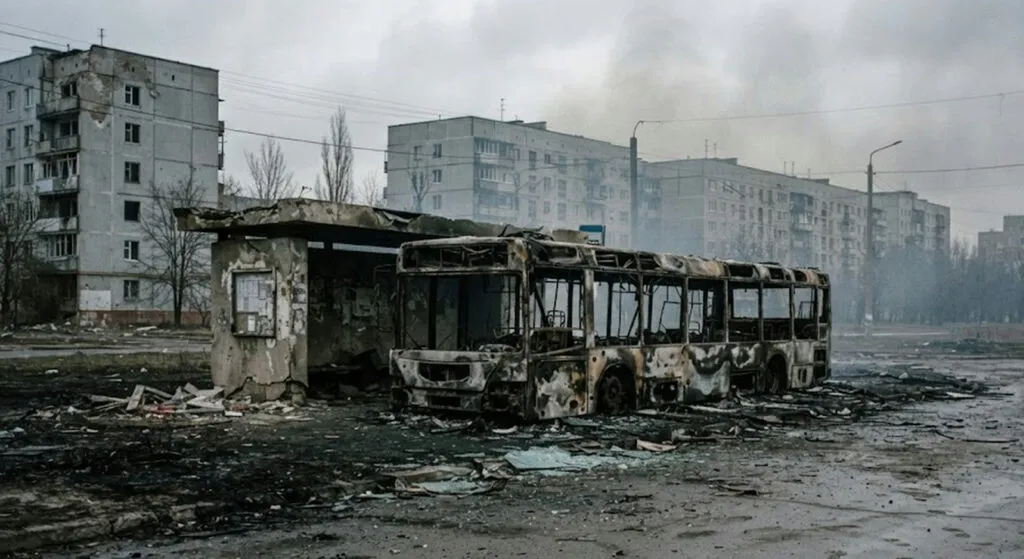
On the morning of October 8, a Russian guided bomb fell on the bus station in Kramatorsk. The first reports spoke of 30 killed, and the State Emergency Service later reported 33 dead and 18 wounded. Two buses were hit - the fire engulfed them and the area around them, and the photos published by the governor of the Donetsk region, Vadym Filashkin, show at least one bus burned down to the metal.
"The Russians target civilians. A bus full of passengers is an attractive target for them precisely because with one hit they can kill as many people as possible," Filashkin said. That isn't the rhetoric of a man seeking sympathy - it's a description of a method. After the attack, the military administrations of Kramatorsk and Sloviansk ordered a complete halt to public transport. A city living on the front line is now left without buses too.
This isn't the first strike on a bus in the city. On October 2, at around 7 a.m., a Russian FPV drone hit a passenger bus on a regular route, and two passengers were wounded. In six days - from a drone on one bus to a bomb on an entire station. When the pattern is this clear, the question "was it deliberate" is no longer a question.
The day didn't stop at Kramatorsk. According to the governor, another four people were killed and six wounded in the rest of the Donetsk region by morning. Russian forces shelled populated areas in the region 31 times in 24 hours, and 256 people were evacuated from the front line, 32 of them children. The night before, Russia sent 142 Shahed drones towards Ukraine, and the Ukrainian air force says 126 of them were shot down or electronically disabled.
Omsk, 2,500 kilometres away
A few hours after the attack, explosions rang out at Russia's biggest oil refinery, in Omsk. Local residents reported at least two detonations and smoke over the plant, and the governor of the Omsk region, Vitaly Khotsenko, confirmed that air defences were operating against a drone attack. Take-offs and landings at Omsk airport were temporarily restricted.
The refinery lies more than 2,500 kilometres from Ukraine, beyond the Urals. It isn't the first time it has been targeted - in July the same plant was hit by Ukrainian drones and operations stopped completely. The same night, according to initial information, fires also broke out at the "Gazprom Neftekhim Salavat" refinery complex in Bashkortostan and at the "Sasta" plant in the Ryazan region.
A refinery versus a bus station
Here is the difference that must not get lost in the numbers. One side is hitting refineries - the machine that fills the Kremlin's war chest. The other is hitting a bus station full of people. Both are news from the same day, but they are not the same thing, however easily the formula "escalation on both sides" rolls off the tongue.
Kramatorsk, together with Sloviansk, is the northern anchor of Ukraine's defensive belt in the Donbas. Since 2014, when Donetsk fell under the control of pro-Russian forces, the city has been the de facto administrative centre of the region. If it falls, the terrain to the west is open and hard to defend - that's why the Russian army has spent months trying to get closer to it. And while the front holds, the bombs fall where people wait for the bus.
The Balkans know what it means when markets, bread queues and buses become targets, while the world counts the dead and waits for someone to say "stop". How many more buses have to burn before that word is finally spoken?
The latest 10 news from this category

While Rubio talks of a "dangerous stalemate", Ukraine counts 78 dead in two days. Zelensky wants sanctions and Starlink, and...
Russia's Defence Ministry lists schools, a court and a stadium, Ukraine's General Staff counts attacks, and ISW analysts see no...
One cargo ship is on the seabed, its crew is gone, and a NATO member state says it can't say...
While birthday telegrams are being counted in Moscow, rescuers in Pryluky are searching the rubble of a five-storey building. A...
Two merchant ships hit, one on the seabed, and rescuers find only capsized life rafts. According to available information, this...
106 MPs voted to scrap a constitutional ban more than three decades old, and Medvedev is already threatening to wipe...
Two dead, nine injured, airports restricted and a fire at "Volodarskaya", where fuel flows straight to Vnukovo, Domodedovo and Sheremetyevo....

The 2022 truce is dead, Taiz is surrounded, and Saudi Arabia is directly back in the war. When the news...
The ship left a Ukrainian port bound for Ravenna and ended up on the seabed 37 kilometres off the Romanian...
The bridges over the Dnipro don't have to fall for the city to grind to a halt - it's enough...
This site uses cookies - is that okay? Learn more
Be the first to know when Metla launches something new
Leave your email and we will write when there is a new guide or something new on Metla.

