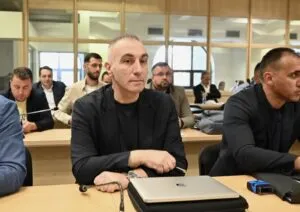
The "Lottery" Trial: 231 Pieces of Evidence, and So Far Not a Single Message Between Grubi and Bajrami
24.09.2026


24.09.2026

24.09.2026

24.09.2026
24.09.2026

24.09.2026

24.09.2026

24.09.2026

23.09.2026

22.09.2026

24.09.2026

24.09.2026

23.09.2026

24.09.2026

24.09.2026

24.09.2026

24.09.2026

23.09.2026

22.09.2026

24.09.2026

24.09.2026

24.09.2026

24.09.2026

23.09.2026

23.09.2026

09.03.2026

27.02.2026

19.02.2026
24.09.2026

23.09.2026

22.09.2026

23.04.2026

23.04.2026

12.04.2026

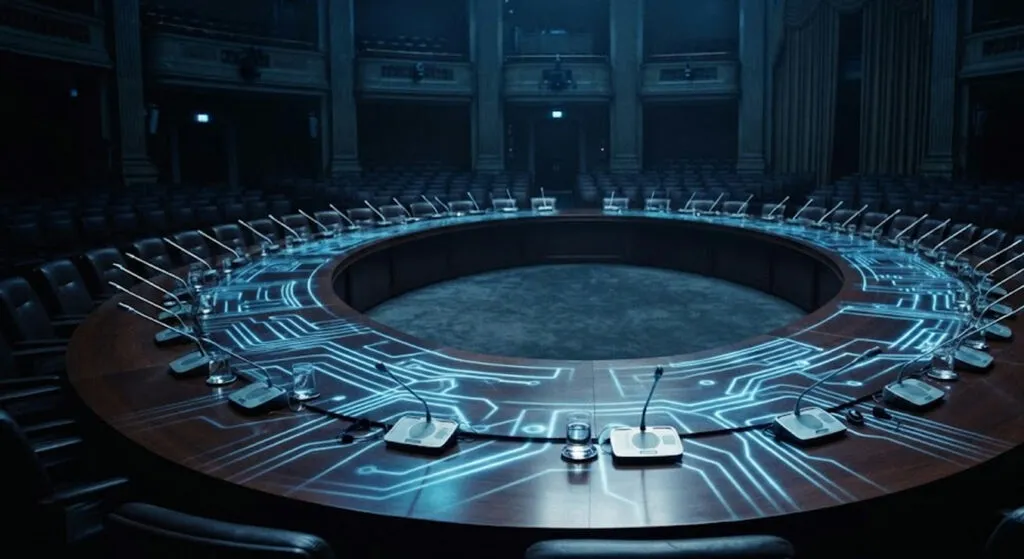
It's rare for a manufacturer to say, unprompted, that its product could become dangerous for the whole world. On Wednesday it happened at the UN Security Council. Before its 15 members, on the sidelines of the General Assembly's annual session, spoke Sam Altman of OpenAI, Dario Amodei of Anthropic and Clément Delangue, co-founder of Hugging Face - three of the most prominent figures in the artificial intelligence industry.
The message they brought: increasingly powerful AI systems could soon advance even further and improve themselves, escape human control and become a threat to international security. "If AI is governed badly, I believe it could pose a risk even to humanity as a whole," Amodei said.
The labs in San Francisco and everyone else
Altman raised the question of who should actually decide. "If AI is to be democratic, the most important decisions cannot be made only by labs in San Francisco. They have to be shaped through democratic processes and made by governments that are accountable to the people they serve," he said, adding that at the international level this will require cooperation.
"There have been periods in our history when countries that compete and don't particularly like each other still came together around common interests and the collective good when faced with a powerful new technology. We believe this is such a period," Altman stressed. Sounds reasonable. But Washington and Beijing, the two dominant players in AI development, still disagree on whether the technology needs global safeguards or should be left more to the market. Governments, meanwhile, are looking for ways to oversee systems that are advancing faster than regulators can keep up with.
"The dangers are real and immediate"
Yoshua Bengio, the Canadian regarded as one of the "godfathers of AI" and co-chair of the Independent International Scientific Panel the General Assembly set up last year, was even more direct. "The dangers are real and immediate," he said. "This council faces an unprecedented threat - a threat none of its members would choose, that no one can contain alone, and that doesn't respect the borders we defend."
The Security Council first warned about the risks of AI in 2023, when China said the technology must not become a "runaway horse" and the US warned about its use for censorship and repression. Since then the warnings have grown louder, while global rules are still at the level of speeches.
Altman said decisions must not stay in San Francisco alone. A nice line. But if the rules end up being written by Washington, Beijing and a handful of labs, what's left for small countries - to apply them once they're finished?
The latest 10 news from this category

Red carpet, anthems, flowers - and two B-1 bombers over the guests' heads. Trump showed Xi both his hospitality and...

Delcy Rodríguez promised the General Assembly there will be elections in Venezuela, but gave no date. Washington wants a vote,...

The King carried the coffin together with her five children, and the politician who led NATO for ten years spoke...
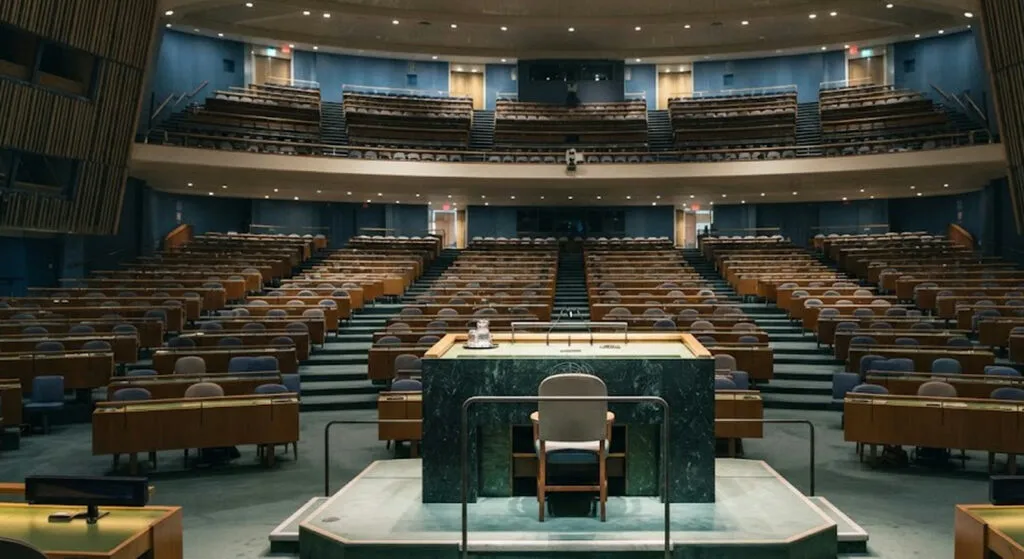
Two presidents, the same podium, a few hours apart and two contradictory realities. Macron did not argue about signatures -...

The mechanism he describes - decision before evidence, evidence retrofitted to the decision - is real, and Iraq proved it....

Peter Magyar compared it to a club that puts you in the team without asking, then tells you to bring...

Washington, Copenhagen and Nuuk are signing off on a military presence on an island of 56,000 people - and the...

Phones in Krāslava rang by themselves, the fighters took off, and what exactly triggered the alert - nobody is saying....
In Mecklenburg the CDU finished on 4.9 percent and, for the first time in the history of the Federal Republic,...

Tisza took 16 years of power off Fidesz and won 141 of 199 parliamentary seats. Orbán now says Brussels is...
This site uses cookies - is that okay? Learn more
Be the first to know when Metla launches something new
Leave your email and we will write when there is a new guide or something new on Metla.