


The Mihailova Case Goes to NATO: Mickoski Blames Sofia, and the Interior Ministry Still Hasn't Explained How She Crossed the Border
17.10.2026


17.10.2026

17.10.2026

17.10.2026

17.10.2026

17.10.2026

17.10.2026

17.10.2026

16.10.2026

15.10.2026

17.10.2026

17.10.2026

16.10.2026

17.10.2026

17.10.2026

17.10.2026

17.10.2026

16.10.2026

15.10.2026

17.10.2026

17.10.2026

17.10.2026

17.10.2026

17.10.2026

17.10.2026

17.10.2026

16.10.2026

15.10.2026
15.10.2026

13.10.2026

12.10.2026

23.04.2026

23.04.2026

12.04.2026

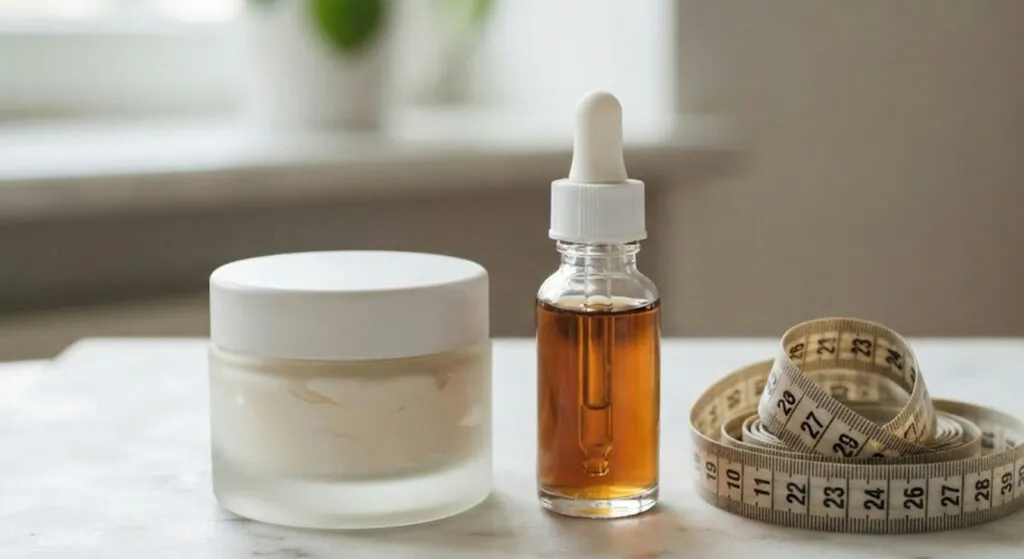
Drugs created for diabetes have become one of the best-known routes to fast weight loss, and aesthetic clinics have gained a new type of patient. They don't come to look younger, they come to get back the face they lost along with the kilos. The phenomenon already has a name - "Ozempic face."
The mechanism is simple. GLP-1 is a hormone the small intestine releases after a meal, and drugs like Ozempic and Wegovy mimic its action. They're used for type 2 diabetes and obesity. When weight drops sharply, fat tissue in the face is lost too, and the skin has no time to adapt to that speed. The result: lost volume in certain places, a changed facial contour, deeper folds and skin that can look saggier. How visible it is depends on age, genetics, skin quality and how many kilos were lost and over what time.
Janet Pardo, a cosmetics expert who works in product development at Clinique, explains that with very fast weight loss the body simply can't keep up with the pace. Her advice is basic and, rare in this industry, free: more protein in the diet, training the large muscle groups three to four times a week, and extra skin care.
The two doctors who talk about the treatments, Dr Paula Rosso and Dr Lajo Plaza, work as expert collaborators for Teoxane, a maker of hyaluronic acid fillers. That's worth knowing before you read their advice - which, surprisingly, is moderate. The face, they say, should be treated only once the weight has stabilised or the weight loss has become slow and predictable. If someone is still losing weight fast, the face keeps changing and there's a risk of overdoing the treatments.
The goal, according to them, isn't to bring back the old face but to achieve harmony in the new one. Hyaluronic acid fillers are chosen according to the area and the goal, and a natural result depends on where, how much and why you inject, not on the amount of product. During the weight loss itself, laser or radiofrequency can help the skin keep its firmness.
And this is where the cream comes in. Clinique has just launched a cream with collagen and PDRN that, according to the brand, "promises to plump the skin in just one month." Pardo adds that after the age of 20, collagen in the skin breaks down by 1 percent a year. Still, she admits something marketing rarely says: no cosmetic product can compare to a medical treatment. But the reverse is also true - if the skin is dehydrated or its protective barrier is damaged, injections won't heal it. That's where cosmetics are needed.
Everyone's conclusion is the same: a combined plan of aesthetic medicine and skin care. Except that each of them happens to sell one half of that plan. Before you decide on a filler or a cream, ask yourself the question no ad will ask you: is the weight really stable, or has the face not yet reached the end of the road?
The latest 10 news from this category

This season's cheapest fashion trend is probably already hanging in your wardrobe. The fashion industry has simply decided to sell...

It shows off the collarbones while leaving enough modesty for the altar and for the mother-in-law's gaze. Designers believe it...

The fashion houses are selling it as the discovery of the season, but suede has been around since the Renaissance....

The cream that worked at 40 won't necessarily work at 60, and more retinol isn't the answer. Three experts on...

A Hollywood star in a mid-calf dress, a princess who lost her right to the throne because of her wedding,...

She once wore wings with more than 125,000 crystals, and this time she waited weeks for an answer that finally...

Sunscreen is the first and most important product. Retinol, vitamin C and glycolic acid can damage the barrier of young...

She met him when she was seven and married him at 21, at an hour chosen by astrologers. Not a...

The depth of black, the warmth of chocolate and the character of purple. Fashion is once again selling a "new...

Ten to fifteen seconds in ice and the puffiness retreats. But Dr Priscila Enríquez warns: the effect is fleeting, and...
This site uses cookies - is that okay? Learn more
Be the first to know when Metla launches something new
Leave your email and we will write when there is a new guide or something new on Metla.


