

The Mihailova Case Goes to NATO: Mickoski Blames Sofia, and the Interior Ministry Still Hasn't Explained How She Crossed the Border
17.10.2026


17.10.2026

17.10.2026

17.10.2026

17.10.2026

17.10.2026

17.10.2026

17.10.2026

16.10.2026

15.10.2026

17.10.2026
17.10.2026

16.10.2026

17.10.2026

17.10.2026

17.10.2026

17.10.2026

16.10.2026

15.10.2026

17.10.2026

17.10.2026

17.10.2026

17.10.2026

17.10.2026

17.10.2026

17.10.2026

16.10.2026

15.10.2026
15.10.2026

13.10.2026

12.10.2026

23.04.2026

23.04.2026

12.04.2026

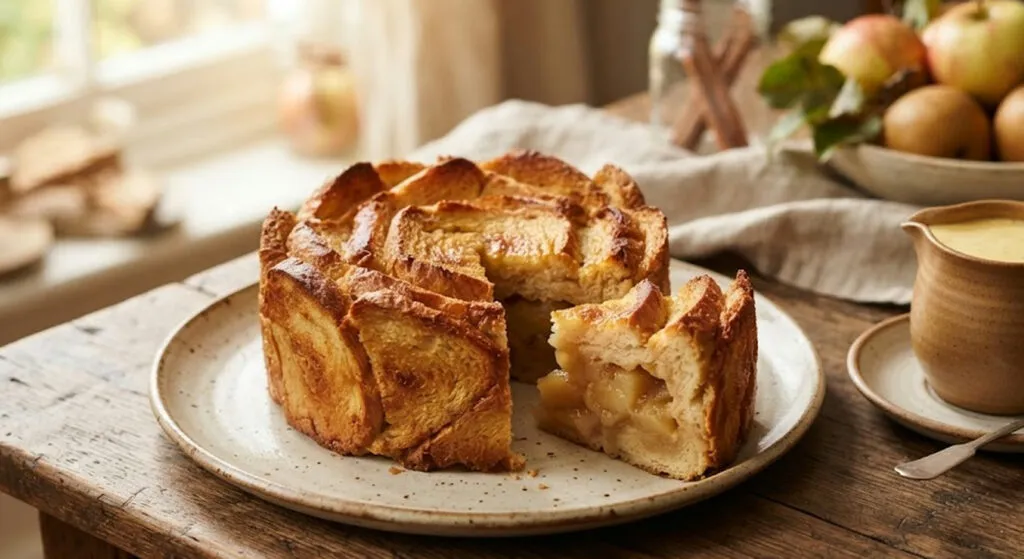
The British have a dessert that is, at heart, an admission that bread doesn't get thrown away. It's called apple charlotte: a warm pudding in which slices of buttered bread form a crisp golden shell around soft, almost creamy apple. Turned out of the mould, it keeps the shape of the tin - a cylinder that looks pricier on the plate than it actually is.
The recipe is old. One of the early records is in the book The Art of Cookery Made Easy and Refined by English cook John Mollard from 1802, where a "charlotte of apples" very close to today's version appears. Its origins lie in the cooking of thrift: a way to use up leftover bread and seasonal apples. In Macedonia the same logic gave us pofesni, fried bread slices - the British just went a step further and put the bread in the oven with sugar.
Ingredients (for 6 to 8 servings)
The filling is everything. Peel and core the apples and cut them into pieces of 2 to 3 centimetres, as even as possible. In a wide pan over low to medium heat, melt the butter, add the apples, sugar, zest and lemon juice, and cook covered for 15 to 25 minutes, stirring occasionally, until soft. If they stick before releasing their juice, add the water. Then uncover the pan and cook for another 5 to 10 minutes, stirring often, to evaporate the excess liquid. Some of the apples get mashed, some stay in pieces. The filling must be as thick as jam, not watery - that's the one rule you can't break, because a runny filling brings down the whole structure.
The shell. Heat the oven to 200 degrees (180 fan). Grease a deep straight-sided mould, 18 to 20 centimetres in diameter and 7 to 9 high, and put a circle of baking paper on the bottom. Cut the crusts off the bread, cut a few slices into triangles for the base and the rest into wide rectangles tall enough for the sides. Brush each piece with butter on both sides - evenly, but without soaking it. Cover the base with no gaps, and stand the rectangles upright around the sides, slightly overlapping, up to the rim of the mould. The cooled filling goes inside, pressed lightly to push out air pockets, and the top is covered with the remaining bread, again brushed with butter and sprinkled with sugar if you like.
Baking and turning out. Put the mould on a baking tray: 15 minutes at 200 degrees, then another 30 to 40 minutes at 180, around 45 to 55 minutes in total. It's done when the outside is deep gold, with the odd darker spot, and the structure is firm. If the top browns too fast, cover it loosely with foil. Then comes the hardest part - the waiting. The charlotte rests for 15 to 20 minutes, you run a thin knife around the edge, put a plate on top and flip it in one firm movement.
Serve it warm, in slices, with custard, whipped cream or ice cream. If your bread is very fresh and soft, leave the slices out for a few hours to firm up. Day-old bread isn't a problem here but an advantage - and that is the whole philosophy of this dessert.
The latest 10 news from this category
Cheap, filling, cholesterol-free and happy to wait months in the pantry. Ten legume recipes for autumn - and the trick...
The larvae are killed only by 60 degrees at the centre of the piece or at least four days in...
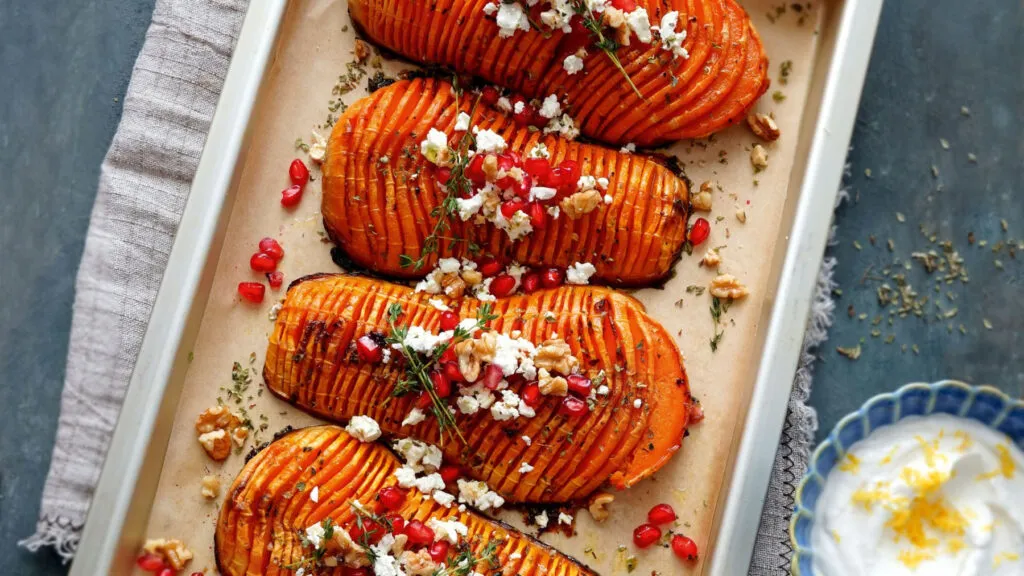
In Macedonia, pumpkin usually ends up in tikvenik, the filo pumpkin pie, or baked with sugar. Three recipes for four...
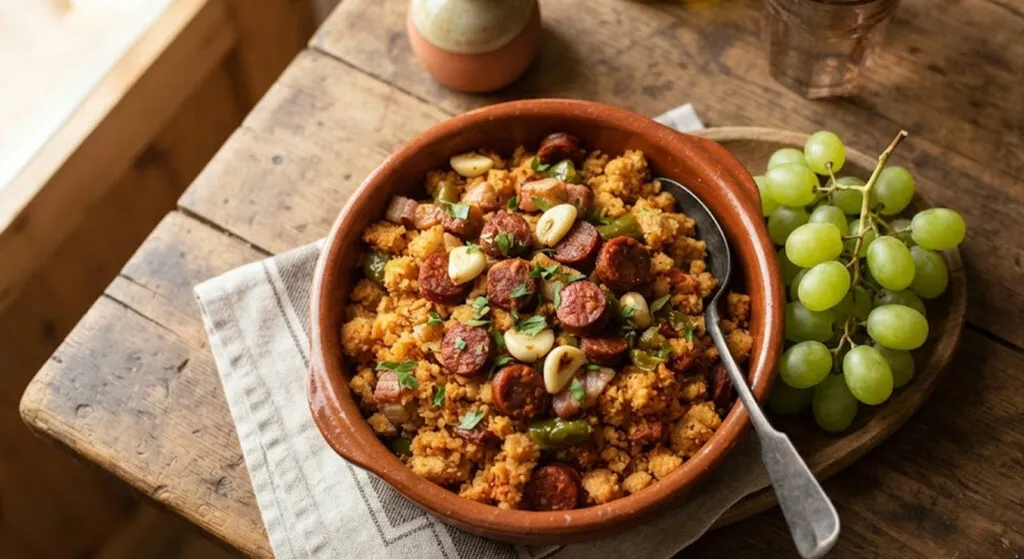
Aragonese cooking was made to feed shepherds and farmers, not to impress a jury. Yesterday's bread, lard, garlic and patience...
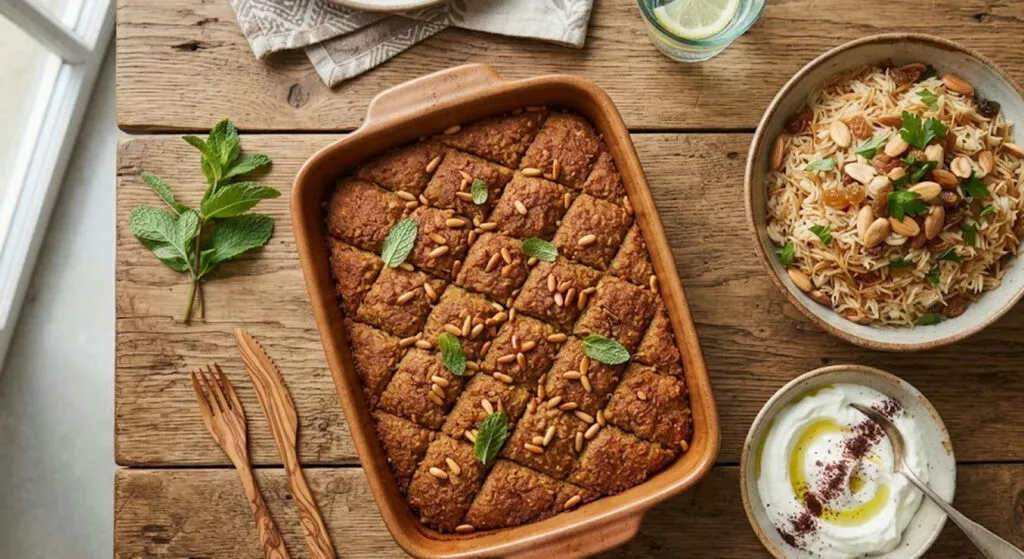
Her Madrid park for 55,000 people includes Lebanese food as a nod to the singer's heritage. The rice simmers for...
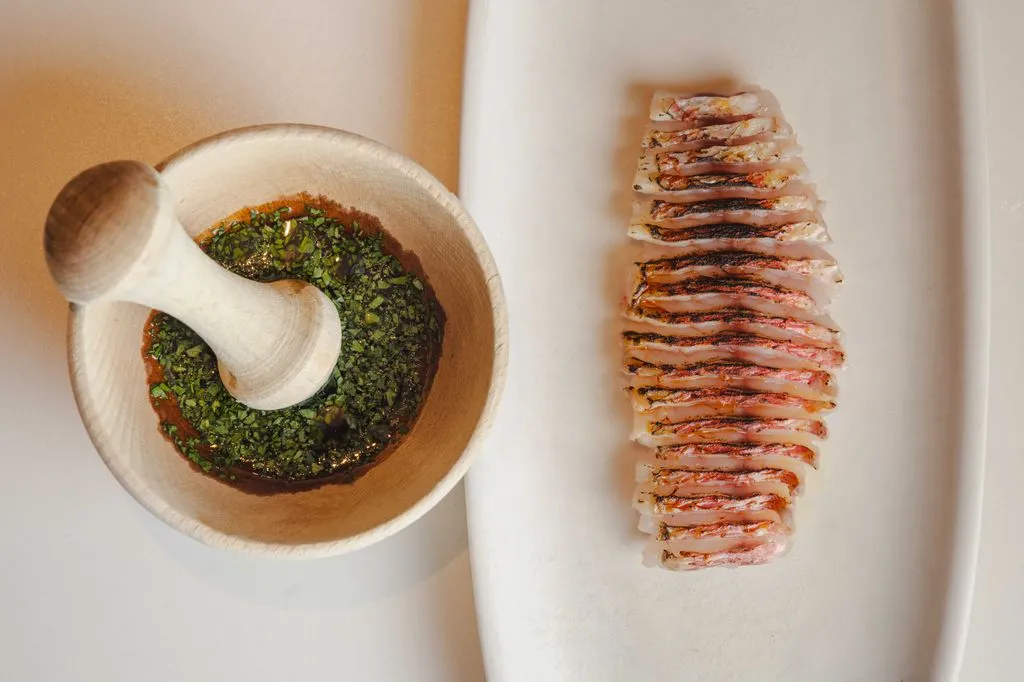
In an age of foam and smoke on the plate, an Andalusian with a star goes back to the stews...
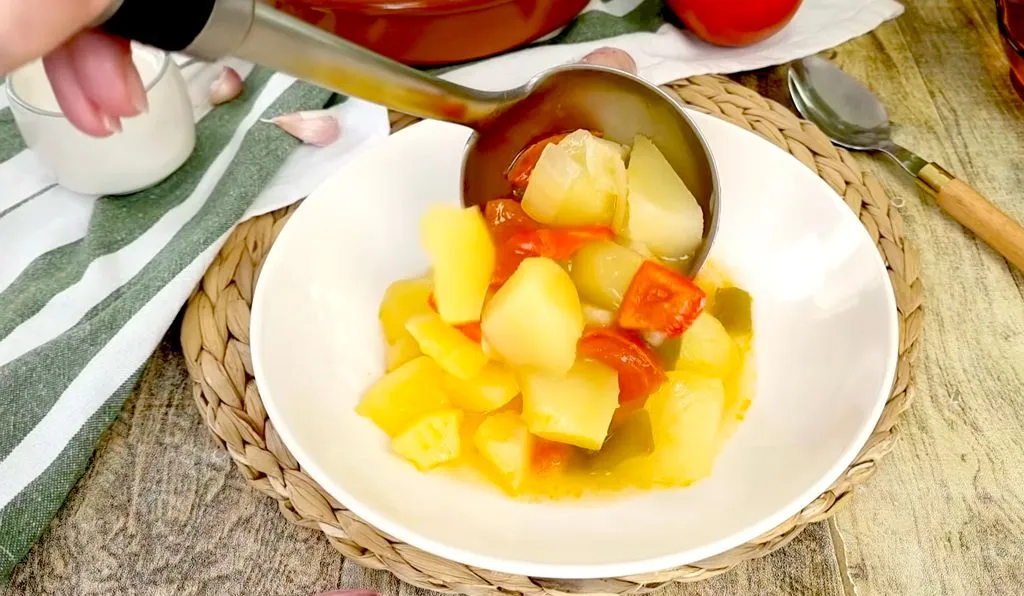
A dish born of ration coupons after the Spanish Civil War: potatoes, peppers, tomato, onion and garlic. The secret is...
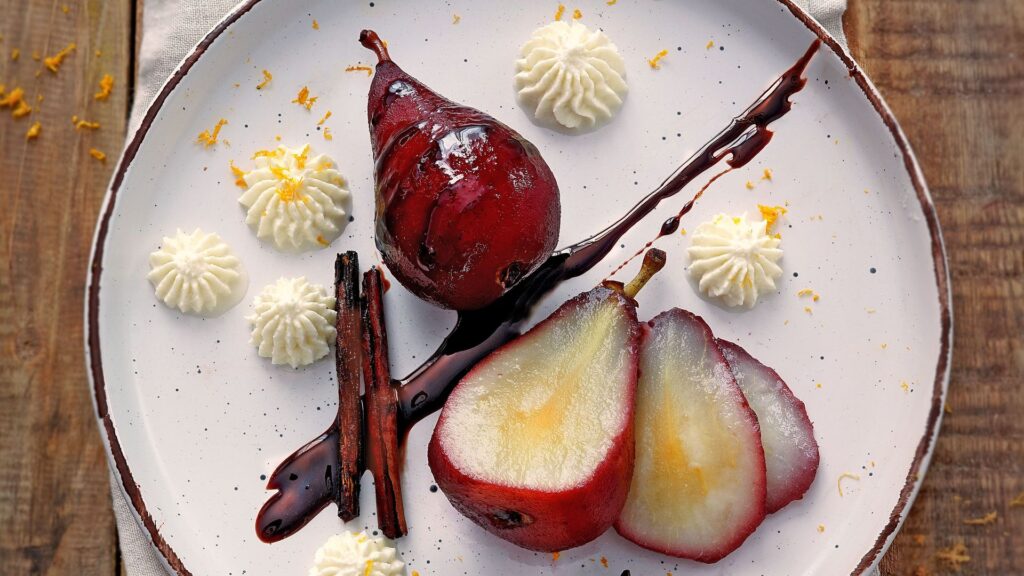
In our part of the world, pears mostly end up as compote or in a rakija still. Three ways to...
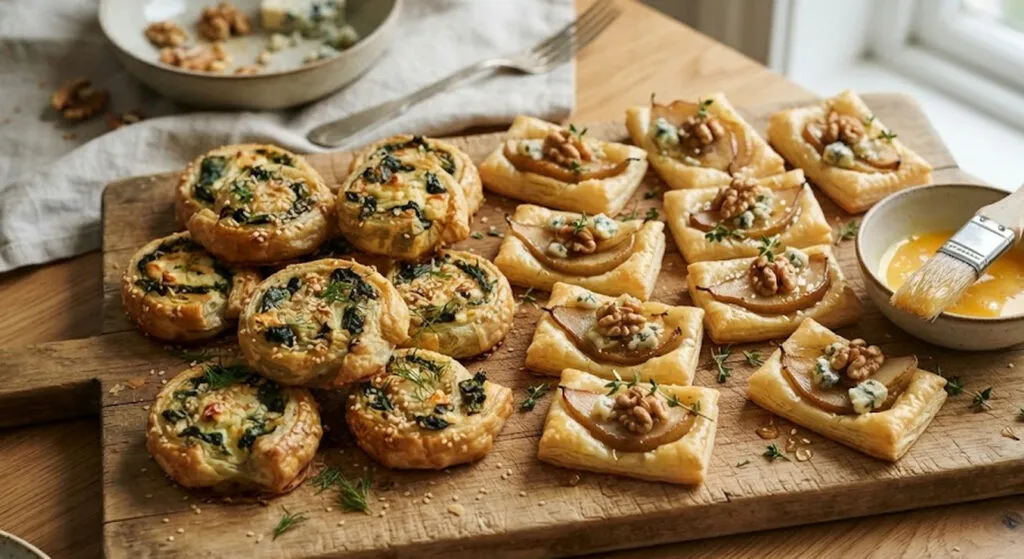
Legend has it that it was born from a French pastry cook's mistake around 1613. Today it's the fastest route...

If "steamed" means bland hospital vegetables to you, the problem isn't the technique - it's the minutes. Here are the...
This site uses cookies - is that okay? Learn more
Be the first to know when Metla launches something new
Leave your email and we will write when there is a new guide or something new on Metla.


