
The Mihailova Case Goes to NATO: Mickoski Blames Sofia, and the Interior Ministry Still Hasn't Explained How She Crossed the Border
17.10.2026


17.10.2026
17.10.2026
17.10.2026
17.10.2026
17.10.2026

17.10.2026
17.10.2026

16.10.2026

15.10.2026

17.10.2026

17.10.2026

16.10.2026

17.10.2026

17.10.2026

17.10.2026

17.10.2026

16.10.2026

15.10.2026

17.10.2026

17.10.2026

17.10.2026

17.10.2026

17.10.2026

17.10.2026

17.10.2026

16.10.2026

15.10.2026
15.10.2026

13.10.2026

12.10.2026

23.04.2026

23.04.2026

12.04.2026

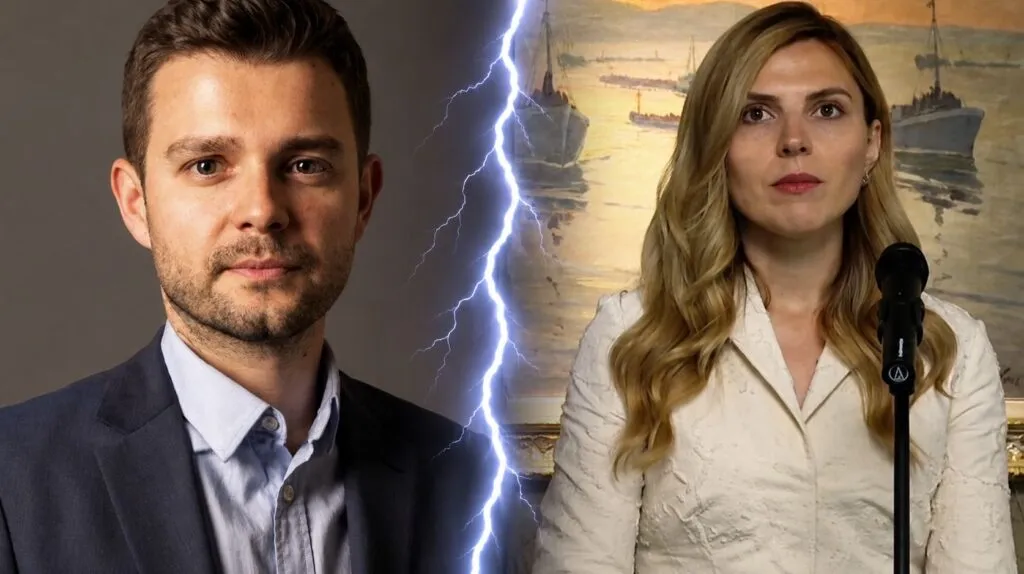
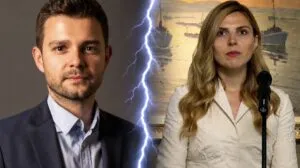
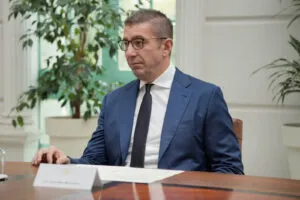
Prime Minister Hristijan Mickoski says claims that Iva Mihailova's escape was arranged with the authorities have "fallen flat." The answer he offers isn't evidence for the domestic public, it's a performance for the allies: as soon as the investigation into how she left the country is finished, part of the evidence will be shown first to NATO partners, and the case will also be raised with the European Union.
The tone towards Sofia comes without a diplomatic filter. "This failed attempt caused great damage, diplomatic damage to the government in official Sofia, but that's their problem, and our problem is to bring the fugitive from justice, male and female, before the face of justice," Mickoski said. Earlier, in a TV interview, he said that "our NATO partner is today a refuge for convicted criminals."
Mihailova, who holds Macedonian and Bulgarian citizenship, is charged in proceedings before the court in Kochani over a traffic accident on the Kochani - Shtip expressway in which 33-year-old Besim Durmishi was killed. Her guilt has yet to be determined by the court. Her father has already been convicted and, according to the Government, is in Bulgaria. After she left, the Kochani court ordered 30 days' detention for her, and Skopje asked through Interpol for her to be located, arrested and extradited.
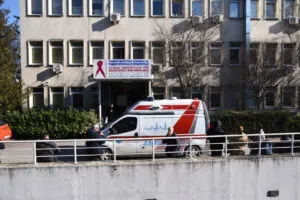
Sofia answered with an article of law: a Bulgarian citizen cannot be handed over to another state for criminal prosecution unless a ratified international treaty allows it. Mihailova has meanwhile been hospitalised at Sofia's Pirogov hospital, where, according to her lawyer Nikolay Dimitrov, she will stay for at least another week. "She is not a fugitive, she is not hiding," he claims.
A border that noticed nothing
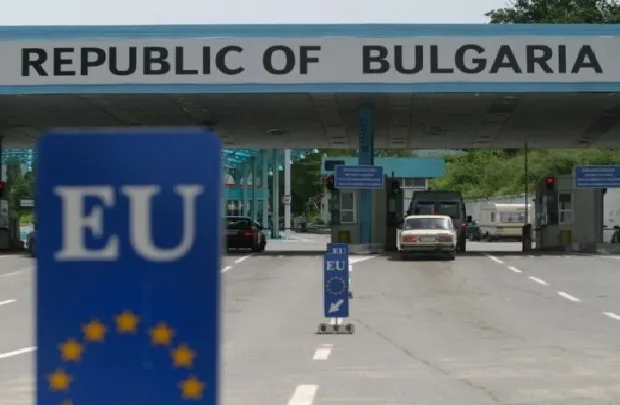
Here lies the most uncomfortable question, and it isn't for Sofia. The Interior Ministry says the border police system has no registered exit for Mihailova. She and her lawyer say they went through a regular border crossing and had their documents checked. Her travel documents had been confiscated, and the court had restricted her movement. One of the two versions isn't true, and both lead to the Interior Ministry.
If the exit wasn't registered and she's still in Sofia, then the border has a hole. If she went through a check, as her lawyer claims, then someone at the crossing saw her and let her through. The opposition has already chosen its answer. SDSM leader Venko Filipče accused Foreign Minister Timčo Mucunski, Interior Minister Pance Toshkovski and the PM of arranging the escape. "Pance let her go, his border was 'Swiss cheese'," Filipče said, and the party is demanding Toshkovski's resignation.
The timing doesn't help. Mihailova left a few days after Mucunski's one-on-one meeting with Bulgarian Foreign Minister Velislava Petrova-Chamova in Sofia on 8 October. That's not proof of a deal, but it's enough for the suspicion not to disappear with one statement.
Principle or selective memory
If Macedonia goes to NATO with a story about an ally sheltering convicts, it's only logical for someone to ask about Nikola Gruevski, who illegally left the country in 2018 and went to Hungary. Budapest refused his extradition in 2019, and he has final convictions. Asked whether the PM would raise that case too, the Government said to ask SDSM. The European Commission, for its part, told a Macedonian TV station that it does not intervene in bilateral cases.
Skopje has every right to demand that the accused stand before a court. But the credibility of that demand isn't built in Brussels, it's built at the border crossing. Until the Interior Ministry explains how a person with confiscated travel documents vanished from the system, every message to NATO will sound like a complaint filed at the wrong counter. When will the investigation end, and who will sign its conclusion?
The latest 10 news from this category
The European Council called enlargement a geostrategic investment, and of the whole region it named only Montenegro. Macedonia, a candidate...
One candidate was shown "Cela da e" comments under the prime minister's posts, the other had been photographed at a...
The opposition refuses or hesitates, and from Sofia comes word that the constitutional changes are not up for renegotiation. Is...
Six companies, around 20,000 euros in donations from the brother-in-law, and a lunch for 250 guests as the Strumica municipality's...
Charged over a fatal car crash, with both her passports confiscated, she crossed a border where neither Macedonian nor Bulgarian...
The Interior Ministry acted only after the footage was already circulating, the police union offers its own version, and DUI...
At the 85th anniversary of the uprising, the prime minister called for unity, set a 1,000-euro salary target and attacked...
A day after the meeting in Sofia, Bulgaria's foreign minister told MPs there will be no renegotiation and no delayed...
The former mayor of Centar now leads a party that invokes an organization from 1908 and says it is open...
Brussels asked for the meeting. Bulgaria rejected renegotiation, constitutional changes with delayed effect and qualified majority voting - and did...
This site uses cookies - is that okay? Learn more
Be the first to know when Metla launches something new
Leave your email and we will write when there is a new guide or something new on Metla.


