

Six Police Officers Suspended over the Beating near Saraj: The Interior Ministry Admits Irregularities, the Union Tells a Completely Different Story
12.10.2026


12.10.2026
12.10.2026

12.10.2026

12.10.2026

12.10.2026

12.10.2026

12.10.2026

12.10.2026

11.10.2026

12.10.2026

12.10.2026

11.10.2026

12.10.2026

12.10.2026

12.10.2026

12.10.2026

11.10.2026

10.10.2026

12.10.2026

12.10.2026

12.10.2026

12.10.2026

12.10.2026

12.10.2026

12.10.2026

11.10.2026

11.10.2026
12.10.2026

10.10.2026

08.10.2026

23.04.2026

23.04.2026

12.04.2026

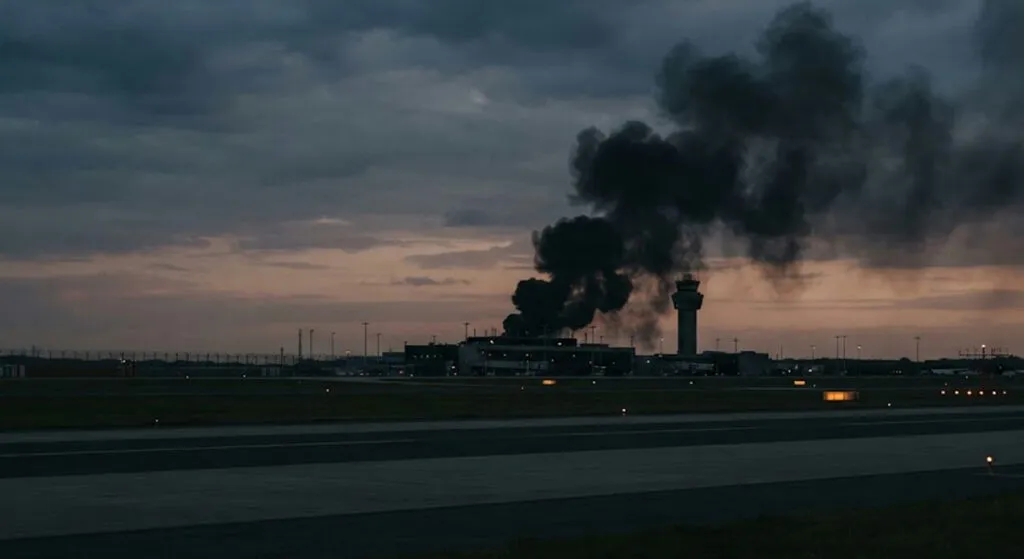
A missile fired from Yemen on Saturday night hit King Khalid International Airport in Riyadh, the capital of Saudi Arabia. Thirteen killed, 309 injured. Responsibility was claimed by Yemen's Houthis, an Iran-backed militia. The dead include four Saudis, two Bangladeshi nationals and one each from the US, Egypt, Jordan, Syria, Sudan and Palestine, while an Indian national later died of his injuries in hospital.
Behind the numbers are names. Egyptian flight attendant Azza Ramzy (28) worked for Saudi airline Flynas. Syrian Buthaina Ahmad Oweida was a widow and mother of four. She had lived in Saudi Arabia for five years after fleeing the war in Syria, and had come to Riyadh to visit her sister. The missile caught her on the way to the airport.
A day later - another strike. A projectile again hit Terminal 4, the same building hit on Saturday, and a fire broke out. Saudi air defences intercepted another projectile near the airport. The airport had already been closed all day, and German Economy Minister Katherina Reiche, on an official visit, was left stranded in the city. SriLankan Airlines cancelled all flights to Riyadh until 18 October.
The kingdom that stays silent
The strangest part of the story isn't the missile - it's the silence. Official Riyadh barely spoke about the most serious strike ever on the country's largest airport. No general alert was declared, there was no address to the nation, and the airport closure wasn't even officially announced - people only found out about the suspended flights through flight-tracking services. The only measure the government did announce: schools and universities are switching to online teaching until the end of the week.
It's a pattern the Gulf states have followed for seven months, ever since they came under fire from Iranian missiles and drones: information is suppressed in the name of "national security" and confidence in the defences. The result is predictable. In the vacuum the government left, social media was flooded with a video supposedly showing the moment of impact - which turned out to be AI-generated. When the authorities hide how bad things are, who will believe them when they say it's safe?
A war that won't stay in one place
This is the deadliest attack on a Gulf state since the US-Israeli war on Iran began on 28 February. The Houthis are part of Iran's "axis of resistance", and their value to Tehran is clear: the Strait of Hormuz still isn't fully open, so the Red Sea route has become even more important - and the Houthis regularly target it. Saudi Arabia had been diverting oil through the 1,200-kilometre East-West pipeline, but last month it temporarily shut that too after a drone attack.
Hisham Al-Omeisy, a Yemen adviser at the European Institute of Peace in Washington, warns this isn't the end. "They crossed that red line. You have to keep in mind that you're dealing with a militia, not a state actor," he said, adding that he fears the escalation could spread to pipelines and Aramco's infrastructure. And this very week Riyadh is due to host the World Petroleum Congress, with the bosses of Shell, ExxonMobil, BP and TotalEnergies expected to attend. The authorities say the gathering isn't being cancelled.
Donald Trump called the attack "terrible": "We just found out about the attack, we'll make a decision. We make our moves very quickly." Analysts nevertheless think direct US involvement is unlikely before next month's Congressional elections - even though a US citizen is among the dead. The Saudi-led coalition promised a "decisive response", and Houthi television has already reported a Saudi air strike on the airport in Sanaa.
Airports are where people say goodbye and welcome each other home. When they too become targets and the government refuses to say how dangerous it is, how many missiles have to fall on civilians before the world stops calling this a "regional conflict"?
The latest 10 news from this category

The GRU recruits people on Telegram to photograph factories, and executives in Germany are being advised to hire private security....
The American farmer wants cheaper diesel, and the money goes to Moscow. It turns out sanctions hold only until they...
More than 4.8 million tons of Russian diesel, a US license until April 2027, and not one publicly confirmed Russian...

The last royal visit to Ceuta and Melilla ended in a diplomatic crisis with Morocco. This time the king isn't...
A month ago Trump signed new sanctions against Russia. Now Moscow is supposed to deliver him diesel, and Zelensky warns...
Hasan killed 13 unarmed people at Fort Hood in 2009. Secretary Hegseth wants everyone to be able to watch him...

The Crown Estate is paying him over 360,000 euros for the terminated lease on the Windsor residence - money that...
While Rubio talks of a "dangerous stalemate", Ukraine counts 78 dead in two days. Zelensky wants sanctions and Starlink, and...

A 58,000-dollar basketball court, private jets and a 100,000-dollar bill a donor was allegedly supposed to pay. The State Department...

A young lab technician at a Russian plague institute died of "pneumonia of unknown etiology", and 200 people are under...
This site uses cookies - is that okay? Learn more
Be the first to know when Metla launches something new
Leave your email and we will write when there is a new guide or something new on Metla.


