


Six Police Officers Suspended over the Beating near Saraj: The Interior Ministry Admits Irregularities, the Union Tells a Completely Different Story
12.10.2026


12.10.2026

12.10.2026

12.10.2026

12.10.2026

12.10.2026

12.10.2026

12.10.2026

12.10.2026

11.10.2026

12.10.2026

12.10.2026

11.10.2026

12.10.2026

12.10.2026

12.10.2026

12.10.2026

11.10.2026

10.10.2026

12.10.2026

12.10.2026

12.10.2026
12.10.2026

12.10.2026

12.10.2026

12.10.2026

11.10.2026

11.10.2026
12.10.2026

10.10.2026

08.10.2026

23.04.2026

23.04.2026

12.04.2026

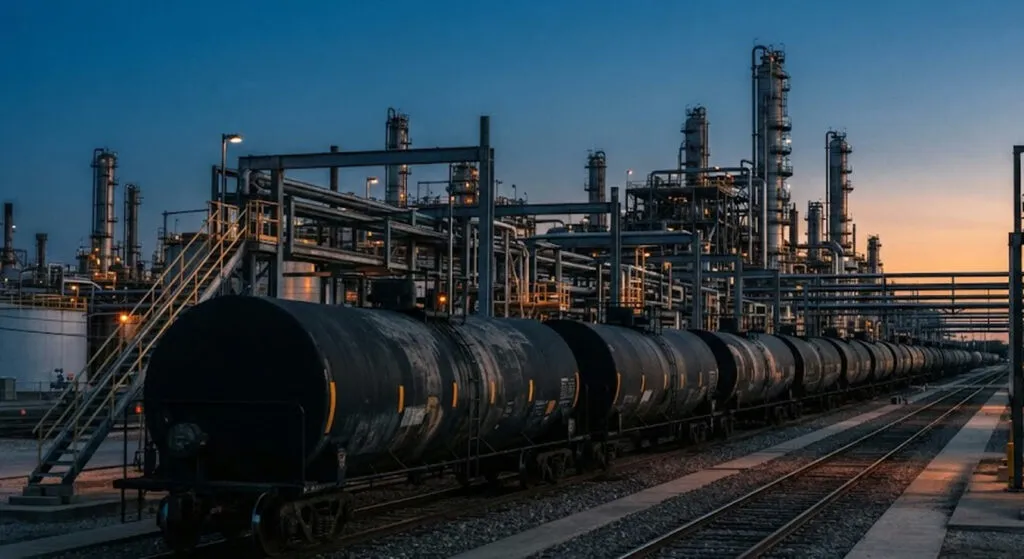
For years, sanctions on Russia were presented as a red line. Now it turns out the line has a price - 6.28 dollars a gallon. That's where diesel prices at US pumps had climbed when Donald Trump, after a call with Vladimir Putin on 9 October, announced a deal: Russia will immediately deliver over 300,000 tonnes of diesel to the US and world markets, another 500,000 tonnes in November and a million tonnes straight after that.
That's not all. Trump also announced an extra three million tonnes, but added that it depends on the state of Russia's refineries, some of which have been seriously damaged in Ukrainian attacks. A strange deal, in which the seller doesn't know whether it will have anything to sell, and the buyer is already celebrating the discount.
According to German calculations, Russia could earn nearly seven billion dollars from the whole arrangement. The extra three million tonnes alone, if they ever reach the market, would be worth around 4.2 billion. How much of that money will end up with the Russian military, nobody can say precisely. But money carries no label, and armies aren't funded by goodwill.
Washington has already opened the door. The US Treasury issued a temporary licence for trading in Russian diesel, despite sanctions introduced earlier. The licence is valid until 7 April 2027. A temporary solution lasting almost half a year - in the Balkans we know full well that nothing is more permanent than the temporary.
Zelensky reacted sharply. In his view, the extra revenue from energy exports will let Moscow keep financing the war, and allowing Russia to sell petroleum products is an investment in prolonging the conflict rather than ending it. Trump, on the other hand, argues the deal is necessary because high diesel prices are causing ever bigger problems for agriculture, transport and the economy.
The market, at first glance at least, proved him right: after the announcement, fuel futures fell almost five percent. But Clemens Fuest, president of Germany's Ifo institute, warns it isn't certain Russia can even supply such quantities, given its damaged refineries and problems supplying its own market. His assessment is cold: if the deal goes through, Russia will get stronger economically, Ukraine will get weaker, and a significant drop in US fuel prices is unlikely.
The Balkans remember sanctions from the inside too - from the nineties, when petrol in sanctioned Serbia was sold in plastic bottles by the roadside. That's where the lesson comes from that still holds today: sanctions are firm until they start costing whoever imposed them. If Washington eases them for diesel, who will believe it won't ease them for something else?
The latest 10 news from this category
Thirteen killed at Saudi Arabia's biggest airport, and the government declared no alert and didn't address the nation. When institutions...

The GRU recruits people on Telegram to photograph factories, and executives in Germany are being advised to hire private security....
More than 4.8 million tons of Russian diesel, a US license until April 2027, and not one publicly confirmed Russian...

The last royal visit to Ceuta and Melilla ended in a diplomatic crisis with Morocco. This time the king isn't...
A month ago Trump signed new sanctions against Russia. Now Moscow is supposed to deliver him diesel, and Zelensky warns...
Hasan killed 13 unarmed people at Fort Hood in 2009. Secretary Hegseth wants everyone to be able to watch him...

The Crown Estate is paying him over 360,000 euros for the terminated lease on the Windsor residence - money that...

While Rubio talks of a "dangerous stalemate", Ukraine counts 78 dead in two days. Zelensky wants sanctions and Starlink, and...

A 58,000-dollar basketball court, private jets and a 100,000-dollar bill a donor was allegedly supposed to pay. The State Department...

A young lab technician at a Russian plague institute died of "pneumonia of unknown etiology", and 200 people are under...
This site uses cookies - is that okay? Learn more
Be the first to know when Metla launches something new
Leave your email and we will write when there is a new guide or something new on Metla.


