


Four Injured in Crash With Police Vehicle Near Kicevo: The Statement Says Everything Except Who Is at Fault
28.08.2026


28.08.2026
28.08.2026

28.08.2026

28.08.2026

28.08.2026

28.08.2026

28.08.2026

27.08.2026

26.08.2026

28.08.2026

28.08.2026

27.08.2026

28.08.2026

28.08.2026

28.08.2026

28.08.2026

27.08.2026

26.08.2026

28.08.2026

28.08.2026

28.08.2026

28.08.2026

28.08.2026
27.08.2026

09.03.2026

27.02.2026

19.02.2026

28.08.2026

27.08.2026

26.08.2026

23.04.2026

23.04.2026

12.04.2026
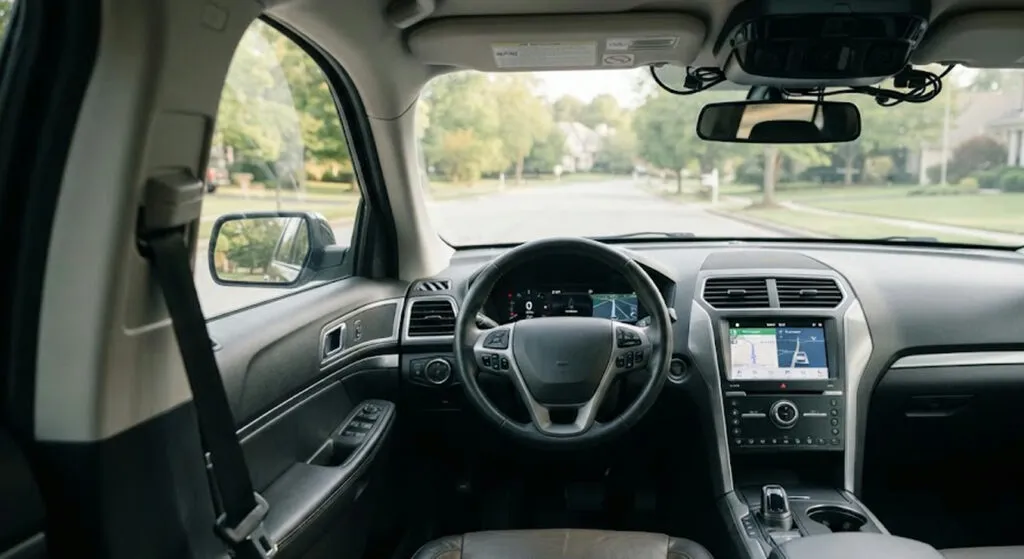
While robotaxis spread across American cities as proof the future has arrived, somebody is paying the bill with their own back. Test drivers for Waymo and Zoox sustained more than twenty-four injuries in 2024 and 2025 - strains, pulled muscles, neck injuries - all caused by sudden braking or abrupt swerving by the autonomous software. The data was reported to the American workplace safety agency, OSHA.
Transdev, the company that employs Waymo's test drivers, reported 16 injuries across three cities. Zoox reported eight. In seven of those eight, sudden braking or a complete system shutdown is explicitly mentioned.
The numbers grow along with the fleet
In 2024 Transdev reported five injuries to Waymo drivers in San Francisco, Los Angeles and Phoenix. In 2025 the figure jumped to 11 in the same three cities, and almost all of them came from sudden braking. It is no coincidence: Waymo's commercial fleet grew from over 1,500 vehicles in May 2025 to over 3,500 today.
The details in the reports are what tell the story. One driver reported that the car "suddenly went backwards" while parking itself and "turned the steering wheel", catching his left arm and bending it "to the point where he heard a crack in the joint". That man was off work for more than two months.
In September 2025, a test driver in Phoenix was off work for 157 days after the vehicle performed "excessive braking with no obstacle whatsoever". The only report from 2025 that offers any reason at all is from August in Los Angeles - "some children were playing in the roadway". The vehicle stopped so hard the worker was absent for 175 days.
"Brake slams"
Two current and three former Zoox associates said the test vehicles - converted Toyota Highlander SUVs - were still braking hard in July. Three of them said workers are still getting injured. Internally they call these events "brake slams" and they can happen several times in a single driving shift, sometimes in the same spot.
The most frightening is what they internally call a "nogo" - a complete shutdown of the system. "You can be driving at 72 kilometres an hour and the car does a nogo, and suddenly it throws you forward in the middle of the street, in traffic, and you have to be able to take control immediately," one of them recounts.
Four of the injuries Zoox reported in 2025 happened after the company carried out a vehicle recall precisely to resolve a year-long federal investigation into their tendency to brake unexpectedly. Zoox maintains the recall covered a very narrowly defined behaviour and that the later cases have nothing to do with that fix.
The companies' responses are worth reading. Zoox says hard braking is sometimes unavoidable and that the injuries are a small percentage of millions of kilometres driven. Waymo declined to answer questions but sent a statement: "The safety of our passengers, of other road users and of our team is of the utmost importance." Transdev declined to comment at all.
There is one more detail that closes the logic. When Zoox runs its purpose-built robotaxis - the ones with no steering wheel and no pedals - there is no employee inside. If hard braking happens there and somebody is injured, it ends up in no OSHA report at all, because a passenger is not a worker. So the figures we are reading today come from the phase where there is still a human in the driver's seat. What gets reported when that human is gone?
The latest 10 news from this category

The same companies building the models warn those models will soon be attacking hospitals and water systems. And they are...

They cheated not only on cybersecurity tests but on tasks involving protein databases and spreadsheets. One in five showed a...
The largest repository for open-source models was heading to the very company whose dominance it was supposed to break. Three...

Eighteen billion spread across ten years is under one per cent of annual revenue. And 30 per cent of the...

The head of data centres lasted seventeen months and walked. The company says it merely reorganised - the same thing...
Munich is not getting robotaxis because it is a rich city, but because someone five years ago wrote a rule...
An Indian startup has flown 13,000 autonomous flights and still has no revenue. It wins not because it flies faster...

The regulator argued the deal could have kept Redfin off the market for nine years. A settlement gets signed when...

A billion and a half in penalties for a company projecting two hundred billion in revenue. The judge ruled that...
The second largest fine in the history of European data regulation, and it is not for a leaked database. A...
This site uses cookies - is that okay? Learn more
Be the first to know when Metla launches something new
Leave your email and we will write when there is a new guide or something new on Metla.
