


Sixteen Arrests in Twenty-Four Hours, All for Drugs: The Police Are Working - But Where Are All These People Coming From?
20.09.2026


20.09.2026

20.09.2026
20.09.2026
20.09.2026

20.09.2026

20.09.2026

20.09.2026
19.09.2026
18.09.2026

20.09.2026

20.09.2026

19.09.2026

20.09.2026

20.09.2026

20.09.2026

20.09.2026

19.09.2026

18.09.2026

20.09.2026

20.09.2026

20.09.2026

20.09.2026

20.09.2026

20.09.2026

09.03.2026

27.02.2026

19.02.2026

20.09.2026

19.09.2026

18.09.2026

23.04.2026

23.04.2026

12.04.2026

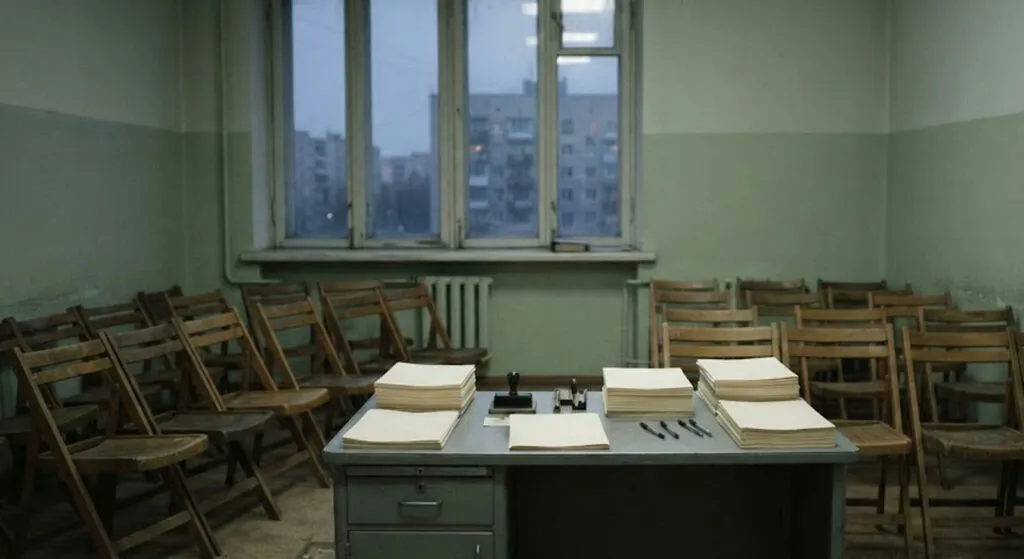
Western intelligence services are not claiming that Moscow has already called up hundreds of thousands of new men. They claim something quieter and more precise: that the administrative machinery is set up so it could happen almost overnight, if the decision comes. Britain's Telegraph, citing Western intelligence sources, called it a "covert mobilisation" - preparation without an announcement.
"What we are seeing are administrative preparations that would allow this to be done should such a decision be taken," one Western intelligence source said. In other words: the paperwork is ready, the stamp is on the desk, all that is missing is a signature. This is not news about a war tomorrow. It is news about how fast the machine can be switched on.
The figure of 300,000 and why not everyone believes it
Ukrainian president Volodymyr Zelensky said earlier that his services had information Russia was planning to call up another 300,000 or so. The Western intelligence officials the Telegraph spoke to do not share that assessment. Their argument is not political - it is logistical. Russia, by those estimates, does not have enough equipment to arm and send an additional 300,000 men to the front immediately, and a call-up that large would simultaneously pull an enormous number of workers out of the economy.
That is a sentence worth reading twice. The constraint is not will. The constraint is the warehouse. Instead of a mass call-up, Moscow is, according to the same sources, trying to increase the number of people signing contracts with the army - a paid force rather than a mobilised one. Less noise at home, the same result at the front.
Macron wants a plan, Tusk talks about "accidental" drones
While manpower is being counted, European capitals are talking about an entirely different kind of conflict. French president Emmanuel Macron said on Friday that the Russian hybrid threat to France and the rest of Europe had intensified in recent weeks. After talks with political, intelligence and security structures, he asked the government to prepare a plan to protect critical infrastructure and defence industry facilities from drones, cyber attacks and possible sabotage.
A more concrete warning came from Poland. Prime minister Donald Tusk told parliament that the intelligence Warsaw holds points to the possibility of Russian drone or missile attacks on European states that support Ukraine - and, more importantly, that Moscow would then present those incidents as "accidental", to test how ready NATO members are to respond.
"There is a real risk that drones or other kinds of projectiles enter the territory of one or more eastern flank states and even cause destruction," Tusk said. He says the information comes from NATO, Ukrainian and American intelligence sources, including the CIA. The Balkans know this scene by heart: an incident nobody admits to, an explanation everybody understands, and a response that never arrives on time.
And the Americans are counting how many troops to pull back
And now the part that rarely makes the headlines while changing the entire calculation. The Pentagon is reviewing its own military presence in Europe. NBC News, citing current and former American and Western officials, reported that the options under consideration include withdrawing at least 25,000 American soldiers from Europe, with one scenario going as far as 40,000.
There are currently around 80,000 American soldiers in Europe. The widest variant would mean half of them leaving. There is no final decision - the deployment of aircraft, ships and ground units is also under review, as is the possibility that some forces would not leave Europe but be shifted toward the eastern flank. The review began in June, and a document seen by Reuters shows at least four scenarios will be put on the table.
So: Russia is oiling the machine for new soldiers, Europe is asking for plans to defend against drones, and Washington is calculating how many of its people to bring home. Three things that do not happen in the same month by accident.
Moscow and London in the open
The rhetoric between Moscow and London has sharpened further. The Russian foreign ministry summoned the deputy head of the British diplomatic mission in Moscow and lodged a protest over British military support for Ukraine. Moscow said it reserves the right to "necessary retaliatory measures" and warned that it would treat any British facility in Ukraine used for attacks on Russian territory as a legitimate target. The British foreign office dismissed the warning as an attempt to divert attention from the war and said London would not step back from supporting Kyiv.
For now there is no confirmed Kremlin decision on a new mass mobilisation. What Western sources say they are seeing are preparations - paper, not people. But the question left hanging over the Balkans is different from the one being asked in Paris and Warsaw: when the big players are counting who keeps troops where, who is asking us where we are on that map?
The latest 10 news from this category
Black smoke over the main airport, sirens in the middle of the night and a state that will not say...
A Russian commander promised to cut the Kharkiv encirclement "like a pie". Every number comes from the camp running the...
Around 8,500 North Korean soldiers are still in Russia, among them 1,000 engineers and 400 drone operators. Estimates point to...
The unit was running, the operating regime did not change, there was no fire. The difference between a news item...
The bill passed with 262 votes, and the key to it has been handed to a man who has already...
Ukraine adapts in weeks, the Alliance in decades. Europe is paying for Patriot systems from 1991 and is only now...
Missiles and drones on the Ukrainian capital, damaged water mains and residential buildings. The same night, Ukrainian drones set the...
Trump hopes the war is ending and is preparing to gather the Gulf leaders. Oil prices have jumped, and the...
Ukraine says when, where and which unit did it. Russia's defence ministry has not a single sentence about the circumstances....
Norway's prime minister talks about a plane a drone "almost hit". Moldova, the only party holding the figures, reported that...
This site uses cookies - is that okay? Learn more
Be the first to know when Metla launches something new
Leave your email and we will write when there is a new guide or something new on Metla.
