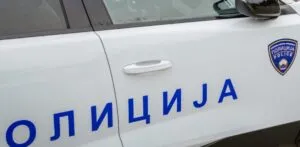
The Young Men From Saraj Say They Were Beaten After Being Subdued, the Union Claims They Tried to Run Police Over: The Interior Ministry Is Still Just Investigating
11.10.2026


11.10.2026
11.10.2026
11.10.2026
11.10.2026
11.10.2026
11.10.2026
11.10.2026

10.10.2026
10.10.2026

11.10.2026

11.10.2026

10.10.2026

11.10.2026

11.10.2026

11.10.2026

11.10.2026
10.10.2026

09.10.2026
11.10.2026

11.10.2026
11.10.2026
11.10.2026

11.10.2026

10.10.2026
11.10.2026
11.10.2026
09.10.2026
10.10.2026

08.10.2026
06.10.2026

23.04.2026

23.04.2026

12.04.2026

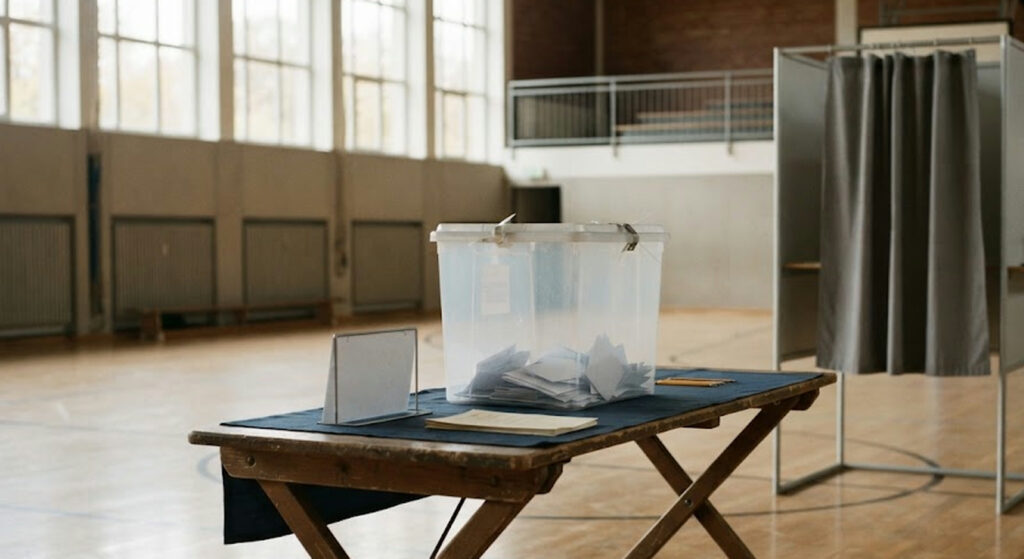
About 1.7 million Slovenian voters go to the polls today in four referendums at once. Only one of them is binding. The other three are consultative: the government and parliament don't have to respect the outcome, there is no quorum, and a simple majority of valid votes decides. In other words, three political barometers the government ordered for itself.
The question that concerns Macedonians
The fourth question is the strangest legally - and the most interesting for a Macedonian reader. It concerns the amendment to the local elections law under which third-country nationals with permanent residence in Slovenia lose the right to vote in local elections, a right they had held since 2002. In practice, this mainly means citizens of Bosnia and Herzegovina, Serbia, Montenegro and Macedonia.
The strange part is that the law has already been passed and has been in force since September 2. The opposition argues that a consultative referendum on something already decided is unconstitutional, because the law allows such a referendum before parliament makes its final decision, not after. The Constitutional Court rejected the opposition's request for a temporary suspension, so about 104,000 third-country nationals will not be able to vote in the local elections in November.
The numbers put the drama in perspective. In 2022, 7,354 such voters cast ballots - less than one percent (0.84 percent) of all votes. MP Andrej Kosi of the ruling SDS cites the growing number of foreigners since 2002 and the problem of fictitious residence registrations as the reason. Prime Minister Janez Janša says it is "completely normal" that someone who is not a citizen and has come temporarily to work should not decide who runs municipal politics.
Except the law doesn't hit temporary workers, it hits people with permanent residence. Is someone who has lived in a municipality for years really "temporary"?
The only binding one: "against a political police"
The legislative referendum is on the amendments to the law on parliamentary inquiries, passed on May 26. Civic associations, backed by the opposition, collected 40,000 signatures. They argue the amendments remove citizens' legal protection and give politicians too much power to dig into other people's privacy. They are campaigning under the slogan "against a political police".
Janša replies that the inquiry committees only investigate political office-holders: "This isn't some body that would be digging through text messages, because even if they wanted to, they don't have the technical means." Two former presidents, Danilo Türk and Milan Kučan, have also come out against the law.
For the law to fall, two conditions must be met: a majority of those who turn out must vote against, and the "against" votes must make up at least 20 percent of all voters in the country - about 340,000 people. A Mediana poll shows 36.9 percent for the law and 28.8 percent against, with as many as 27.5 percent still undecided. Interest is high: in the three days of early voting, 75,401 voters cast ballots, or 4.44 percent of those registered - more than double the figure for the referendum on assisted voluntary end of life.
Television and welfare
The second question is whether to abolish the mandatory license fee for RTV Slovenia. Janša argues that even people who don't watch the broadcaster are paying for it now, and calls it "the trumpet of the far-left political option". The journalists' union replies that this isn't about 14 euros, but about "who will decide in the future what you watch, listen to and read". The poll favors abolition: 52 percent for, 37.1 percent against.
The third question is whether welfare for people able to work should be conditioned on community service. In July, 68,382 people received welfare. Aleksander Reberšek of NSi sums it up with the line that a healthy person needs work, not welfare. Social work expert Vesna Leskošek calls the question "seductive and manipulative". The outcome is almost certain - 70 percent of respondents are in favor.
The first real test for Janša
Today's vote is the first big test for a government that came about in an unusual way. In the parliamentary elections in March, the most votes went to the Freedom Movement of then-prime minister Robert Golob (28.66 percent), with SDS right behind at 27.88 percent. Yet it was Janša who formed the government. Golob has urged voters to vote against on all four questions, while the coalition is calling for "yes".
Macedonians without Slovenian citizenship, in any case, will be just an audience at the November local elections. The decision about them has already been made - today's vote will only show how many Slovenians stand behind it.
The latest 10 news from this category
Since the start of 2025 Republika Srpska has spent over four million dollars on lobbyists close to Trump. When that...
Tiny Montenegro detained the man whose project Washington offered up to 10 million dollars for information about, and is expelling...
The Hague tribunal sentenced Slobodan Praljak to 20 years, he poisoned himself in the courtroom, and eight years later a...

Serbia isn't mentioned by name, but everyone knows who it's about. And the list of conditions for Balkan candidates has...
The White House says lifting the sanctions averted a catastrophe, but won't say what kind. A company founded four days...

The bookmakers have him at 1.20 to become prime minister, and he wants more than 50 percent of the vote....
Economist Justina Shiroka Pula is Kosovo's new president, elected minutes before the deadline after a deal to curb the powers...

The video has over half a million views, and Serbia's Defence Ministry is silent. If two lads with a camera...
Hungary has a new prime minister, but Dodik is still getting congratulations from Orbán. What is support worth from a...

Croatian services recorded 38 state-sponsored cyber attacks last year, and Moscow responds with phrases like "suicidal course". The Balkans know...
This site uses cookies - is that okay? Learn more
Be the first to know when Metla launches something new
Leave your email and we will write when there is a new guide or something new on Metla.