
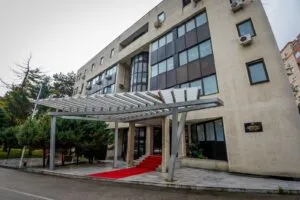
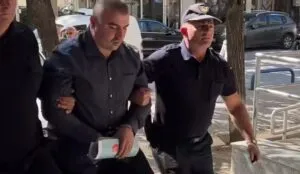
Two young men say police officers beat them while they were tied up: the investigation is being run by the Interior Ministry itself
10.10.2026


10.10.2026
10.10.2026
10.10.2026

10.10.2026
10.10.2026
10.10.2026
10.10.2026
10.10.2026
09.10.2026

10.10.2026

10.10.2026

09.10.2026
10.10.2026

10.10.2026

10.10.2026
10.10.2026
09.10.2026
08.10.2026
10.10.2026

10.10.2026
10.10.2026

10.10.2026

10.10.2026
09.10.2026
09.10.2026

08.10.2026

07.10.2026
10.10.2026
08.10.2026
06.10.2026

23.04.2026

23.04.2026

12.04.2026

Risan, Bay of Kotor, Friday morning. Montenegrin police and the National Security Agency detained several Russian citizens on the tourist coast: Mikhail Zvinchuk, founder of Rybar, his wife Valeria and three associates. Before the day was out, the Interior Ministry announced its decision: the five are a threat to national security and will be expelled from the country.
Rybar is not an ordinary blog. The project was founded in 2018, its Telegram channel has more than a million followers, and during the war in Ukraine it became one of the most-read pro-Russian sources, with detailed maps of the front. Zvinchuk previously worked within the structures of the Russian Ministry of Defence. Britain sanctioned him last year, claiming the network cooperates with Russian intelligence services, is partly coordinated by Vladimir Putin's administration and is funded by the state corporation Rostec. In 2024 the US State Department offered up to 10 million dollars for information related to interference in US elections, including about people from this project.
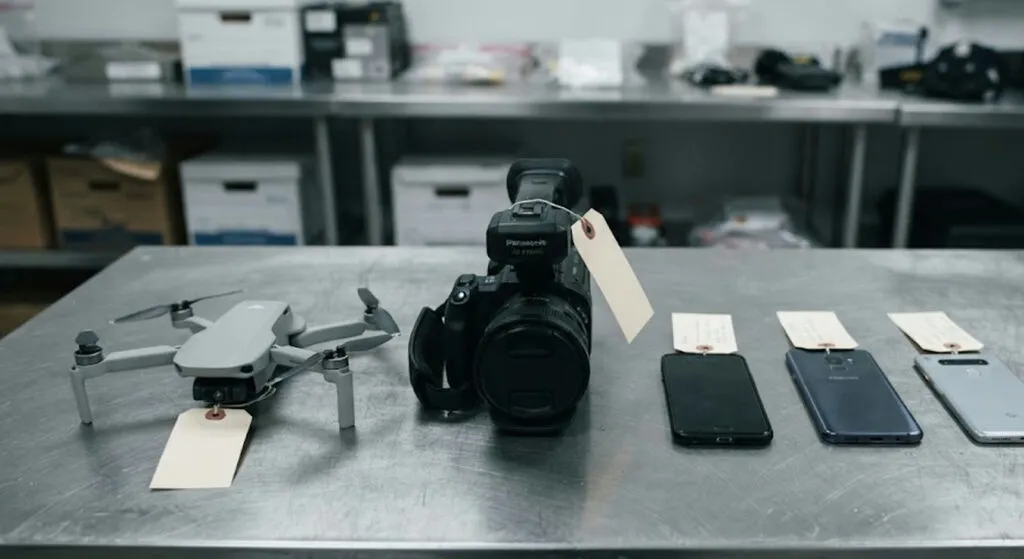
Podgorica detained them on suspicion of so-called hybrid activities. Equipment was seized from the Russians - a drone, a camera and mobile phones - and sent for forensic examination to establish what it was actually being used for in Montenegro. Podgorica's daily press, citing security sources, claims Zvinchuk is a colonel in Russia's GRU military intelligence, in charge of hybrid operations. There is no independent confirmation of that claim so far.
Rybar tells a completely different story: the team was in Montenegro legally, planned to film the Cetinje Monastery and had filed an official request in advance. A drone and a camera in front of one of the most important Orthodox symbols in the Balkans - is that a tourist postcard, or content for an audience of a million with a clear political agenda? The answer probably depends on whom you ask in Moscow and whom in Podgorica.
Prime Minister Milojko Spajić called the operation a success and wrote on X that the country "is defending its interests and no one will endanger Montenegro's European future". Moscow responded in order, from quietest to loudest. Maria Zakharova said the Russian embassy in Podgorica was establishing the circumstances. Dmitry Peskov promised diplomats would protect Zvinchuk's rights "like those of any Russian citizen". And then Dmitry Medvedev weighed in.
"A hunt has potentially been declared on all Russians - I stress, all," Medvedev said, adding that neither visas nor invitations help, and that Moscow may have to "replenish the exchange fund" with Europeans and Americans to get its own people out. He wrapped it up with a proverb: if you live with wolves, you have to howl like one.
Montenegro has been a NATO member since 2017 and is seen as the closest of the whole region to joining the EU, yet for a long time it was a favourite destination for Russian tourists and buyers of seaside property. Now a small country of some six hundred thousand people is expelling a man whose project Washington offered up to 10 million dollars for information about - and doing it loudly, with an announcement from the prime minister. Is this a rare show of backbone in the Balkans, or just a message to Brussels sent at the right moment? And how many such "teams with a drone and a camera" pass through the region without anyone asking what they are filming?
The latest 10 news from this category
Since the start of 2025 Republika Srpska has spent over four million dollars on lobbyists close to Trump. When that...
The Hague tribunal sentenced Slobodan Praljak to 20 years, he poisoned himself in the courtroom, and eight years later a...
Serbia isn't mentioned by name, but everyone knows who it's about. And the list of conditions for Balkan candidates has...
The White House says lifting the sanctions averted a catastrophe, but won't say what kind. A company founded four days...

The bookmakers have him at 1.20 to become prime minister, and he wants more than 50 percent of the vote....
Economist Justina Shiroka Pula is Kosovo's new president, elected minutes before the deadline after a deal to curb the powers...
The video has over half a million views, and Serbia's Defence Ministry is silent. If two lads with a camera...
Hungary has a new prime minister, but Dodik is still getting congratulations from Orbán. What is support worth from a...
Croatian services recorded 38 state-sponsored cyber attacks last year, and Moscow responds with phrases like "suicidal course". The Balkans know...
Komšić conceded, Dodik celebrated with a song, and Bećirović dreams of a "Balkan Switzerland". The elections are over - the...
This site uses cookies - is that okay? Learn more
Be the first to know when Metla launches something new
Leave your email and we will write when there is a new guide or something new on Metla.

