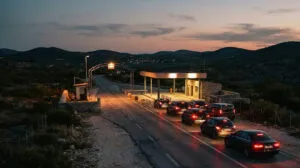
A cocked pistol on the road near Krushopek: the line between a police bulletin and a funeral was held by somebody else's nerve
07.08.2026


07.08.2026

07.08.2026

07.08.2026

07.08.2026

07.08.2026

07.08.2026

07.08.2026

06.08.2026

06.08.2026

07.08.2026

07.08.2026

06.08.2026

07.08.2026

07.08.2026

07.08.2026
07.08.2026

06.08.2026

05.08.2026

07.08.2026

07.08.2026

07.08.2026
07.08.2026

07.08.2026

07.08.2026

09.03.2026

27.02.2026

19.02.2026

07.08.2026
06.08.2026
05.08.2026

23.04.2026

23.04.2026

12.04.2026
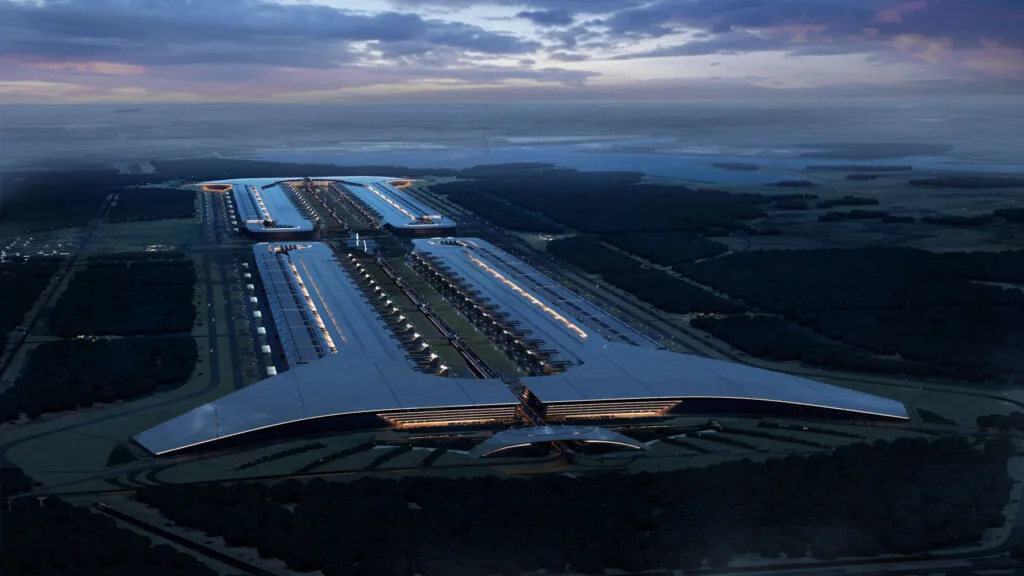
Elon Musk announced on Thursday where Terafab will be built - the chip plant being developed jointly by Tesla and SpaceX. The site is Grimes County in Texas, northwest of Houston, and the initial investment comes to $16.8 billion (around €15.5 billion). Musk described it as "the largest and most expensive building on Earth, by a wide margin".
The figures are beyond any scale we're used to. The planned 100 million-plus square feet of production space is around 9.3 million square metres - an area measured in square kilometres, not in halls. SpaceX stated in its filings that across the multi-phase construction plan it could spend up to $119 billion. Employees? At least 3,000 people from Grimes and neighbouring Brazos County.
The logic behind the project is straightforward and Musk doesn't hide it. His vision - millions of robots taking over human jobs, robotaxis driving instead of people, satellites turning into data centres for artificial intelligence - demands an amount of computing power that the world's chip production rate simply doesn't have. When you can't buy them, you make them yourself. That's the whole strategy, reduced to one sentence.
"The facility will be an advanced semiconductor plant that will bridge the gap between the current global chip supply and future computing needs," SpaceX said in its statement. The plant is meant to produce chips for Optimus robots and autonomous Cybercabs, as well as more powerful chips for the data centres SpaceX is planning in space. Intel announced it will take part in the project, but stayed vague about what exactly it contributes.
There's one detail worth noting, because it rarely makes it into announcements like this. The day before, hundreds of residents showed up at a county meeting. They didn't come to applaud - they came to ask about the millions of dollars in tax breaks awarded to the project and about the absence of transparency. SpaceX simultaneously announced a commitment to use water from the local Gibbons Creek reservoir instead of groundwater. It's hard not to notice that such a commitment appears exactly when people start asking.
From the local authorities, naturally, the tone was different. "We believe this agreement will strengthen our county, expand opportunities and better prepare our students for the future," said Dr Sara Borowicz, superintendent of the Anderson-Shiro school district, in a statement sent through the Texas governor's office. "There are moments that define a school district and this is one of them."
What remains is the question none of the participants asks out loud: what happens if the vision doesn't materialise. A 100-million-square-foot plant doesn't get converted into something else. If demand for robot chips and orbital data centres turns out smaller than the projections, what's left in Texas is the most expensive empty building on Earth - built with tax breaks the residents are already questioning.
The latest 10 news from this category
Not a single accepted or rejected correction in three months, and millions of people are still reading it every month....
The two biggest dating apps suddenly discover that meeting in person was the point. Bumble's revenue fell 15.2 percent, which...
Jeff Dean, Google's thirtieth employee, is walking out after 27 years and taking three of the company's best researchers with...

Private Relay hides your IP address and is paid for through iCloud+. Two researchers showed it can be bypassed, but...
The rocket company made 7.8 billion in a single quarter, and almost 2 billion of it came from data centres...
Alex Karp argues that companies building language models pipe your expertise into their model to take your business. In the...

Norwegian researchers found code in smart TV apps that turns your home connection into a tunnel for someone else's traffic....
The operator covering 67 million consumers admitted it does not have power for everyone and decided in advance who gets...
Sales are not falling because people got poorer, but because old phones stopped breaking on schedule. The industry's answer is...
Opus 5 set a record in the test and broke 11 agreements. Not one of the tricks is new -...
This site uses cookies - is that okay? Learn more
Be the first to know when Metla launches something new
Leave your email and we will write when there is a new guide or something new on Metla.