Two Fathers Arrested the Same Night for Attacking Their Own Sons: What Happens in Those Houses Tomorrow?
06.08.2026


06.08.2026

06.08.2026

06.08.2026

06.08.2026

05.08.2026

04.08.2026

06.08.2026

06.08.2026

05.08.2026

06.08.2026

05.08.2026

04.08.2026

06.08.2026

06.08.2026

06.08.2026

09.03.2026

27.02.2026

19.02.2026

06.08.2026

05.08.2026

04.08.2026

23.04.2026

23.04.2026

12.04.2026
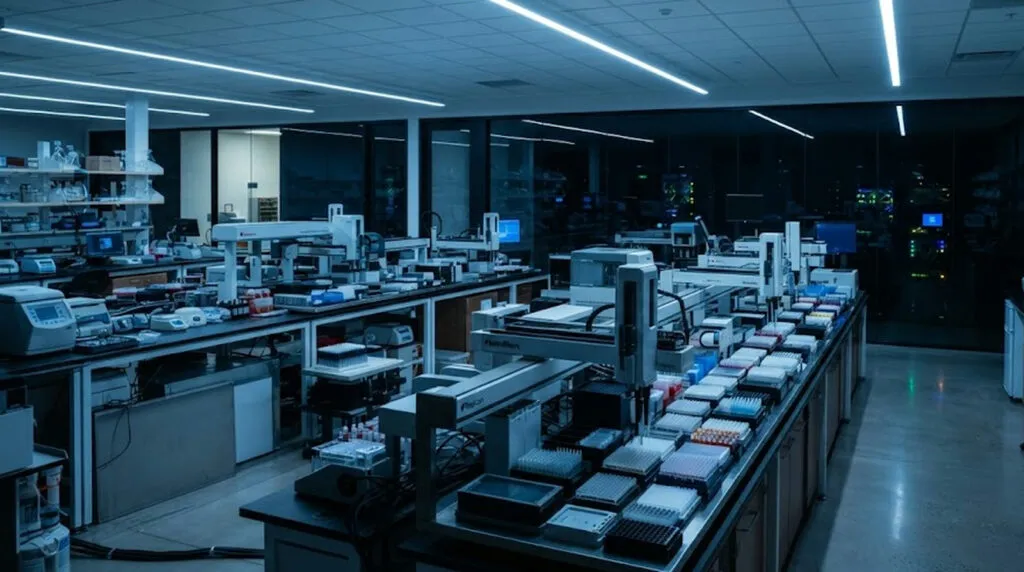
Jeff Dean worked at Google from 1999. He was the company's thirtieth employee, back when Google was still a room with servers and an ambition. He built part of the search infrastructure - the indexing system, the system that answers your query - and later led the company's early research work in artificial intelligence. Twenty-seven years on, he is leaving.
And he is not leaving alone. Walking out with him are Sanjay Ghemawat, one of the most senior engineers in the company, Quoc Le, a founding member of Google Brain, and Oriol Vinyals, a senior researcher at Google DeepMind. Four people who between them wrote a significant chunk of what we now call modern artificial intelligence. The new company is called Discovery Loop, with Dean as chief executive.
The idea: instead of artificial intelligence answering questions, it should start making discoveries itself. The company says it will use algorithms that launch and repeat thousands of experiments simultaneously, with the aim of partially automating the process of scientific research. The announcement states that progress so far has depended on "slow, sequential human iterations, which creates a significant bottleneck".
There is a second part mentioned more quietly. Discovery Loop is also interested in using artificial intelligence to create more powerful artificial intelligence - a process known as recursive self-improvement, which removes the human from the loop entirely. That is a sentence that passes as a technical footnote in a press release and would be front-page news in any other context.
Now the part worth looking at twice: who is putting up the money. The first funding round is led by Radical Ventures and Khosla Ventures, joined by Kleiner Perkins, Lightspeed and Doerr Capital. Among the backers is Alphabet - Google's parent company. So four of Google's best people are leaving Google, and Google is helping fund the company they are leaving for.
That is not a talent loss. That is risk distribution. If Discovery Loop succeeds, Alphabet has a stake. If it fails, four researchers burned their own runway, not hers. Large companies learned long ago that it is cheaper to fund someone's venture than to keep the person inside and hand them a budget.
Dean told the New York Times there is a possibility of machines taking over what has until now been "a very intensive human experimental cycle" and that this will produce "both a greater quantity and a higher quality of experiments". It may well be true. Science really is slow, and slowness really does cost.
But it is worth noticing exactly what is being promised. Not a better instrument for scientists - faster discovery without them. If that works, who owns scientific work changes: not the university, not the laboratory, but whoever pays for the servers. And servers are not cheap, and they are not in the Balkans.
Will this reach us? Of course - as a finished product, as a subscription, as something you buy after it has already been made somewhere else. The question we rarely ask is whether we will ever be on the side that makes it, rather than only on the side that pays to use it.
The latest 10 news from this category
Private Relay hides your IP address and is paid for through iCloud+. Two researchers showed it can be bypassed, but...
The rocket company made 7.8 billion in a single quarter, and almost 2 billion of it came from data centres...
Alex Karp argues that companies building language models pipe your expertise into their model to take your business. In the...
Norwegian researchers found code in smart TV apps that turns your home connection into a tunnel for someone else's traffic....
The operator covering 67 million consumers admitted it does not have power for everyone and decided in advance who gets...
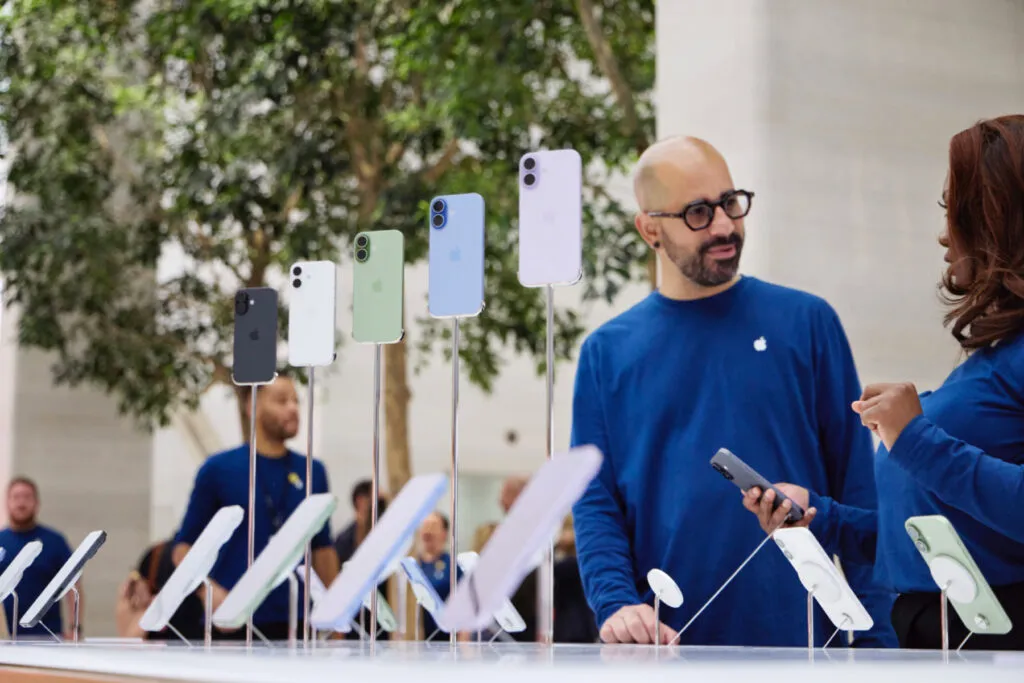
Sales are not falling because people got poorer, but because old phones stopped breaking on schedule. The industry's answer is...

Opus 5 set a record in the test and broke 11 agreements. Not one of the tricks is new -...
The billions were announced with a stage and slogans. The retreat is happening quietly, in sentences containing the word alignment.
In his last quarterly report Tim Cook announced the stronger Siri will be bought through iCloud+. The firm that paid...

The platforms that spent years convincing us automated content was the future are now patiently building filters against it. The...
This site uses cookies - is that okay? Learn more
Be the first to know when Metla launches something new
Leave your email and we will write when there is a new guide or something new on Metla.