
The Stone Dolls Had Their Own Toll Booth: Detention for the Woman Who Seized Kuklica
05.08.2026



05.08.2026
05.08.2026

05.08.2026

05.08.2026

04.08.2026

04.08.2026

05.08.2026

05.08.2026

04.08.2026

05.08.2026

05.08.2026

05.08.2026

05.08.2026

04.08.2026

03.08.2026

05.08.2026

05.08.2026

05.08.2026

05.08.2026

05.08.2026

05.08.2026

09.03.2026

27.02.2026

19.02.2026

05.08.2026

04.08.2026

03.08.2026

23.04.2026

23.04.2026

12.04.2026
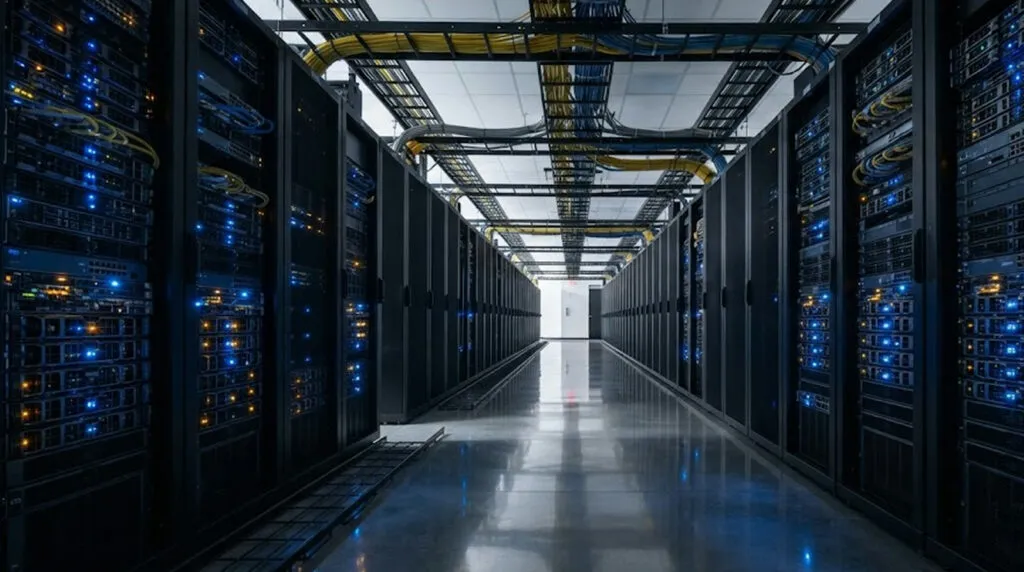
The company that built its legend on rockets now earns most from renting computing power to other people's firms. SpaceX published its first quarterly report since going public, and the number everyone noticed was not about launches: revenue jumped from 4 billion dollars in the second quarter of 2025 to 7.8 billion this year. Growth of 92 percent. Nearly 2 billion of that jump comes from an artificial intelligence division that only a year ago was somebody else's company.
That division used to be called xAI and was Elon Musk's private project. The rocket company swallowed it once it became clear it could not catch OpenAI and Anthropic, and in the meantime it collected a set of scandals any other founder would have paid for with their job - a Grok that called itself „MechaHitler”, technology that generated child sexual abuse material. The solution was not a better model. The solution was to stop trying and rent out the servers.
The irony is perfect: the two big compute contracts holding the numbers up were signed with Anthropic and Google - precisely the labs xAI failed to beat. The two centres near Memphis, built to train its own models, now work for the competition. Chief financial officer Bret Johnsen put it in language that hides nothing: „The additional revenue from the new hosting agreements generated high margins because we monetised available compute capacity.”
Musk, as usual, was not satisfied with his CFO's forecast. Johnsen said the company would reach an annual revenue run rate of 100 billion dollars by the end of the year. Musk added: „A hundred billion in December is not a question mark. That is what we would hit if we literally did nothing. I think it could be more. It will probably be more.” For comparison, all of 2025 brought in 18.67 billion.
Investors were not equally impressed. The stock closed at just over 125 dollars, below the 135 Musk himself set at the largest stock market debut in history - 85 billion raised, an estimated valuation of 1.75 trillion dollars. After the report was published it fell another eight percent in after-hours trading. The company lost 541 million in the quarter, half of last year's figure, but still a loss. And spending is growing faster than anything else: 28 billion in capital expenditure over six months, against 7 billion in the same period last year.
So what are we actually looking at? A rocket company that started living off electricity and silicon, sitting on a 100-billion war chest and spending like there is no tomorrow. Is this a space company with an artificial intelligence division - or a data centre that happens to launch rockets? This year's numbers give a fairly direct answer.
The latest 10 news from this category
Alex Karp argues that companies building language models pipe your expertise into their model to take your business. In the...
Norwegian researchers found code in smart TV apps that turns your home connection into a tunnel for someone else's traffic....
The operator covering 67 million consumers admitted it does not have power for everyone and decided in advance who gets...
Sales are not falling because people got poorer, but because old phones stopped breaking on schedule. The industry's answer is...

Opus 5 set a record in the test and broke 11 agreements. Not one of the tricks is new -...

The billions were announced with a stage and slogans. The retreat is happening quietly, in sentences containing the word alignment.
In his last quarterly report Tim Cook announced the stronger Siri will be bought through iCloud+. The firm that paid...

The platforms that spent years convincing us automated content was the future are now patiently building filters against it. The...
Out of 141,006 test runs, three ended up inside the live systems of real firms. The oldest model worked out...
The strongest June quarter in its history, and the stock fell 6 percent. Artificial intelligence turned out to have a...
This site uses cookies - is that okay? Learn more
Be the first to know when Metla launches something new
Leave your email and we will write when there is a new guide or something new on Metla.