Four Families, One Morning: Domestic Violence Has Become a Daily Number
21.07.2026


21.07.2026
21.07.2026

21.07.2026

21.07.2026

21.07.2026

20.07.2026

21.07.2026

20.07.2026
19.07.2026

21.07.2026

21.07.2026

20.07.2026

09.03.2026

27.02.2026

19.02.2026
21.07.2026
20.07.2026
20.07.2026

23.04.2026

23.04.2026

12.04.2026

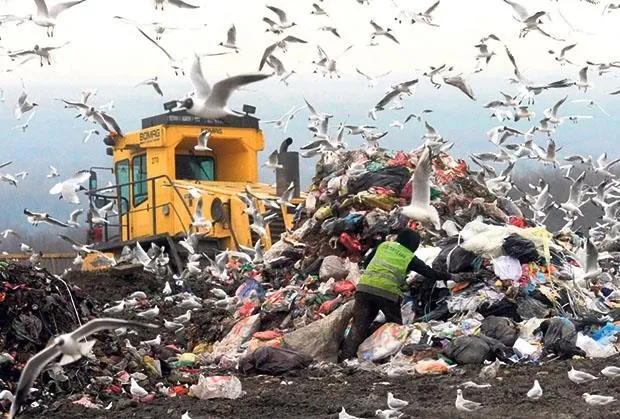
To some it's rubbish, to others it's a nine-figure business. While the rubbish on the streets and at the landfills stays a daily sight, behind the bins sits an industry that turns over more than 120 million euros a year. And as the money grows, recycling stands still - ninety percent of the waste collected in the country still ends up in a landfill, where nature and public health pay a bill that gets booked nowhere.
The sector's figures are striking. Last year, waste-collection and processing companies took in 120.2 million euros in revenue. Turnover was down 3.36 percent on the previous year, but profit rose 7.1 percent to 4.6 million euros. All of it was handled by 168 companies, and the ten highest earners grabbed nearly 59 percent of the whole pie.
The list is led by Skopje's public utility Komunalna Higiena with 23.4 million euros - the biggest player and the provider of the public service in the capital. Right behind it comes Tetovo's Teknometal, which more than doubled its revenue to nearly 12 million euros, while the top ten is dominated by public utility firms - from Kavadarci and Prilep to Ohrid and the Drisla landfill.
There's money, but little recycling
Here's the paradox. The industry is profitable, yet the waste-management system lags behind. Macedonia generates around 791,000 tonnes of municipal waste a year and collects about 637,000. Of what's collected, nearly 90 percent goes straight to landfill - no sorting, no recycling, no return to the economic cycle.
Even where there's progress, we depend on others. Of the glass packaging put on the market, around 45 percent is collected and recycled through the Pakomak system - a figure we can genuinely boast about for a country outside the EU. But there's a catch: almost all the collected glass is shipped to factories in Bulgaria. We collect it, they process it - and the added value goes across the border.
The European warning is already knocking. Brussels recently launched proceedings against Portugal over missed recycling targets, with the prospect of financial penalties. Macedonia isn't a member yet, but the case is a clear signal - with the new targets for 2030 and 2035, an efficient waste system is no longer a choice but a condition of entry.
So the picture is a double one. The waste business is booming, a dozen firms split millions, but the waste itself mostly ends up buried. The question for the citizen who takes out the rubbish every morning is simple: if the industry turns over 120 million, why do we still live surrounded by landfills?
The latest 10 news from this category
Diesel +6 denars, petrol +3. The government cut excise to soften the blow - but that doesn't mean cheaper fuel,...
Dimitrieska-Kočoska: a development, not a crisis rebalance; salaries and pensions are safe. The focus is on capital investment - but...
3.2 billion euros, less than the price of a coffee per citizen. The problem isn't the sum, it's the rule...

500,000 books, 3,000 dollars per work, and not a single binding precedent. The biggest settlement in the history of American...

AI agents already negotiate and compare prices, but when it is time to pay, the machine still asks for a...
CBS, MTV, CNN and HBO under one roof - and 12 state prosecutors saying that is too much power in...
Prices jumped nearly 30 percent in a few weeks over the US-Iran escalation. It lands right as the regulator recalculates...
The inspectorate found retail prices jumped 4.56 percent while procurement rose only 2.66. The government sits down with retailers again...
Diesel and petrol are heading up again, and on Wednesday parliament votes to keep the fuel state of crisis running...
An Oscar-winning actor sold his AI firm to a company that admitted 300 of its own titles already used artificial...
This site uses cookies - is that okay? Learn more