
The Video Found Them in a Day: Two Minors and a 20-Year-Old Suspected in the Brutal Gostivar Beating
04.08.2026


04.08.2026

04.08.2026

04.08.2026

04.08.2026

04.08.2026
04.08.2026

04.08.2026

04.08.2026

03.08.2026
04.08.2026

04.08.2026

04.08.2026

04.08.2026

03.08.2026

02.08.2026

04.08.2026

04.08.2026

04.08.2026
04.08.2026

04.08.2026

04.08.2026

09.03.2026

27.02.2026

19.02.2026

03.08.2026
03.08.2026

03.08.2026

23.04.2026

23.04.2026

12.04.2026
The world's oldest unbroken monarchy has one problem no ceremony can solve: the heir may not inherit. Aiko, the only daughter of Japan's Emperor Naruhito and Empress Masako, stood on Sunday at the centre of one of the country's holiest rituals, dressed in white from head to toe, pearls at the collarbone, gloves on - and even as she did it, the law keeping her away from the Chrysanthemum Throne continues to be written without her.
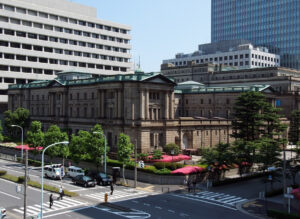
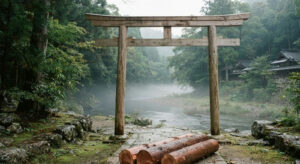
The journey ran from the Imperial Palace in Tokyo to Ise, in Mie prefecture, home to Shinto's holiest complex. The reason is the reconstruction of the Grand Shrines at Ise - a custom repeated every twenty years and running unbroken for 1,300 years. The next great renewal begins in 2033. The preparations, then, begin now, and they begin with her.
This is not a photoshoot. Ise houses the Sacred Mirror, one of Japan's three sacred treasures, symbolising wisdom and, by legend, used to draw the sun goddess Amaterasu out of a cave. The other two are the Kusanagi sword, for courage, and the Yasakani no Magatama jewel, tied to benevolence and to the legitimacy of the Imperial House. The Inner and Outer Shrines date back some 2,000 years. When a state transmits authority through objects of that age, anyone standing beside them receives something no election can confer.
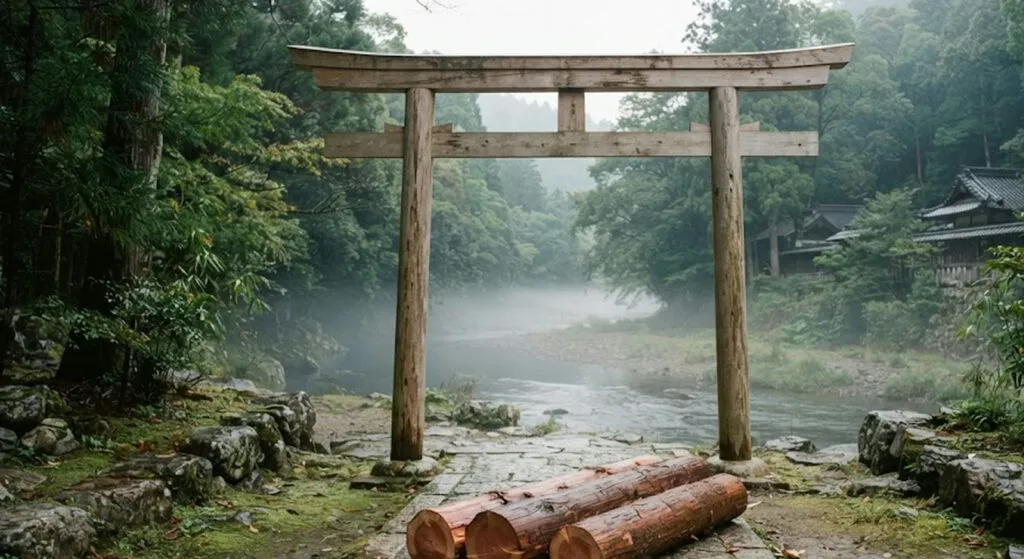
And there is the irony. Aiko bowed to Amaterasu - a goddess - and then attended Kawabiki, the traditional hauling of logs along the river, taking hold of the rope alongside hundreds of ordinary citizens. Before that, in town, she boarded an ordinary metro train among the crowd. A scene any court adviser would call symbolism of closeness to the people. Except symbolism does not amend an article of law.
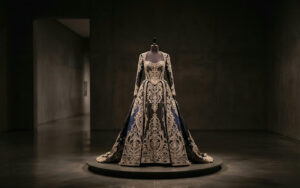
The clothing was ivory white, light fabrics, restrained cut - and, as protocol notes, exactly what she had already worn at a previous official appearance. White in Japan means purity and renewal, in the spirit of Shikinen Sengu, the rite of periodically returning the shrines to their original state. Pearls are the "official" jewellery of court ladies because they display elegance without displaying wealth. Not one item is accidental, and not one is her choice.
So this is the picture: a woman who publicly represents the oldest dynasty on the planet, whom the public adores, who knows every ritual by heart - and who, under the current Imperial House Law, cannot take the throne, and who loses her title outright if she marries a man from outside the imperial family. Reform of that law has been discussed for years and keeps being postponed.
Do the Balkans have any right to laugh at this? We have no throne, but we have plenty of institutions where someone with obvious ability waits outside the door while the decision inside is made by a rule written generations ago. The only difference is that here the rule is less often called tradition, and more often called an arrangement.
In 2033 Ise will be torn down and rebuilt again, as it has been for thirteen centuries. The question is whether by then anything will have changed in the text that decides who may stand closest to the mirror.
The latest 10 news from this category

Italy before college, and one sentence any parent who has sent a child abroad recognises from the first word.
Daily horoscope - 04.08.2026
No princess title, but a philosophy degree from the Sorbonne. Charlotte Casiraghi enters her forties with a book about her...

Fifty-five shows, three million spectators, four continents - and not one album in English. For years we were told that...
Daily horoscope - 03.08.2026

Hilaria Baldwin was dieting at five and went through everything over two decades. The costliest part was not the body...
Daily horoscope - 02.08.2026
The law sent her to the guards, the palace announced she won't take the pay. When you have no money...

Eighteen years of litigation for one acknowledgement, and the recognised princess's children have neither a court role nor a budget....
This site uses cookies - is that okay? Learn more
Be the first to know when Metla launches something new
Leave your email and we will write when there is a new guide or something new on Metla.