The Stone Dolls Had Their Own Toll Booth: Detention for the Woman Who Seized Kuklica
05.08.2026



05.08.2026

05.08.2026
05.08.2026

05.08.2026

04.08.2026

04.08.2026

05.08.2026

05.08.2026

04.08.2026

05.08.2026

05.08.2026

05.08.2026

05.08.2026

04.08.2026

03.08.2026

05.08.2026

05.08.2026

05.08.2026

05.08.2026

05.08.2026

05.08.2026

09.03.2026

27.02.2026

19.02.2026

05.08.2026

04.08.2026

03.08.2026

23.04.2026

23.04.2026

12.04.2026
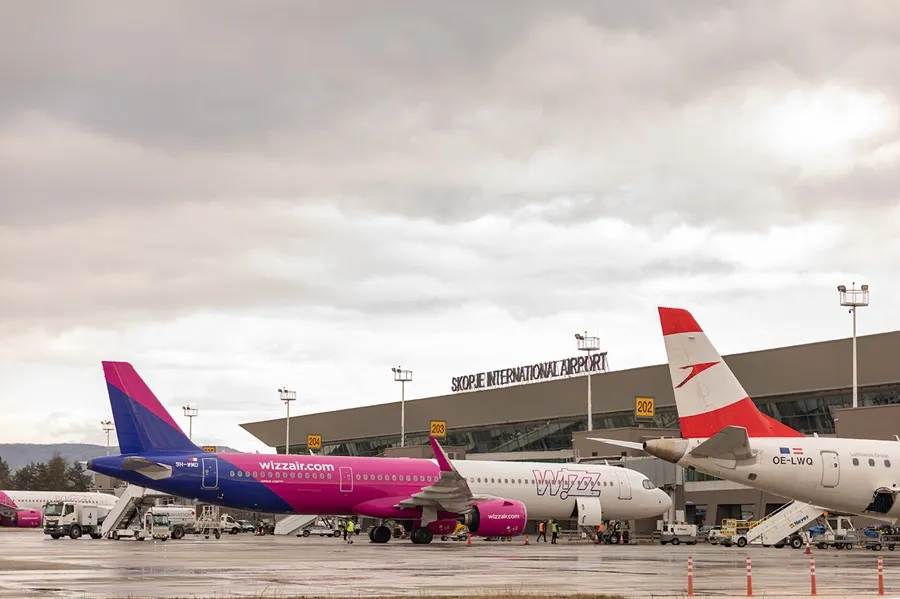
Macedonia's two international airports handled more than 460,000 passengers in July. A few years ago that number sounded like an ambition for an entire season, not for a single month.
Skopje International Airport served 408,925 passengers in July - a 29.5 percent rise on last year, across 2,670 flights. The "St. Apostle Paul" airport in Ohrid handled 52,544 passengers, up 41.21 percent, on 443 flights, which is 34.65 percent more than July 2025. Ohrid's busiest day was 26 July with 2,988 passengers.
Between January and July the two airports together served 2.42 million passengers across 16,280 flights - growth of 28.4 percent in passenger traffic and 8.6 percent in operations.
First place among non-EU countries
According to ACI Europe data, Macedonia ranks first for passenger traffic growth among non-EU countries, at 27.9 percent. Skopje airport is listed among Europe's fastest-growing medium-sized airports, with growth of 28.6 percent.
Deputy Prime Minister and Transport Minister Aleksandar Nikoloski credited the results to the policy of subsidising and attracting new carriers, and expects Macedonia to reach four million passengers a year.
What one record July means - and what it does not
The growth is real and it was measured by an external association, not by a ministry. That is an important distinction and it deserves saying. When ACI Europe confirms the figure, it is hard to argue it has been inflated.
But a 41 percent growth rate in Ohrid also means the base was low. An airport that handles 52,000 passengers across an entire July remains a small airport, however fast it grows. And the second half of the ledger - the subsidies paid to airlines - is almost never published in the same press release as the record. How much did each of these additional passengers cost?
That question is not asked to diminish the result, but because without it there is no way to know whether the model is sustainable or simply purchased. When the subsidy stops, do the routes stay? The answer decides whether four million passengers a year is a plan or a promise.
The latest 10 news from this category

Officially, fuel prices are down 1.24 percent. In practice, diesel went up by another denar - and that lands in...

Measured by purchasing power, Macedonia jumps from 24th to 16th place and overtakes seven EU countries. The net minimum wage...

The hardest ten kilometres open in the coming months. Nikoloski's admission that one project swallows four fifths of his ministry...

The EU has already cut its forecasts for sunflower, maize and potatoes. What burned in the Mediterranean in July will...

Michael Burry argues the rally feeds itself through leverage. The same mechanism that pushes records up also accelerates the fall.

Ракетната фирма заработи 7,8 милијарди во еден квартал, а речиси 2 милијарди од нив дојдоа од дата центри изградени за...

Компанијата не пропадна - има 480 милиони приход и 500.000 клиенти. Само престана да вреди толку колку што некој напишал...

Уредите беа во сефови и банкарски трезори. Хакерите не мораа да ги обиваат - научија како самиот уред прави лозинки,...

8,369 transactions, 351.7 million euros in turnover, 28,352 construction pre-registrations. And 47 families in Debar who got a key for...

The Romanian navy is blasting rocks to redirect water towards a reactor. On the Macedonian exchange, power is already trading...
This site uses cookies - is that okay? Learn more
Be the first to know when Metla launches something new
Leave your email and we will write when there is a new guide or something new on Metla.