The "Lottery" Trial: 231 Pieces of Evidence, and So Far Not a Single Message Between Grubi and Bajrami
24.09.2026


24.09.2026

24.09.2026

24.09.2026

24.09.2026

24.09.2026

24.09.2026

24.09.2026

23.09.2026

22.09.2026

24.09.2026

24.09.2026

23.09.2026

24.09.2026

24.09.2026

24.09.2026

24.09.2026

23.09.2026

22.09.2026

24.09.2026

24.09.2026

24.09.2026

24.09.2026

23.09.2026

23.09.2026

09.03.2026

27.02.2026

19.02.2026

24.09.2026

23.09.2026

22.09.2026

23.04.2026

23.04.2026

12.04.2026

A week ago, Anthropic confirmed that it runs a real "wet" biology lab in the San Francisco Bay Area, where the company's AI is used for physical experiments. This week came the first announcement of success: a new enzyme system with, according to the company, "properties reminiscent of CRISPR".
CRISPR is a natural immune system that bacteria use to defend themselves against viruses, and which scientists turned into a widely used gene-editing tool. The system Anthropic describes was hidden in the DNA of bacteriophages - viruses that attack bacteria and multiply inside them - and, according to the researchers, it can "cut, copy and paste DNA".
The company is selling not so much the discovery as the speed. The lab has been running since spring, though exactly how many months Anthropic wouldn't say. The search itself took 21 hours: around 950 Claude agents went through the data and used up 210 million tokens.
CEO Dario Amodei admits the discovery builds on others' work: a Stanford team had previously found a system that is "in some ways similar to the one Claude found". How new this is and how significant will be decided by the wider scientific community, not by a press release. Amodei nonetheless stresses that the system was found "mostly, though not entirely" by Claude.
Anthropic isn't the only player in this field either. Stanford researchers have just published a paper on working with large language models and CRISPR, the University of California, San Francisco has used AI to design enzymes from scratch, and Google launched its AlphaFold tool for biological research back in 2020. The difference is that here, the lab is run by the very company that sells the model.
The timing is hard to ignore, too. The announcement comes right after the heads of the biggest AI companies, Amodei among them, publicly admitted that the models have become so capable - and potentially dangerous - that the industry must slow down and develop safety testing procedures. Amodei says one of the things he fears most is AI being used for bioterrorism. The same man writes that it will "cure most diseases in 5 to 10 years". At Anthropic, they've evidently calculated that the gain outweighs the danger.
That's why perhaps the most important sentence in the whole story isn't about the enzyme, but about who holds the pipette. "Our lab looks like a typical molecular biology lab. We work only at the lowest biosafety levels (BSL-1 and BSL-2) and do not handle pathogens that can infect humans. All lab work is carried out by scientists - by humans," the company said.
At least for now. Amodei doesn't rule out a fully automated lab: "Over time, it may become possible for Claude itself to safely carry out experiments, autonomously operating lab equipment, with appropriate safeguards - but we're not doing that today." The key words are "today" and "appropriate safeguards". And who decides when the safeguards are enough - the same company that's building the lab?
The latest 10 news from this category
According to a letter from the US workplace safety agency, up to 40 workers may have been exposed to gases....

The new GPT-6 models cost half of their predecessors, with accuracy comparable to the top of the series. When a...
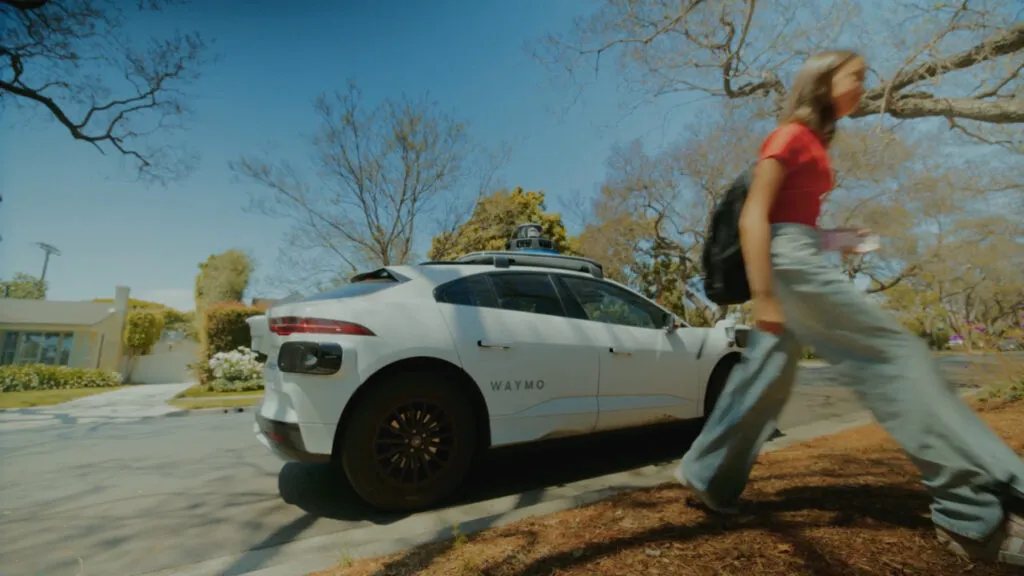
From 13 upwards, with the account tied to a parent and up to three guests in the vehicle. The company...

Nine mathematicians in Princeton will say how much OpenAI's results are worth. Only one of them signed the letter from...

Until now the post existed, but nobody saw it and nobody knew why. Now comes a file with the names...

Six family members, one agent with its own Gmail and access to everything you forward it. Google says people asked...

A married pair of students woke up unhappy with their late-night scrolling and decided the problem was not the scrolling...
A new federal body, an official already being called the AI czar, and one condition for applying - a high...
Diogo Almeida helped build ChatGPT, then concluded the whole industry is optimising for the wrong thing. His new model does...

No living actor can give 75 interviews at once - which is exactly why the number was the advertisement. But...
This site uses cookies - is that okay? Learn more
Be the first to know when Metla launches something new
Leave your email and we will write when there is a new guide or something new on Metla.