
Sixteen Arrests in Twenty-Four Hours, All for Drugs: The Police Are Working - But Where Are All These People Coming From?
20.09.2026


20.09.2026

20.09.2026

20.09.2026

20.09.2026

20.09.2026

20.09.2026

20.09.2026

19.09.2026

18.09.2026

20.09.2026

20.09.2026

19.09.2026

20.09.2026

20.09.2026

20.09.2026

20.09.2026

19.09.2026

18.09.2026

20.09.2026

20.09.2026

20.09.2026

20.09.2026

20.09.2026

20.09.2026

09.03.2026

27.02.2026

19.02.2026

20.09.2026

19.09.2026

18.09.2026

23.04.2026

23.04.2026

12.04.2026

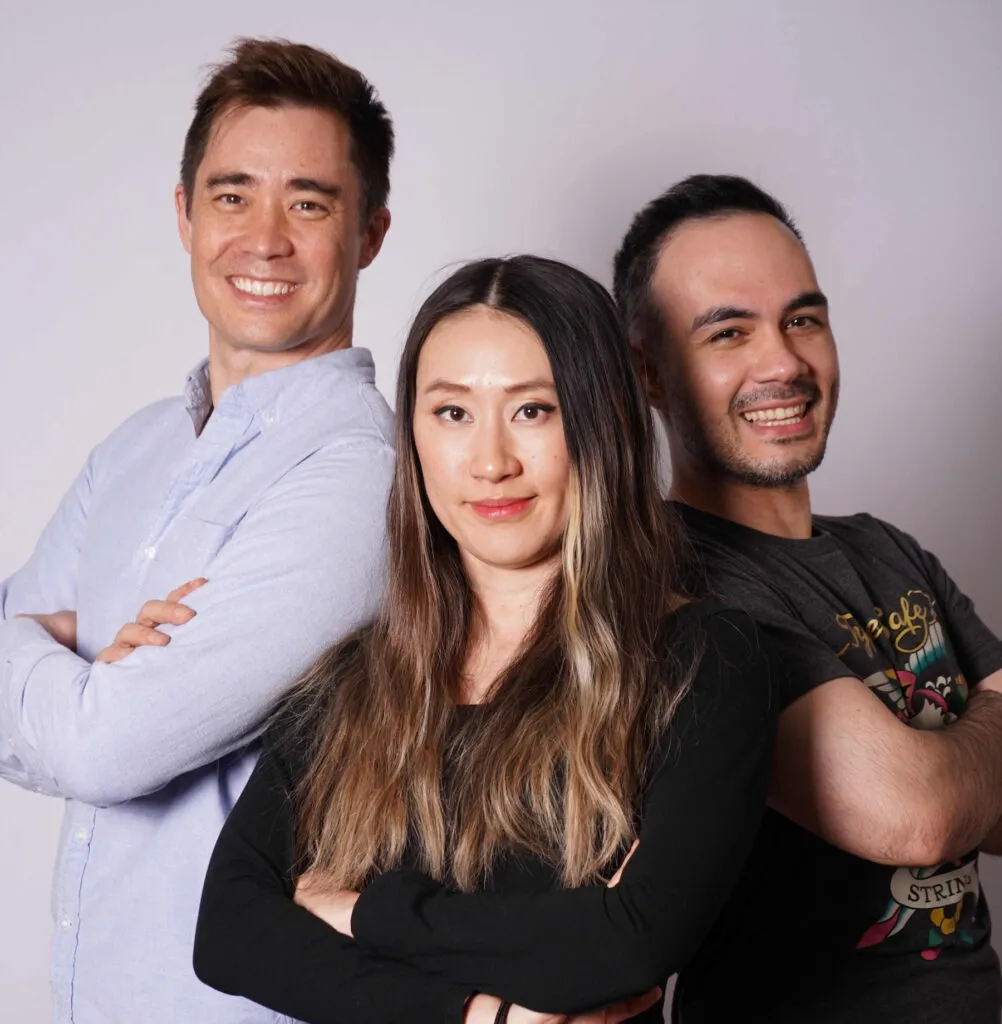
The man who helped build ChatGPT now says the entire industry is chasing the wrong thing. Diogo Almeida, a former researcher at OpenAI and one of the people behind reinforcement learning from human feedback (RLHF) - the method underpinning almost everything called artificial intelligence today - left the company two years ago because he was not satisfied with what he had built.
"We have lightning in a bottle, and yet it isn't useful," Almeida told the American technology outlet that broke the story. "We've been fighting that problem ever since. It took me time to conclude: the problem is that we're optimising for human language. We've been excellent at human language for four years now, but that isn't useful for automation because computers speak a different language."
His startup TypeSafe AI released a model this week called Jev which is not a large language model. It does not emit text. It emits probabilities - what the company calls "calibrated decisions". The user defines the possible outputs in advance, so the model has nowhere to invent a new one. With that, the company claims, it literally cannot hallucinate.
The effect on the bill is what woke developers up. Output tokens are free, and input tokens are priced per billion, not per million. Demand was such that the company briefly ran out of capacity to serve its users through the developer interface.
Numbers from real use, not from a marketing deck. Pranit Sharma, a software engineer at Vercel, says his company had been using an OpenAI model to check whether commands were safe. After swapping it for Jev, results arrived five to 18 times faster and with greater accuracy. Nikhil Mudholkar, chief technology officer at Bryo AI, tested Jev against Gemini for classifying business messages: Gemini was slightly more accurate, but 10 to 20 times more expensive.
What interested Mudholkar most was neither speed nor price. "It's the only one that returns a true probability, which makes it ideal for automating workflows," he says. Armin Ronacher, chief technology officer at Earendil, explains the same thing from the other side: "At the end of the day, it partly hands the hallucination problem to the user. The user has to say - fine, if this comes back with 50 percent probability, it's maybe a coin flip and I ignore it. But if it's 95 percent, then I can do something with it."
That is a more honest deal than what the industry currently offers. A large language model returns a sentence written with perfect confidence, with no marker of how much it believes itself. Jev returns a number and leaves you to decide whether it is enough. It is not more intelligent - but it is more checkable.
The name is not accidental. The model is named after William Stanley Jevons, the 19th-century economist whose paradox says that when something gets cheaper we start consuming many times more of it, not less. That is exactly what Almeida is betting on: if intelligence becomes cheap enough, it will end up everywhere. "We think there'll be smart software everywhere, in a way that's spread out and distributed - much more like the early internet than like the mega-apps people are trying to build now," he says.
On the model's architecture he stays quiet, and outside observers assume there is still an open-weights language model underneath. What he does admit is that Jev was trained exclusively on synthetic data - data the company produced itself. "We made an early bet that we'd make all our own data, and it's one of the best bets of my life - better than our launch, better than RLHF," says the man who invented RLHF.
Asked whether TypeSafe is a new frontier lab, Almeida answered with a sentence worth more than the industry's entire PR output this year: "The main product of frontier labs is fear or hype. I'd like our main product to be intelligence. We're not a lab in the sense of - you know - a bet on infinite wealth, or a religion, or building a god in a data centre, or whatever the thing of the day is."
For now Jev is one of a kind, but Ronacher expects competitors as soon as it becomes clear what it is for. His explanation for why this did not happen sooner is perhaps the most accurate sentence about the state of the market: "We should have seen this earlier in a lot of ways, but probably because language models are so cheap and subsidised, often you still don't have to be creative." When somebody else's money covers the bill, nobody goes looking for a cheaper route.
The latest 10 news from this category

A new federal body, an official already being called the AI czar, and one condition for applying - a high...
No living actor can give 75 interviews at once - which is exactly why the number was the advertisement. But...

Dario Amodei spent months arguing for independent evaluators inside AI labs. The choice landed on the world's largest consultancy rather...

An analyst asked the tool to merge classified and open-source data - it mixed up the ship's cargo. Then the...

When a model learns to lie and the same company that caught it decides how much we get to see....

The German regulator spent years on an investigation to get one screen changed. The question is not whether the rule...

Three days to check the most aligned model yet: the evaluators want a law, not an essay from the CEOs.

The device that drew ridicule and sank the share price returns with artificial intelligence, partners and a basketball shooting app....
A researcher resigned saying the industry is gambling with our lives. A warning can be sincere and at the same...

It was free while the company wanted you to use the tool. Now that you are using it, the tariff...
This site uses cookies - is that okay? Learn more
Be the first to know when Metla launches something new
Leave your email and we will write when there is a new guide or something new on Metla.